How a gas juice cooker works: design and operating principle
A juicer is a simple device that allows you to prepare a nutritious product from berries, vegetables, and fruits with minimal time and money. The device is highly efficient, leaving only about 20% dry residue, suitable for further processing into jellies, jelly, and other products. To get the best results from your juicer, including delicious apple juice, you need to understand how it works.
Content
What is a juice cooker?
A juice cooker consists of several containers, each of which performs a specific process. The device is easy to assemble and disassemble and can be powered by either electricity or gas. The kit includes the following components: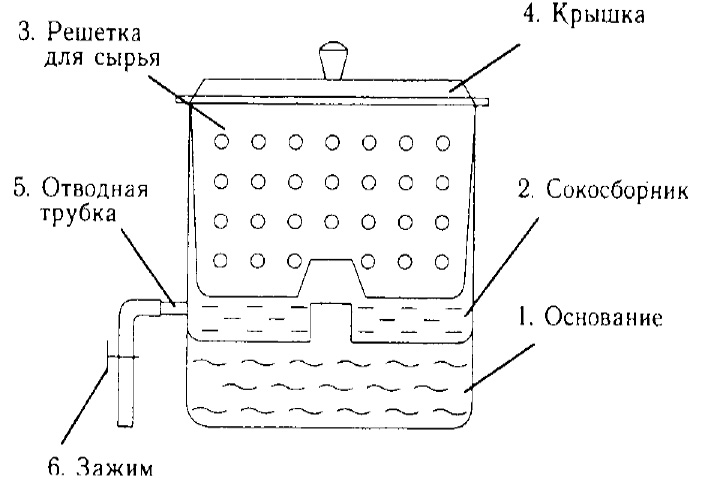
- the lower pan with a small height is intended for water;
- juice collector – a tall container with a hole made for feeding hot condensate into the upper tier;
- a juice drain tube equipped with a special valve that allows you to regulate the flow of liquid;
- steam basket – a mesh for raw materials;
- lid with built-in safety valve;
- a hose with a clamp through which the finished juice flows.
When using a juice cooker, the drink yield reaches 80%.
The amount of finished product is determined by the juiciness of the raw materials; the most can be obtained from berries and fruits, less from vegetables.
The main differences between a juice cooker and a juice extractor
The main difference between the two units is that a juice cooker is designed for preparing food for the winter, while a juicer is used to obtain a fresh drink. When choosing between them, the intended purpose is taken into account.
At the same time, the product obtained in a juicer is significantly inferior in nutritional value to juice extracted with a juicer, which does not heat the raw material during processing, thus preserving the vitamins and nutrients. When using a juicer, ascorbic acid suffers more, being almost completely destroyed by the hot steam.
Types of juicers
There are two types of juicers, which differ in the type of nutrition:
- electric – equipped with a heating element built into the housing;
- traditional – operate under the influence of an external heat source.
Depending on the material used, structures can be made of aluminum or steel.
Juicer: How it works
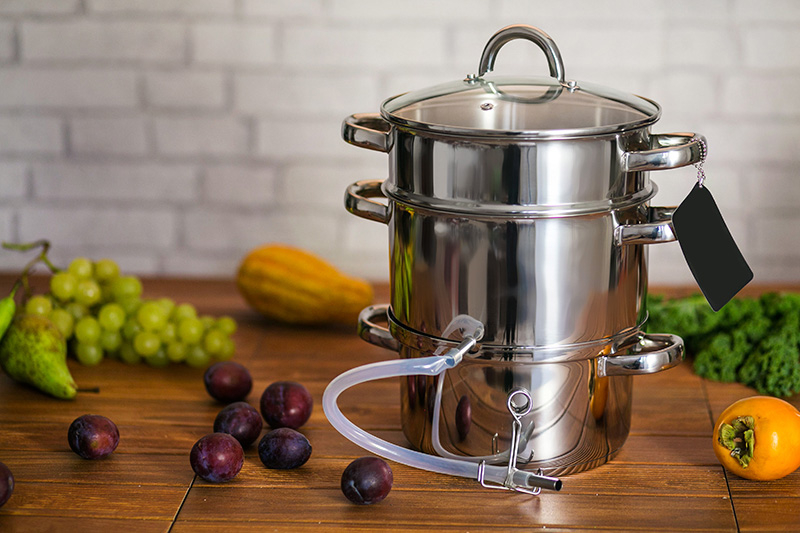
The juice cooker operates according to the following principle:
- The water poured into the lower container boils under the influence of the heating element.
- The resulting hot condensate exits through the steam pipe and rises to the upper tier, coming into contact with the raw material located on the grate.
- The steam softens the fruit and releases juice, which flows through the grate onto the hot bottom of the juice receiver.
- At a temperature of 60–70 °C the drink is pasteurized.
- After accumulation in sufficient quantity, the finished product flows through a drain pipe into a container placed outside.)
How a gas juice cooker works
A juicer installed on a gas stove operates by bringing hot condensate into contact with the fruit, similar to traditional steam cooking. Under high temperatures (around 70°C), the fruit softens and releases juice. This juice, which enters the juice collector, undergoes heat treatment (pasteurization), and then flows through a tube into a collection container.
How to use a juicer correctly
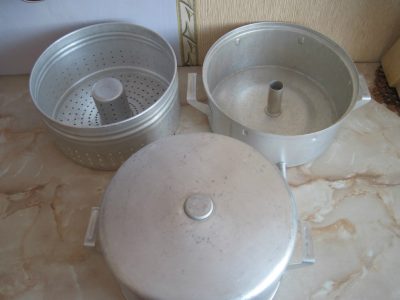
When using a juicer, it is important to follow the step-by-step instructions:
- Prepare the raw materials: wash and clean, since the pulp must be directly exposed to steam.
- Place the fruit on the top tier of the rack. If you plan to make a sweet drink, sprinkle with sugar. When processing vegetables, sprinkle with salt.
- Pour about 2 liters of water into the bottom pan.
- Place the juice receiver on top.
- Plug the device into an electrical outlet or place it on a gas stove.
- Cover the juicer with a lid.
- Insert a tube into the side hole of the central container to drain the liquid, and lead its other end into a container installed outside (previously sterilized).
It is advisable to warm the glass container for collecting the finished juice slightly before starting the process, otherwise the glass may crack upon contact with hot juice.
Advantages and disadvantages of juicers
Using a juice cooker has a number of positive aspects:
- minimal amount of waste, possibility of using remaining raw materials for further processing;
- no preliminary preparation of raw materials is required: cleaning, pitting;
- ability to load hard fruits;
- no need for subsequent sterilization of the finished product;
- purity and transparency of the drinks dispensed;
- the ability to prepare juice from several components;
- absolute silence;
- easy to care for.
The disadvantage of a juice cooker is as follows:
- long processing process;
- reduced concentration of the finished product due to its combination with water during evaporation;
- destruction of most vitamins and nutrients.
A juicer is a convenient device that allows for a virtually waste-free production process. Using this design, you can produce not only juice but also steam-treated fruit, suitable for making various delicacies.