Bokashi Fertilizer: What It Is and How to Use It
Recently, various fertilizers have become increasingly popular in gardening, as plants are not receiving sufficient nutrition due to a variety of factors. Intensified land use has necessitated the use of chemicals or organic farming. The most popular microbiological fertilizer is bokashi, a mixture of fermented wheat bran.
What are these bokashi fertilizers? What are the benefits of using this fertilizer, and what types of plants is it suitable for? Let's take a closer look.
Content
What is bokashi in gardening?
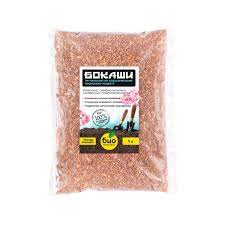 Bokashi is a soil amendment made from food waste or similar organic matter. All ingredients are fermented using specialized bacteria, rather than being broken down. The catalyst mixture visually resembles traditional bran, but it is a unique preparation filled with beneficial microorganisms.
This product is considered a well-known fertilizer that can restore soil biological fertility in a short period of time. The substances transformed during the fermentation process promote rapid rooting of fruit and vegetable crops and strengthen the plant's immune system.
How to make bokashi
To prepare bokashi, use any dry nutrient mixture with a moisture content no higher than 30 percent. This can be wheat bran or chaff, which is then immersed in EM spores. The resulting seedlings are moistened and transferred to favorable conditions, which include:
- temperature from 32 to 35 degrees;
- high air humidity 80–90%;
- a place where there is no access to oxygen.
After the fermentation process, the primary EMs die off, producing abundant sporulation. The processed starter is naturally dried to produce fine granules—also known as bokashi.
What are the benefits of fertilizer?
Using fertilizer has many benefits for the soil:
- accelerated fermentation of organic matter;
- increasing the proportion of humus;
- giving a healthy look to sun-dried grass;
- an obstacle to the development of pathogenic microorganisms.
To restore healthy soil in problematic areas of the garden, bokashi is combined with the planting of green manure.
Application areas
Many people don't know how to use bokashi in gardening. Most often, the fertilizer is used to restore soil. It can also be used in livestock farming to eliminate odors. Bokashi has a wide range of applications:
- accelerates compost maturation;
- used to prepare the soil for planting seedlings;
- root feeding of plants;
- elimination of unfavorable street odors;
- feed additive for animals and birds.
Dry fertilizer under the roots
 In spring, bokashi is used directly as a fertilizer for soil preparation and root feeding. It becomes a good plant waste for composting. Granules are used to feed plants in protected soil, such as greenhouses or hothouses. The recommended dosage is 1 pinch per 1 m.2.
For the soil
Bokashi is added to the planting holes for many vegetable crops, including potatoes, tomatoes, carrots, as well as raspberry bushes, currants, and grapevines. For soil cultivation, use 50 to 250 grams per 10 square meters.
For seedlings and flowers
Bokashi can be applied topically to clean soil. Sprinkle the mixture into planting holes, covering with 2–3 centimeters of soil. Apply a pinch per 5 grams of dry seeds.
How to make bokashi yourself
There are several ways to make your own fertilizer. Everyone can choose their favorite method and then use bokashi in their gardening. The most proven recipe is the one described below:
- Place the bran in an even layer on the film in a well-heated room. Note that the moisture content of the raw material should be up to 30%.
- Using a hand sprayer, coat the bran with the EM preparation mixture.
- Moisten the raw material until the bran forms a single lump.
- Pour the contents into a thick black bag and tie it tightly.
- Move the bag to ripen at a temperature of 32-35 degrees.
- Check the contents of the package after a week; the smell of yeast should be coming from it, which indicates that the product is ready.
If the raw materials are too dry, they will need to be moistened with an EM preparation.
Making bokashi yourself requires a fair amount of time and money. If gardeners don't want to bother, they can always buy a ready-made product.
Harm and contraindications
If the bokashi preparation technology isn't followed, the resulting pickled kitchen scraps can be created because unnecessary ingredients are used. The resulting organic matter may not be fully digested, so when applied to vegetables or fruits, the fruit can harbor a large number of phytopathogenic microorganisms.
Fertilizers enriched with a large number of phytopathogenic microorganisms will only increase the infection rate in your garden, which can lead to the development of a wide range of plant diseases. If bokashi enters the system, it can cause illness in both humans and animals.