Why do apple trees bloom every other year?
How attractive are plump, ripe apples, and how we long for the apple trees in our garden to bear fruit abundantly and frequently. However, sometimes fruiting becomes irregular, which makes us wonder: is everything alright with the trees and can the owner of the dacha improve the situation? Or perhaps nothing needs to be done, and this is a completely normal reaction? Let's find out.
Content
Reasons
Feature of the variety
The most common cause is the variety's characteristics. There are many apple tree varieties that, due to their natural characteristics, cannot produce fruit frequently. It has been noted that profusely blooming varieties produce apples twice a year. If an inexperienced gardener has chosen such a variety, they will have to accept the situation or try grafting the crown from an annually fruiting variety. In the future, choose varieties that bear fruit every year: Gargama Yubileinaya, Aidared, Sinap Orlovsky, Calville Snezhny, Osennaya Radost, and Diana.
Incorrectly performed pruning
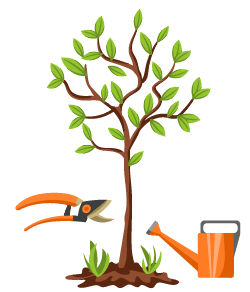
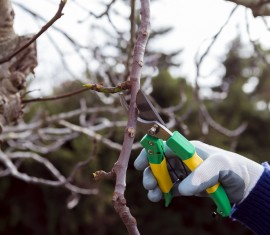
Many inexperienced gardeners make mistakes when pruning branches and shaping the crown, which can cause the tree to stop producing fruit for a while. Therefore, before picking up the pruning shears, seek advice from experienced people or search online. You should prune branches growing inward and those that interfere with the development of fruiting branches. And don't prune too much. Prevent the trunk from forking and promptly remove shoots that could cause this. It's better to remove a couple of large branches than a bunch of small ones. Remember to treat tree wounds with a disinfectant (for example, a mixture of copper sulfate and lime in a 1:10 ratio), and then apply garden pitch to the cut to protect against infection.
Improper care
It's not that the apple tree is a particularly capricious or capricious crop, but like many others, it requires properly selected, systematic feeding and regular watering. Trees growing in depleted soil will have nowhere to get nutrients, and consequently, you'll see few or no apples. The basic care guidelines are as follows: water around the crown (where the tiny absorptive roots are located) to wet the soil to a depth of 60–80 cm. Young apple trees (less than a year old) require 2–3 buckets of water, two-year-olds 4–5, trees up to five years old 8 buckets, and those older than five years old up to 10.
Fertilizer should be applied during watering. To ensure proper bud formation, apply fertilizers containing phosphorus, followed by nitrogen and potassium later. The frequency of mineral fertilizers per season should be 3-4 times.
The tree lacks light
An uncommon cause, but one that can't be ruled out: insufficient light leads to minimal fruit bud formation. Therefore, plan ahead for what will grow where in your area. Before purchasing a seedling, ask the seller: what is the approximate width of the tree's crown and how tall can it grow? Shorter plants will eventually end up in the shade of taller ones if planted close together, which will only cause discomfort.
In a large plot, establishing a garden is usually straightforward. In a small plot, however, it's best to stagger the plants: low-growing ones to the south, taller ones to the north. This way, everyone will have enough sunlight.
Apple tree diseases and pests
It's hard not to mention the numerous diseases and nasty pests that debilitate trees. Diseases don't directly cause a tree to fail to bear fruit in a given year, but they reduce its vitality, deprive it of the energy needed to set fruit buds, and weaken the immune system. There are few options: systematically and responsibly prevent various diseases and combat pests promptly.
Preventive treatment is carried out in spring (before flowering) and autumn (after the leaves fall) with fungicidal and insecticidal preparations (urea solution, 3% solution of Bordeaux mixture).
In the spring (late April - early May), it's a good idea to whitewash the trunk using the following mixture: mix 2.5 kg of lime with 600 g of copper sulfate and 250 g of casein or wood glue. Add the mixture to a bucket of warm water and mix. In the fall, loosen the soil around the trunk (this will help kill pests hiding there until warmer days and enrich the soil with oxygen).

Abundant fruiting the year before
If an apple tree produced a bountiful crop last year, there's a good chance the owner will be left without any apples next year. We recommend thinning out the blossoms (or ovaries) within a few weeks of flowering. This will help the tree regulate its own production in the future.
Even an inexperienced but hardworking gardener can easily harvest apples annually. You just need to follow a few rules. We hope our tips will help you.