How to get rid of ants on fruit trees
Before developing a system of measures designed to solve the problem of how to get rid of ants on fruit trees, it is necessary to understand the need for such an approach.
Content
Do you need to fight ants?
The intensity of the fight against ants depends on the damage caused to fruit trees by these common insects.
What benefits and harm do ants bring to the garden?
Ants are known to perform the following beneficial ecological functions:
- increasing soil aeration;
- destruction of various types of harmful insects, including sawfly caterpillars, which are dangerous to garden crops, as well as widespread butterfly caterpillars.
Inconvenience and serious damage from ants are observed if large populations of these insects appear in the garden plot:
- They settle in houses, damaging food and wooden buildings.
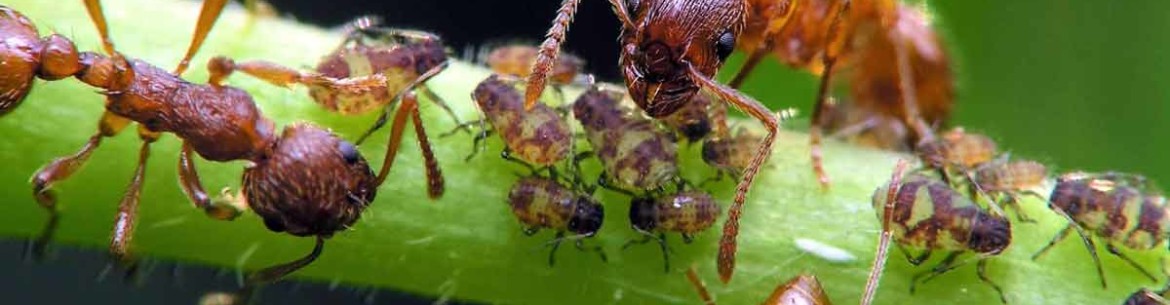
- Aphids spread among cultivated plants by feeding on the honeydew excreted by these pests. Aphids suck out plant sap, damaging the yield of fruit plants.
- Ants can spread some viral and bacterial infections.
- When building anthills, insects often damage plant roots.
If ants are causing damage in your garden, you need to consider measures to limit their population. Completely eradicating these insects, which easily adapt to any conditions, is impossible.
Reasons for occurrence
 A garden plot becomes an attractive place for ants to settle. This is explained by the rich food supply, including:
- plant residues;
- compost and manure heaps;
- plant seeds preserved in the soil;
- the presence of pests (especially aphids), whose sweet secretions serve as bait for ants.
Varieties
There are two most common species of ants that you can most often encounter in the garden.
Redheads
The red (wood) ant (Formica rufa) is distinguished by its reddish-brown coloration. The body length of these insects ranges from 7 to 14 mm.
In the wild, numerous colonies inhabit tall anthills constructed from plant material. In gardens, red ants typically inhabit crevices under buildings. Nests are not immediately found, which can lead to rapid population growth.
Garden black
The widespread black garden ant (Lasius niger) is smaller than the red species.
You can find anthills of these insects in different places:
- in the soil;
- inside rotting stumps, logs, boards;
- in hollows;
- under stones, flooring, and the foundation of a house.
Black ants keep aphid eggs in their nests over winter. In the spring, they spread the pests to surrounding plants, damaging future crops. Nests under buildings or path surfaces lead to gradual erosion and subsidence of the soil.
How to tell if your garden is being infested by ants
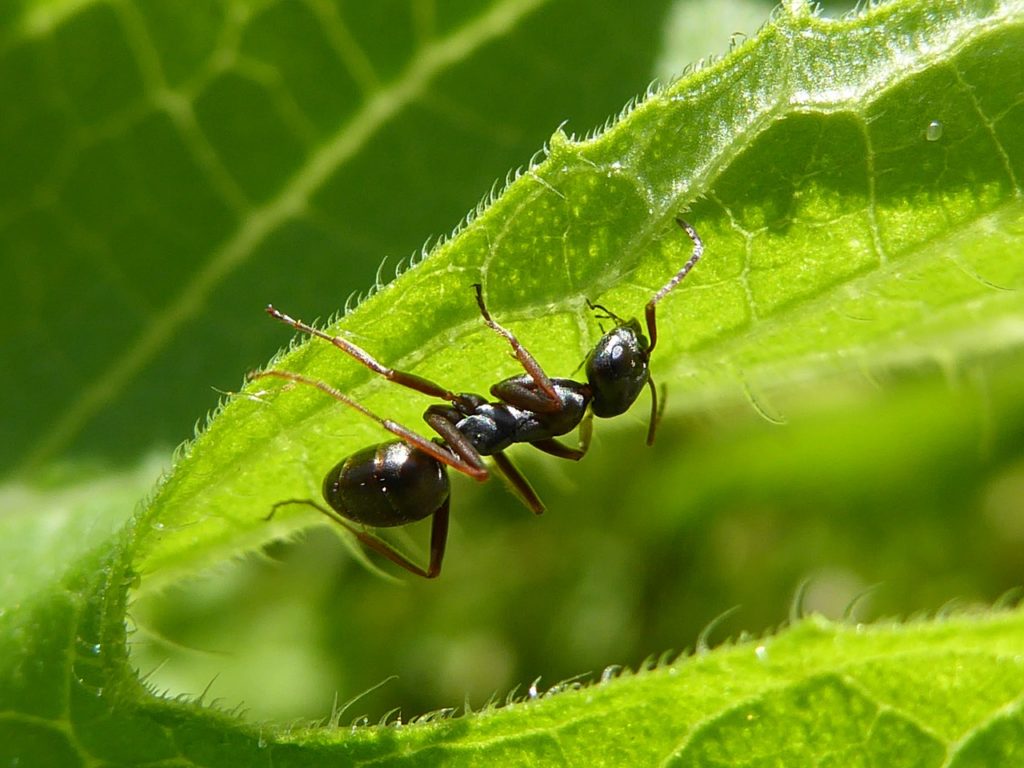 It's easy to spot ants in your garden if you regularly inspect your plantings. You can identify the presence of these insects by the following signs:
- the buds that swelled in early spring are eaten away;
- the fruits develop gnawed wounds on the outside, in which a fungal infection often develops (especially during prolonged damp weather);
- ant trails appear on the ground, branches, and trunks;
- mounds of loosened soil become visible on the surface, indicating the presence of anthills underneath them;
- The juicy tops of the shoots are strewn with numerous colonies of aphids.
How to protect trees
It's important to decide how to get rid of ants on fruit trees immediately. Several methods are used.

Barrier method
These methods are designed to protect your orchard from ants. The most effective options are:
- A tire cut into two halves is placed in a shallow groove around the trunk. The parts are secured by sprinkling soil on the sides and filled with water. Ants will be unable to overcome this barrier.
- White chalk, ground to a powder, is scattered evenly over the surface of the tree trunk circle. The base of the trunk is also rubbed. The chalk sticking to the ants' legs makes it difficult for them to move. The insects cannot climb the trunk.
- A cone-shaped piece is cut out of foil. Attach this skirt to the trunk. The slippery surface will deter insects. Some gardeners coat the foil with sunflower oil, the smell of which ants dislike.
Trapping belts
Various types of devices designed to catch or repel ants crawling on tree trunks are installed at a height of 20–50 cm above the ground. The minimum width of the trapping belts is 20 cm. The following options are used:
- Soak cotton wool in a carbolic solution. Wrap it around the trunk, securing it with twine. Due to the toxicity of the solution, remove the bandage after 3-4 days. Perform 3-5 treatments per season.
- Film strips, generously coated with solid oil, birch tar or resin, are attached to the trees.
- The trunks are wrapped with double-sided tape. The top layer is then removed to prevent insects from getting past the sticky surface.
- A clothesline is wound around a tree. Then it is coated with Vaseline, the layer of which is regularly renewed.
Impregnation
Special solutions are prepared and applied to the bark of tree trunks and skeletal branches. Effective options include:
- Grind the soot with fine salt and linseed oil until smooth. The ingredients are used in equal parts. The mixture should have a thick consistency. Coat the trunk in a strip 15–20 cm wide.
- Garlic cloves are crushed to a pulp and rubbed onto large skeletal branches and the trunk.
- Dilute bleach according to the instructions. Using a brush, apply a medium-strength solution to the trunk to a width of 25–30 cm.
Processing of trunks
Treating your orchard with ant repellents should begin in early spring. The following options are available:
- Combine 400 g of laundry soap, finely ground into shavings or powder, with 2 tablespoons of carbolic acid. Add 100 ml of kerosene. While stirring, dilute the mixture with 10 liters of warm water. Pour this solution into any discovered anthills, treat ant trails, and spray the trunks of trees.
- Grind 30 g of dried wormwood (you can use 300 g of fresh herb). Pour 10 liters of warm water over it. Let it steep for 5–6 hours. After straining, spray the crown, branches, and trunks.
- During the active fruiting stage, berry bushes and fruit trees are treated with a solution prepared from baking soda (5 g) combined with linseed oil, of which 30 g is required. The mixture is diluted with a liter of water.
Professional traps
For quick results, ant traps are set up on fruit trees using specialized chemicals. These include the following varieties:
- "The Great Warrior." The gel is packaged in syringes. The bait is applied to the bark in small strokes, spaced 3–5 cm apart. This trap is effective for about 3–4 weeks. Attracted by the sweet aroma, ants consume the toxic bait and carry it back to the nest on their feet.
- "Thunder". This granular product provides long-lasting protection. It is scattered around tree trunks and remains effective for at least a month.
- "Ant-eater". Using this solution, prepare it according to the instructions and spray it on the trees. The poisonous liquid can also be poured into any excavated anthills that have been discovered.
- "Clean House". This highly effective gel is available in syringes and lasts up to two months under various weather conditions.
The toxic product "Clean House" is not recommended for application to the bark during the fruiting stage. It is placed on small lids or pieces of cardboard under the crown of the tree on the ground surface.
Preventive measures
When deciding how to protect fruit trees from ants, the following effective preventative measures are used:
- clear the area of fallen leaves, debris, and organic matter;
- regularly loosen the soil under the trees, destroying any ant nests that are discovered;
- When digging, add ash to the soil, which repels ants;
- Insect nests found in tree hollows are removed and then treated with insecticides.
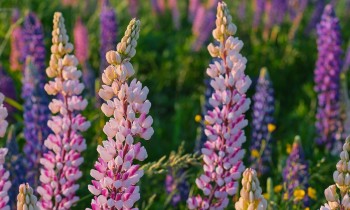
Many gardeners plant plants under their canopies whose scent repel insects. These include lavender and calendula. Mint and wormwood also produce good results.
Ants appearing in large numbers in a garden plot can cause significant damage to fruit crops. Various methods are used for protection. The most effective method remains timely and systematic prevention.