Columnar fruit trees: pros and cons of growing them on a plot
Columnar fruit trees have a distinctive shape reminiscent of columns or candles. These trees have short, upward-facing lateral branches and a vertical trunk, and can include apple, pear, plum, cherry, and other trees. In this article, we'll explore what columnar fruit trees are, their pros and cons, and the basic aspects of their care.
Content
General characteristics of columnar fruit trees
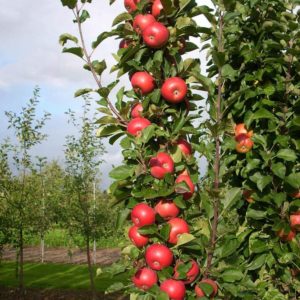
Columnar fruit trees differ from regular trees in that they have a significantly reduced apical dominance—a hormone that suppresses the growth of lateral branches. This prevents them from spreading outward and creating shade.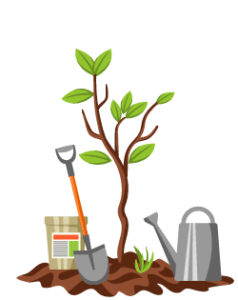
Description of columnar fruit trees:
- the height can reach 2–4 m, and the width – 30–50 cm;
- fruiting begins in the second or third year after planting;
- yield - up to 20 kg per tree;
- the fruits are large and juicy.
The fruits are well suited for fresh consumption, canning and processing.
Next, it is worth considering the main advantages and disadvantages of columnar fruit trees.
Pros
 Columnar fruit trees have many advantages over regular ones:
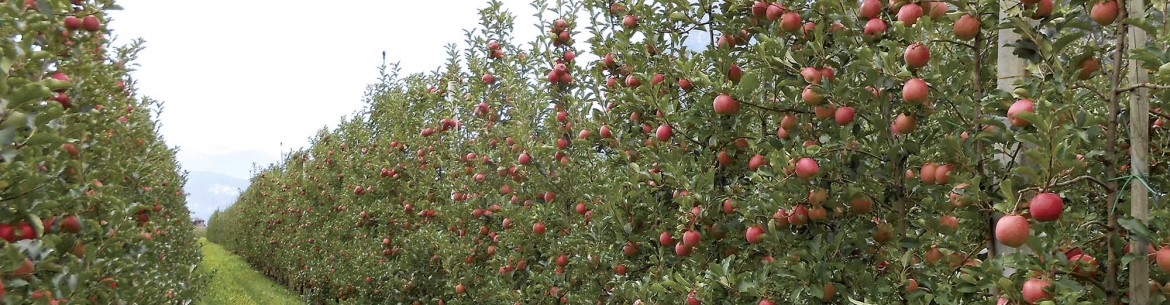
- They save space on your plot. You can plant up to 10–15 trees per 100 square meters of land and get a varied harvest.
- They are easy to plant and transplant. Columnar trees have a small root system and don't require large planting holes.
- They easily tolerate transportation and adapt to new conditions.
- Easy to harvest. The fruits grow on short branches located along the trunk, making them easily accessible for picking. No ladders or other tools are required.
- They look beautiful on a property. They create a unique landscape effect and can be used as a hedge or decorative element.
Cons
Columnar fruit trees also have some disadvantages that need to be taken into account when growing:
- They require special care, as they need regular watering, fertilizing, pruning and protection from pests and diseases.
- Sensitive to frost and wind (may freeze or break).
- They have a limited lifespan. They typically live 10 to 15 years and eventually lose their decorative appeal and fertility.
- They can degenerate and produce small or poor quality fruits.
- The cost is higher than that of ordinary fruit trees, but they require more maintenance and protection.
- Difficult to find on sale.
Columnar varieties of fruit trees
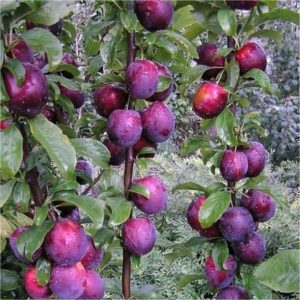
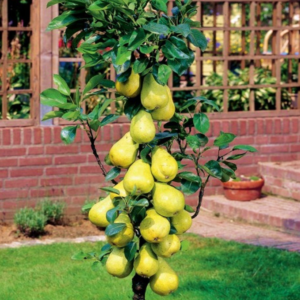
Now it's time to figure out which fruit trees are columnar. The most common ones are:
- Apple trees. These are the most popular columnar apple trees. There are over 50 varieties of columnar apple trees, each with a different color, shape, and flavor. For example, the President variety produces large red apples with white flesh and a sweet flavor. The Aragon variety produces small yellow apples with a sweet-tart flavor and a pineapple aroma. The Ballerina variety produces narrow pink apples with crisp flesh and a pleasant aroma.
- Pears. Less well-known, but no less delicious, are columnar pear trees. There are about 20 varieties of columnar pears, each with a variety of sizes and colors. For example, the Decora pear is large, yellow-green, with juicy flesh and a sweet flavor. The Carmen variety produces small, brown pears with firm flesh and a sweet-tart flavor. The Venus variety produces medium-sized, green pears with tender flesh and a fragrant flavor.
- Plums. Rare but highly prized columnar trees. There are several varieties of columnar plums with fruits in varying shades of purple. For example, the Purple Beauty variety produces large, dark purple plums with soft flesh and a sweet flavor. The Violet variety produces medium-sized, light purple fruits with firm flesh and a slightly tart flavor. The Sapphire variety produces small, dark blue plums with juicy flesh and a fragrant flavor.
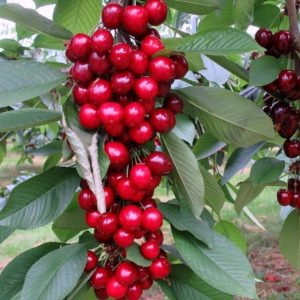
- Cherries. These are beautiful trees with delicious fruit. There are about 10 varieties of columnar cherries, each with a different shade of red. For example, the Rubin variety produces large, dark-red cherries with firm flesh and a sweet flavor. The Ambre variety produces medium-sized, light-red cherries with tender flesh and a sweet-tart flavor. The Crystal variety produces small, bright-red cherries with crisp flesh and a refreshing taste.
The right choice of columnar seedlings
To ensure columnar fruit trees grow well and bear fruit, it's important to choose the right seedlings. Here are some tips on what to look for when purchasing:
- Choose healthy and high-quality seedlings. They should be free of damage, disease, and pests. The trunk should be straight and thick, and the roots well-developed and moist. It's best to buy seedlings from specialized nurseries or reputable online stores.
- Choose varieties that are appropriate for your climate and soil. Columnar fruit trees can be winter-hardy or heat-loving, early-maturing or late-maturing, self-fertile or pollinated by other varieties. Consider these factors when choosing varieties for your region and site.
- Choose different species and varieties to diversify your harvest. Columnar fruit trees can be combined by species and varieties to produce different types of fruit at different times of the year. For example, you can plant columnar apple trees of early, mid-season, and late ripening to have apples from summer to fall. Or you can plant columnar pears, plums, and cherries to produce a variety of colors and flavors.
Planting columnar fruit trees
To ensure columnar fruit trees take root and thrive, they need to be planted correctly. Here are some tips:
- Choose a suitable landing site. These trees prefer sunny, wind-protected locations. They do not tolerate shade or standing water. The soil should be fertile, loose, and well-drained.
- Prepare holes for planting. The holes should be large enough to accommodate the roots of the seedlings. Typically, they are 40 x 40 x 40 cm. A drainage layer of stones or crushed stone should be placed at the bottom of the hole, followed by a layer of fertile soil with some compost or humus added.
- Plant the seedlings at equal distances. Columnar fruit trees should be planted at a distance of 50–70 cm from each other within a row and 1–1.5 m between rows. This will prevent them from interfering with each other's growth and fruiting. Seedlings should be planted so that the root collar is at ground level or slightly above. The trunk should be supported with stakes or supports.
- Water and cover the seedlings. After planting, the seedlings should be watered thoroughly and covered with a mulch of straw, sawdust, or peat. This will help retain moisture in the soil and protect the roots from overheating or freezing.
In the first year after planting, the tree needs to be watered regularly and abundantly, especially in hot and dry weather.
Caring for columnar fruit trees
To ensure that plants grow well and bear fruit abundantly, you need to know how to care for columnar fruit trees.
Top dressing
Columnar fruit trees require regular and balanced nutrition. They require a lot of nitrogen, phosphorus, potassium, and other micronutrients. Fertilizing should be done several times a year:
- In spring, before flowering begins, you need to feed the trees with a nitrogen fertilizer, such as nitroammophoska. This promotes green growth and fruit formation.
- In summer, after flowering During the fruit ripening period, trees should be fed with phosphorus-potassium fertilizers, such as superphosphate or potassium salt. This will improve the quality and quantity of fruit.
- In the fall, after the harvest Before frost sets in, apply organic fertilizer, such as compost or humus, to strengthen the roots and increase winter hardiness.
Fertilizers should be used in liquid form, dissolving the preparations in water and watering the trees at the roots.
Avoid overfeeding trees, as this can lead to excessive growth of green mass and decreased fertility.
Trimming
Pruning is necessary to maintain the plant's shape and fertility. It is recommended to perform this procedure twice a year:
- In spring, before the sap begins to flow, you need to remove damaged, dried, or diseased branches. Also, prune any branches that are too long or low. Avoid pruning the top of the trunk, as this can disrupt the tree's shape and reduce its fruitfulness.
- In the fall, after the harvestTrees should be pruned to shape the crown and improve ventilation. Remove excess or crossing branches, as well as those growing inward or away from the trunk. Avoid pruning too many branches, as this will weaken the tree and make it vulnerable to frost.
Pruning should be done with sharp, clean pruning shears, making even and smooth cuts. To prevent disease or pest infestation, treat the cuts with garden pitch or another preservative.
Preparing for winter
Columnar crops require winterization to protect them from frost and wind. This should be done in late fall or early winter:
- Hill up the treesHilling is the accumulation of soil around the tree trunk to a height of 20–30 centimeters. This helps protect the roots from freezing and prevent the soil from freezing.
- Cover the treesVarious materials can be used to provide shelter from frost and wind, such as agrofibre, burlap, mesh, or film. The shelter should be secured to supports or stakes to prevent it from being blown away and damaging the tree.
- Wrap the treesTree wrapping is the process of wrapping the trunk and branches of a tree with material to protect them from rodents and sunburn. Various materials can be used, such as spruce branches, matting, paper, or special tape. The wrapping should be tight, but at the same time, it must be done carefully to avoid damaging the tree's bark.
Columnar fruit trees are an excellent choice for those looking to harvest fresh, delicious fruit on their property. They save space, are easy to harvest, and are quite attractive. If you follow proper cultivation practices for these trees, you'll enjoy their beauty and delicious fruit for many years to come.