Top 8 fruit trees for the Moscow region
The Moscow region is located in central Russia. This area is quite risky for gardening. Despite the full seasons, not all common crops thrive here. Fruit trees for the Moscow region must be selected with extreme care, as purchasing the wrong varieties can result in a failed harvest.
Moreover, fruit trees here require special care, as the temperate zone has a unique climate: hot summers and cold winters, with lots of snow and frosts arriving quite early. Such weather fluctuations can easily ruin even the most resilient crops. Therefore, before heading to the nursery for your next seedlings, familiarize yourself with the guidelines for selecting fruit trees for your region.
Content
Features of the climate and soils of the Moscow region
Although many associate the central part of the country with a temperate climate, in reality, this region is considered a risky agricultural zone. The Moscow region is a particularly prominent example of this climate. Fruit crops for a garden in the Moscow region must be selected especially carefully, taking into account the following climate nuances:
- high levels of air humidity (even in cold seasons);
- prolonged rains (especially in autumn and spring);
- summers are not too hot (although in the last few years abnormal heat may set in in July for several weeks);
- the winter is cold and prolonged, the snow cover is unstable (freezing rain is also possible);
- early frosts, often recurrent (so the entire crop can be lost in a couple of days).
As for soils, the most common in the region are low-fertility sod-podzolic soils. At higher elevations, loams and clay soils can be found, while in the lowlands, in addition to sod-podzolic soils, marshy, sandy, and sandy loam soils are found.
Almost all soils in the Moscow region require additional fertilizers to increase fertility.
Fruit tree requirements for the Moscow region
Frost resistance of crops is not the same as winter hardiness. Therefore, even the most frost-resistant fruit crops may not survive the climate of the Moscow region. Frost resistance means a plant can withstand extremely low temperatures for a short period of time (for example, temperatures down to -40°C). Winter hardiness, on the other hand, indicates a crop's resilience to various weather changes (for example, sudden temperature changes, sudden frosts in the fall or after a thaw, etc.).
Thus, frost-resistant fruit crops planted in the Moscow region can easily survive a consistently cold winter, but can be damaged by the climatic fluctuations that typically occur in the spring or fall in this region.
For these reasons, special requirements are imposed on fruit trees and shrubs intended for planting in the Moscow region:
- Apple treesIt's best to have a mix of varieties with different ripening times and winter hardiness in your garden. The optimal ratio (if you have a basement for storing your harvest) is: summer varieties make up 20% of your plantings, fall varieties 30%, and winter varieties 50%. If you don't have space to store your harvest, it's best to plant fewer winter varieties.
- PearsMost pear varieties thrive in the Moscow region. Both summer and fall/winter varieties can be planted in the garden.
- CherryCherries are quite capricious. They absolutely hate sudden spring frosts, so it's best to choose the most winter-hardy varieties. If you plan to plant self-sterile crops, you'll need other trees in the area for pollination.
- CherriesSweet cherries are rare in the central and northern regions. However, there are several varieties suitable for colder climates. Proper care is essential.
- PlumsThese are the most undemanding fruit trees. They can be propagated by grafting onto cherry plum or plum seedlings.
- Cherry plum. It's a fairly climate-tolerant crop, like its relative, the plum. However, it's important to remember that cherry plum is self-sterile, so it will require pollinators.
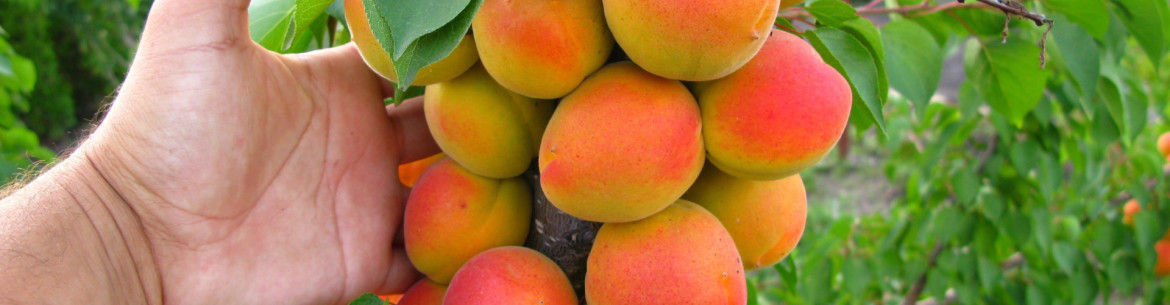
- ApricotsThey tolerate the frosts of the Moscow region quite well, but spring frosts can be dangerous. It's better to be on the safe side and choose the most winter-hardy varieties, and also try to provide the fruit trees with maximum protection during the period of flower bud formation. To ensure good fruit production, you'll need several varieties of apricots in your plot.
- Sea buckthornSea buckthorn is a dioecious plant, so an additional male specimen should be planted immediately in the area (and it should be planted on the windward side). Sea buckthorn propagates by layering and cuttings. It tolerates climate fluctuations well.
The best fruit tree varieties for the Moscow region
Fruit tree varieties for the Moscow region need to be carefully selected. They must be not only frost-resistant but also winter-hardy to withstand the weather fluctuations that are common in this region.
Apple
Today, there's a wide selection of apple varieties ideal for the Moscow region. Here are the most popular:
- summer (cannot be stored longer than 14 days) – Konfetnoe, Yubilyar, Orlinka, Bely Naliv, Arkadik;
- autumn (stored for about 1-3 months) – Antonovka, Skala, Solnyshko, Kurnakovskoye;
- winter (can be stored for 6 months or longer) – Bogatyr, Lobo, Charodeyka, Severny Sinap, Veteran, Orlovskaya Zarya, Imrus.
It is worth mentioning separately the popular columnar varieties, which grow up to 2 meters and are early fruiting:
- Chervonets;
- President;
- Currency;
- Baby.
Pear
As mentioned earlier, pears tolerate the Moscow region's climate very well. Many varieties are suitable for growing in local gardens, so we'll list only the most popular:
- summer (cannot be stored) – Cathedral, Memory of Vavilov, Severyanka, Chizhovskaya;
- autumn (can be stored for no longer than 1 month) – Veles, Moscow Bergamot, Nadezhda, Moskvichka.
Apricot
For the Moscow region, try to choose varieties that are most resistant to sudden frosts:
- Countess;
- Favorite;
- Alyosha;
- Iceberg;
- Lel;
- Aquarius;
- Monastic.
Cherries
Sweet cherries are less popular in the Moscow region than sour cherries, but several interesting varieties can still be found here:
- early ones – Early Sadko, Krasnaya Gorka, Ovstuzhenka;
- mid-season – Rechitsa, Teremoshka;
- late ones – Tyutchevka, Revna.
Cherry
The most popular hybrids are:
- Zhukovskaya;
- Beauty of the North;
- Nurse;
- Strong.
Plum
You can pay attention to any types that interest you:
- Memory of Timiryazev;
- Alexey;
- Blue Gift;
- Yakhontovaya;
- Early fruiting;
- Zarechnaya early;
- Morning;
- Opal;
- Chinese;
- Victoria and others
Cherry
Among the most popular cherry varieties suitable for the Moscow region are:
- Youth;
- Ruby;
- Crimson;
- Vladimirskaya;
- Vole,
- Chocolate Girl;
- Shakirovka;
- Volga;
- Morozovka.
Cherry plum
Popular varieties of cherry plum:
- early ones – Scythian Gold, Found, Tent;
- late varieties – Sigma, Promen, Podarok Sankt-Peterburgu.
Sea buckthorn
The following sea buckthorn varieties are ideal for the Moscow region:
- Orange;
- Vitamin;
- Amber;
- Pepper.
Helpful tips
Of course, knowing which fruit trees grow well in the Moscow region is important. But equally important is proper care of the planted crops. Therefore, we recommend heeding the following advice:
- You should only purchase the right seedlings from nurseries. Anything sold at markets or along the roadside is a pig in a poke. No one can guarantee that it's the right variety, that the seedling is healthy, or that it meets all the stated characteristics.
- Avoid planting a large number of seedlings with the same maturity date in the same plot at once. This will create unnecessary difficulties during processing and storage of the harvest.
- Give preference to domestic varieties that have been grown in our country for a long time and are proven. Foreign crops may simply not tolerate the local climate.
- Carefully prepare your plants for winter. Provide them with sufficient moisture and nutrients. Train the crown to prevent strong winds or ice buildup from breaking the shoots. Fertilize and treat for pests. Make life easier for you and the plant in these challenging climates.
Conclusion
Many people believe that the Moscow region is a fertile area for farming. In fact, this is not the case. The Moscow region is considered a risky area, where only a limited number of fruit varieties can be grown. This should be taken into account when planning your plantings and stocking your garden.