How to get rid of undergrowth on your property
A summer cottage requires a lot of work. Not only do you need to plant and care for various plants, but you also need to combat the dense undergrowth that forms around the trees. Various methods can be used for this: mechanical, biological, and chemical, and even a combination of these. Fighting undergrowth is quite difficult. Below are several effective methods that will definitely help you get rid of undergrowth on your property.
Content
Reasons for the appearance of shoots
Most fruit trees develop suckers. These sprout from dormant buds on the roots, trunk, and base of trees and shrubs. This is highly undesirable, as it reduces the tree's nutrition and inhibits its growth.
This problem often arises when growing fruit trees such as plum, cherry, apple, and cherry plum. These fruit trees can cause a variety of problems.
Typically, shoots appear after winter damage, but there are other reasons:
- The tree is planted in the wrong location. For example, if a tree grows in the shade of another tree, it will suffer from a lack of light and nutrients. The tree will try to find new life by using root suckers located away from the trunk.
- The ties weren't removed in time. If the ties aren't removed promptly, they will cut into the trunk and branches as the tree grows. As a result, the roots won't receive the nutrition they need. They'll begin to support themselves by creating new shoots. For this reason, ties shouldn't be tied too tightly to the trunk or branches. It's also important to remove them promptly.
- Underwatering. In this case, water will not reach the roots. If the tree doesn't have enough moisture, it will begin to form roots near the soil surface. It's important to maintain watering schedules that take into account the soil's properties.
- The tree was planted at the wrong depth, leaving its roots exposed. Exposed roots will encourage suckers to form. The roots need to be covered with soil.
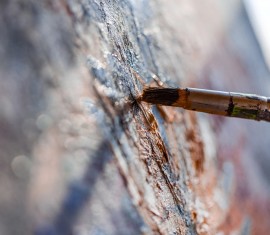
- Mechanical damage to a tree can contribute to the growth of suckers. This includes burns, breaks, bark damage, and other injuries. This can be caused by physical impact or adverse environmental factors. Any damage detected should be sealed with garden varnish.
- Excessive tree pruning. If a tree is pruned too severely, it will resort to using any available means to replenish its lost green mass, creating new shoots.
- Incorrect grafting: if there is incompatibility between the rootstock and scion, the metabolism will be disrupted.
There are other reasons why a tree may develop suckers. The reasons listed above are the most common.
Where does growth most often appear?
When a tree tries to preserve its genus, it begins to form suckers, which are quite difficult to remove. Removing them is essential, as the suckers will rob the tree of some of its nutrients, stunting its growth. These suckers usually form close to the tree, but they can also grow on the trunk.
Methods of combating shoots
All methods of combating shoots in the garden can be divided into two groups: mechanical removal and control using herbicides.
Digging with root removal
This method can be used at any time of year. A regular shovel is used. Sometimes a hatchet will be necessary. The shoot is removed along with the root. When digging, collect all the extracted roots. To remove small roots, loosen the soil with a rake. If the area to be cultivated is large, a walk-behind tractor or tractor is used.
Continuous mowing
Regular mowing involves cutting back undergrowth as close to the ground as possible. New shoots must be mown regularly to completely eliminate them. This method will help give the garden a well-maintained appearance.
Stump burning
Trees that have been cut down often sprout new shoots. Their vigorous growth will distort garden paths and patios. Completely uprooting the stump is quite a labor-intensive undertaking.
A stump won't rot quickly on its own; it will take a long time. Stump removal can be accomplished using specialized equipment.
It's also possible to destroy a stump from the inside. To do this, light a fire on it. This will damage the core, preventing re-growth. The roots will gradually be destroyed. Alternatively, using a saw or other tools, you can trim the stump as close to its base as possible. This will accelerate root rot, and the stump will begin to decompose naturally. Boiling hot water can also be used. If you pour it on the stump's roots, they will gradually disintegrate.
Dark coating for the area
Active sprouting can be reduced by limiting its exposure to light. After the shoots are mown down, the area is covered with dark plastic. Agrofibre can be used for this purpose.
This method will prevent weeds from growing, making vegetable crops and berries easier to care for. The laid material is covered with a layer of soil and the lawn grass is sown.
Digging in the barrier fence
This method involves placing a fence made of boards or slate around the tree or bush. The material is buried at least 30 cm deep. Ready-made tree boxes are also available.
Chemistry
Chemical control of weeds in the garden is also possible. This is a simpler option. This method involves the use of herbicides, saltpeter, and salt. However, this method has a drawback: the chemicals leach into the soil. Most people prefer to grow clean fruits and vegetables without chemicals. After using this method, the weeds begin to dry out. They then need to be dug up by hand or cut off with pruning shears.
The following chemicals are usually used: Roundup, Tornado and others.
The use of these broad-spectrum herbicides is carried out taking into account the following rules:
- The chemical is applied to green mass and soil.
- To increase efficiency, the solution is introduced into holes drilled in the barrel.
- The treatment is carried out several times to completely get rid of the growth.
Mulching
Mulching is a process in which the soil is covered with a specific nutrient mixture. To combat undergrowth, mulching with a layer of green material, sawdust, or straw can also be used. This can help stop the active growth of shrub shoots. All undergrowth must be cut off. The area is then covered with a thick layer of covering material.
Manure or compost can also be used as mulch. The layer should be at least 10–15 cm thick to block sunlight. This will provide good fertilizer for fruit trees and vegetable crops the following year.
The methods listed above will help you control the growth of fruit and wild plants in your garden. If you carry out the treatment carefully and regularly, the unwanted growth will be tamed and the soil will be prepared. Careful and regular treatment will quickly tame the unwanted growth and prepare the soil for planting any crops.