What to do if your apple tree isn't bearing fruit and why is this happening?
What should you do if your apple tree refuses to bear fruit? How can you help it regain its strength? To understand this, you need to eliminate the causes preventing it from producing fruit. Our article will help you understand these issues.
Content
Why doesn't the apple tree bear fruit?
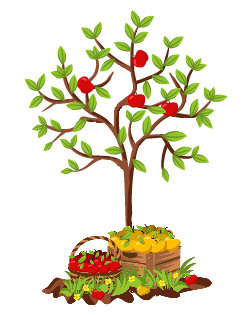 There is no fruiting due to the following reasons:
- incorrect landing;
- young age;
- old age;
- excess or deficiency of microelements;
- damage to flower buds;
- wrong watering;
- poor pollination of flowers;
- damage by diseases and pests;
- adverse weather conditions;
- increased yields in previous years.
Columnar
Gardeners love this apple variety for its compact size. However, caring for it has its own unique challenges. Reasons for poor fruiting include:
- Incorrect choice of variety and soil. The variety must be appropriate for the climate. Apple tree roots often freeze and suffer from high humidity. This is taken into account when choosing soil.
- Excess of lateral branches.
- A large number of ovaries. The tree trunk is weak. The abundance of ovaries puts a lot of strain on it. You should leave twice as many ovaries as you want to harvest. They should be thinned out.
- Incorrect pruning. When shortening branches, leave cuttings 2–3 cm long. These will be the ones that will produce the future harvest.
- Heat-loving. Trees need protection from cold and good shelter. Tree trunk circle mulch straw and burlap. In the spring, the crown is insulated.
- Incorrect planting. Choose a planting site with moderate light. The hole for the seedling should be 1 m deep and 1 m long, but the collar should not be dug too deep. Avoid groundwater. Leave 4–5 m between trees.
- Intensive growth. The tree expends a lot of energy during rapid growth. A young apple tree should be 2–2.5 m tall, while a mature tree should reach no more than 4 m. Growth should be limited and tops pruned.
Old
Apple trees begin to bear fruit at a certain age. The time of fruiting depends on the variety. Trees begin to bear fruit well at 4–5 years of age. Some varieties begin to fruit at 2 years of age, while others reach maturity at 6–8 years of age or later.
Old apple trees are rejuvenated by pruning. Another solution is to dig up the tree and replace it with a new sapling.
Apple tree 6-10 years old
For an apple tree to begin bearing fruit, it must become strong and develop strong roots and a crown. Fruiting times vary for each tree:
- some form fruits after 4–5 years;
- others - in 6-10 years.
The absence of fruits may be due to the following reasons:
- the variety is not suitable for your region;
- the planting location was chosen incorrectly, the soil is infertile;
- dense crown, incorrect pruning;
- no pollinating plants;
- irregular watering;
- the tree has been damaged by diseases or pests.
Why doesn't the apple tree bear fruit or bloom?
Fruit tree does not bloom and fails to bear fruit for various reasons. Fruiting depends on age, planting, and care. It's important to determine the cause of the problem.
Excess and deficiency of mineral nutrition
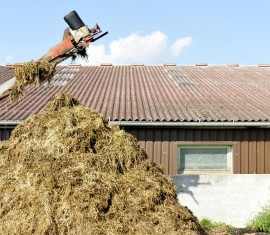
 It is important to dose fertilizers correctly. Excess or deficiency of nitrogen fertilizers can cause crop failure. Nitrogen fertilizers include organic ones, such as manure And humusIf you have already fed the plants with organic matter, then nitrogen is no longer required.
Incorrect landing
Mistakes made when landing:
- make poor quality soil;
- allow the proximity of groundwater;
- they go deep root collar;
- deform the trunk: tilt or bend it;
- They choose the wrong place: the north side, at an angle.
As a result of mistakes, the tree begins to bear fruit one to three years later.
Poor pollination of flowers
Apple trees require cross-pollination. Two or three apple trees that bloom at the same time should be planted nearby. Low or high humidity reduces the number of insects, making pollination more difficult.
Incorrect pruning
It's important to monitor branch placement. Tree crowns require adequate sunlight. This requires proper crown formation. Too many branches will shade the tree, and excessive pruning will reduce the yield. The tree will waste energy restoring its crown, and there will be no yield. The lower branches will dry out.
Young apple tree, varietal characteristics
Not all apple trees bear fruit every year due to varietal characteristics. These include Malinovka, Grushovka, and Antonovka. Some varieties are not suitable for your region due to climate conditions. These apple trees do not tolerate high or low temperatures and are susceptible to insect pests.
Flower bud damage
Frosty winters and poor shelter damage buds. In winter-hardy varieties, buds are damaged by late spring frosts, while in varieties with weak winter hardiness, winter frosts damage buds. Buds are also attacked by tree pests.
Incorrect watering
Proper watering will ensure a good harvest. Different seasons require different amounts of water.
During the summer, apple trees are watered 4 times:
- Before bud break.
- 2 weeks after flowering.
- 3 weeks before harvest.
- In October.
Watering is done in three ways:
- along furrows, along ring-shaped holes around the trunk;
- sprinklers;
- drip irrigation.
The amount of water depends on the age of the plant:
- apple trees up to 5 years old - 6-8 buckets;
- 6–10 years – more than 12 buckets;
The soil should be moist to a depth of 60–80 cm.
Water consumption is determined by the area of land covered by the crown.
Root collar should not get wet.
Damage by diseases and pests
In April, apple trees appear in the gardens flower beetleIts presence is indicated by black, dry spots, webbing, and damage. If immediate action is not taken, the entire harvest can be lost within a few months. Up to 80–100% of apples will be lost. Pest control begins immediately. Nothing can be done in May or June.
The sooner pests are detected, the higher the chance of preserving the future harvest.
Apple trees periodically get sick. Preventative measures are taken before the disease occurs. The following steps are necessary:
- spraying against infectious diseases;
- treatment of wounds on tree bark;
- cutting down branches showing signs of disease;
- cleaning tree trunk circles;
- identification of the onset of the disease;
- selection of planting material resistant to diseases.
Adverse weather conditions
Climate conditions can adversely affect the harvest. Frost damages ovaries, causing the apple tree to drop them or fail to produce new ones.
What to do if the apple tree does not bear fruit
If an apple tree isn't producing fruit, the cause should be determined. Factors preventing fruit formation must be identified and eliminated.
Pests have settled in
 Pest control is carried out in several directions:
- In early spring, before the buds swell, apply bark to the lower part of the trunk trapping beltsThey prevent insects from climbing up the tree.
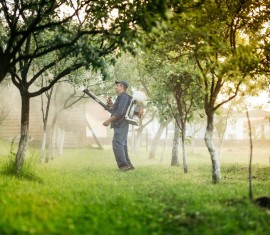
- Insecticides used include "Benzophosphate," "Karbofos," "Fitosporin-M," "Trichlorol-5," and others. The first treatment is done before bud break, and the second two weeks after flowering.
- Attract insectivorous birds to the garden;
- Don't forget preventative measures:
- loosening tree trunk circles;
- removal of fallen leaves, diseased and dry branches.
Do not spray with chemicals during flowering! This can destroy beneficial pollinating insects.
Watering
During apple ripening, water is applied in furrows around the crown when there is no moisture.
If there are a large number of ovaries, more water is needed than apple trees with a small number of apples.
Planting a plant
The harvest will please you if you follow the rules:
- buy seedlings with strong roots and a straight trunk;
- do not plant on a shady or windy slope;
- try to straighten the irregular shape of the trunk;
- When planting, leave the root collar above the soil surface;
- plant in a hole with fertilized, watered soil.
Pollination problem
The pollination problem can be solved in the following ways:
- plant trees that bloom at the same time as apple trees;
- grow plants in the garden that attract insects for pollination (sunflower, thyme, bird cherry, asters, dahlias);
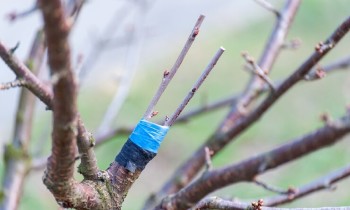
- graft a pollinator branch.
Trimming
Try to prune wisely:
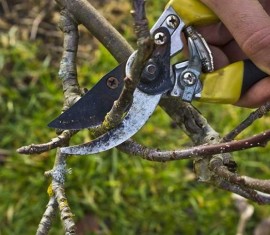
- once a year in spring or autumn, remove old, damaged, crooked branches;
- treat the cuts with a disinfectant and cover them with a sealant garden pitch;
- young shoots should be directed to grow outward, and not towards the center of the crown;
- thick vertical branches can be set into a horizontal position using weights or a rope can be tied to the branch, pulled and aligned parallel to the ground.
Don't prune too many old branches at once. The tree will begin to regenerate its crown, which will compromise fruiting.
To ensure a regular harvest, you need to follow some simple rules. The methods you've learned in this article will help you achieve a good harvest. First, you need to determine the reason for your apple tree's lack of fruit. By addressing this issue, you'll enjoy a bountiful harvest each year.