
Why didn't the apple tree wake up after winter?
An apple tree that doesn't wake up after winter is a common problem for gardeners. This can be caused by several factors. To properly revive the tree, it's important to understand each of them.
Content
Reasons for apple tree dormancy
Abundantly blooming fruit trees are not only a vibrant sight but also the key to a good harvest. A lack of bloom indicates one or more problems, which can only be resolved by a thorough inspection of the apple tree.
Incorrect pruning
Incorrectly performed pruning of an apple tree often results in the absence of flowering and foliage growth:
- severe pruning – with the onset of spring, all the tree’s energy goes into growing new branches;
- Excessive crown density – unremoved branches (damaged, old and growing incorrectly) create a nutritional deficiency, significantly weakening the apple tree.
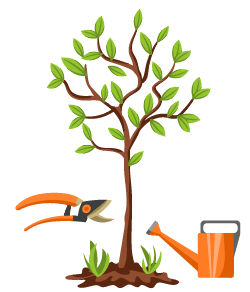
Fruit trees require careful sanitary pruning once a year to remove unnecessary branches. Mature fruit trees, on the other hand, require additional pruning for rejuvenation.
Vertically growing branches
Excessive upward growth of apple tree branches is one of the reasons for the lack of blooms, as fruit can only develop on horizontally positioned branches. This problem can be solved by driving stakes around the trunk and running ropes from them to the branches to ensure horizontal support. Some gardeners replace the stakes with heavy weights hanging from the branches, weighing them down and preventing them from breaking.
Incorrect planting of seedlings
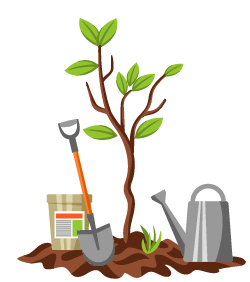
Planting the root collar too deeply or too shallowly not only results in a lack of flowering but also the death of the young tree. Ideally, the top root should be 3 cm below the topsoil. Incorrect root placement can be corrected by digging it out or covering it with soil.
Spring frosts
Sudden temperature fluctuations in spring are a common cause of fruit trees not waking up. Buds that have barely formed can't withstand the frosts and die. As a result, branches remain bare throughout the growing season. Bark grooving can help wake up an apple tree. To do this, make small vertical cuts no longer than 7 cm in the bark.
Mechanical damage
Bark damage occurs in early spring due to the harsh effects of sunlight. Typically, the junctions of the trunk and branches, where the bark is particularly thin, are affected. A reddish-brown tint on the surface of the bark indicates burn. When significant damage occurs, the tree devotes all its resources exclusively to restoration.
In addition to sunburn, damage can occur due to the weight of snow or ice that accumulates on branches during the winter.
Deficiency or excess of fertilizers
High levels of nitrogen fertilizers in the soil inhibit bud formation. These fertilizers should be applied in the optimal amount once a year, in the spring. During the summer, it is recommended to feed apple trees with potassium and phosphorus fertilizers. Humate and boron fertilizers can also be added.
Incorrect watering
Insufficient or excessive soil moisture is a factor that negatively impacts the spring awakening of an apple orchard. When watering fruit trees, it is important to adhere to the following watering rate per 1 m2 of the tree trunk circle:
- 1-2 year old trees – 2-3 buckets;
- 3-5 year olds – 5–8 buckets;
- 6 years and older – 10 buckets.
The soil in the tree trunk circle should be moist to a depth of at least 80 cm.
Invasion of harmful insects
During the period of bud and flower formation, weevil larvae and flower beetles cause particularly severe damage. In a very short period of time, these pests can destroy up to 90% of flowers and leaves. Control measures for these harmful insects include:
- treatment with insecticides and preparations prepared according to folk recipes;
- wrapping the lower part of the trunk with trapping belts.
Rodent attacks
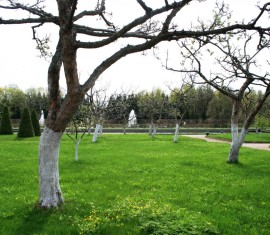
A tree heavily gnawed by mice and hares during the winter lacks the resources to form green mass. Whitewashing the trunks helps protect against rodents, and adding tar significantly enhances the effect. Experienced gardeners recommend wrapping the trunk with old nylon tights soaked in resin. The smell of this substance repels rodents.
Fungal diseases
Poor weather conditions and pest infestations often trigger the development of rust, Cytosporosis, and Phyllostictosis. To prevent the development of fungal diseases, it is necessary to promptly treat the entire apple tree crown with fungicides.
Wrong variety
Gardeners often purchase varieties that are unsuited to the climate of a particular region. As a result, all the apple tree's energy is spent adapting to the climate or soil composition. The adaptation period depends on the severity of these conditions; in many cases, it takes 7–8 years. Sometimes trees die in the first year, for example, when planting southern varieties in northern regions. To prevent this, it is important to select the right seedling varieties.
Irregular fruiting
Some apple tree varieties bloom and bear fruit at intervals of 1–2 years. These include:
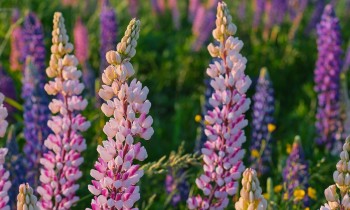
- Lungwort;
- Robin;
- Early gold Chinese etc.
Apple trees, depleted by abundant harvests, require a long period of recovery. Therefore, in the second year, they not only fail to bloom, but often don't even produce leaves.
Other factors
In addition to the main reasons, there are a number of other reasons why apple trees don't wake up in the spring. Namely:
- planting a seedling in an unfavorable location: too shaded and exposed to strong winds;
- heavy soil with a depleted composition;
- planting in late autumn (after the onset of cold weather);
- weak seedling.
If you discover that your apple tree isn't entering the growing season, it's important to identify the exact cause and implement all necessary measures to restore the tree. Proper winter preparation and timely preventative maintenance will save you the time and effort spent fixing problems in the spring.