Restoring damaged bark on an apple tree: how to treat mechanical and infectious wounds
Bark is the apple tree's first line of defense against external factors. Damage and disease weaken the tree as a whole, reducing flowering and fruit yield. Any wound in the bark becomes an entry point for woodworm and insect larvae. What can be done to restore bark?
Content
Apple tree bark diseases
Various infectious and non-infectious diseases can cause damage to tree bark. These often result in spots, cracks, and bark deformation. To properly treat the tree, it's important to correctly determine the cause of the bark changes.
The nature of the wound
Depending on the underlying cause, damage to the integrity of the cortex can be divided into two large groups:
- infectious;
- non-infectious (mechanical).
Non-infectious wounds
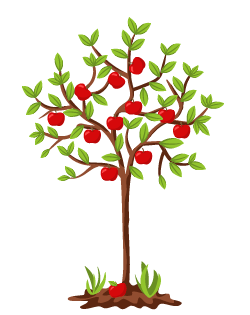 Non-infectious wounds are caused by mechanical damage. These wounds can be inflicted by the gardener during pruning and grafting, or by external factors such as sunburn, frost cracks, strong winds, excess or deficiency of moisture and nutrients, or damage by rodents, birds, and harmful insects.
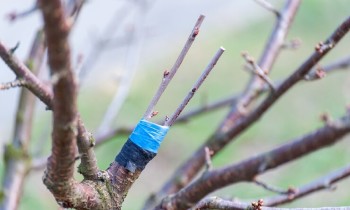
- Gardeners treat pruning and grafting wounds during the process, so trees tolerate them relatively well. Wounds caused by branch breakage are also immediately noticeable and require no further treatment.
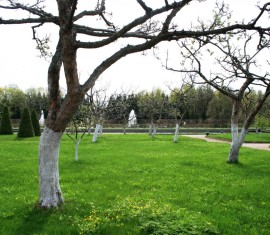
- If the bark peels off in large chunks, and the wound looks as if the tree was doused with boiling water, this is the result of a temperature change or sunburn. To avoid this, trees need to be whiten slaked lime, garden whitewashing or water-based paint.
- If the wounds are located at the base of the trunk and the bark appears frayed and torn into strips, this indicates the presence of rodents. Damage to the upper layer of bark indicates the presence of mice, while deeper damage may indicate the presence of hares.
- Through holes in the bark are a sign of the presence of woodworms and wood borers. Opening these holes will reveal a cavity in the bark. These wounds require treatment and pest control, as otherwise, woodworms may form in the wood. hollow.
- In mature trees, bark can renew itself naturally, cracking and peeling. These are the safest wounds, and their main sign is the presence of a new layer beneath the old bark. Healthy trees heal such wounds on their own and require no treatment.
Restoring bark on an apple tree with non-infectious wounds
Depending on the cause of the wound, a specific method of treatment and prevention is selected, but all of them require cleaning the tree from dead tissue and disinfecting the exposed area copper sulfate (1% solution is prepared from 10 g of dry matter per 1 liter of water).
If damage to the bark exposes the wood, the wound requires the application of a clay putty and mullein, mixed in different proportions. Small wounds can be treated with garden pitch. A layer of whitewash.
Tree infections affecting bark appearance
Infectious diseases are much more serious and require immediate treatment and bark restoration. Most often, infectious diseases are caused by fungi or bacteria. Without treatment, the tree can quickly die, and the infection can spread throughout the garden.
Black crayfish

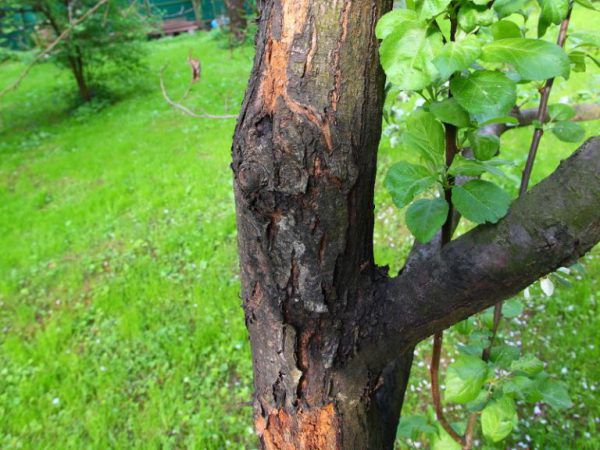 Black crayfish – a fungal disease caused by fungi of the genus Botryosphaeria. The pathogen is widespread in countries with temperate climates. Mushrooms They are biotrophs and saprotrophs, feeding on living and dying tissue. The infection spreads rapidly, leading to rapid infection and death of the entire orchard. Botrysphaeria can infect not only apple trees but also virtually all fruit trees.
The clinical picture of the disease is as follows: in the initial stage, cracks appear in the bark, surrounded by small brownish dots. As the disease progresses, the wounds widen and deepen, becoming purple or brown in color, and then turning black. The branches take on a scorched appearance. The leaves on them turn black, dry out, and curl. In the final stages, black rings form around the trunk and skeletal branches. Such trees are considered unviable.
If no treatment is taken, the tree dies within one or two seasons, simultaneously infecting other fruit crops.
Cytosporosis
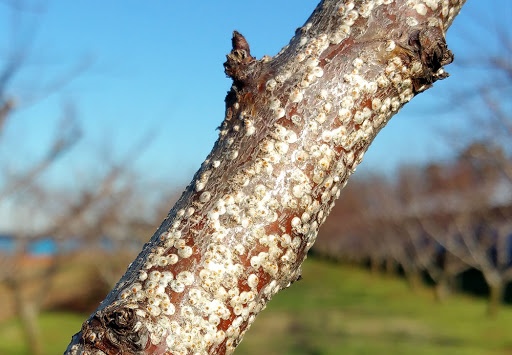 Cytospora leaf spot is caused by fungi of the genus Cytospora, whose spores penetrate deep into the bark through small wounds and cracks. The infection spreads and progresses very quickly, leading to bark decline within a single season. Bark infected by Cytospora dries out and cracks, becoming covered with a series of black bumps. The fungus is highly aggressive, affecting not only the bark but also the wood.
Leaves and ovaries on the diseased branch dry out, curl, and fall off. With deep lesions, the cambium begins to wilt, turning crimson or reddish. The only treatment is to remove the diseased branches and burn them away from other crops. If the trunk is affected, the only way to save the tree is to remove the diseased crown.
European crayfish
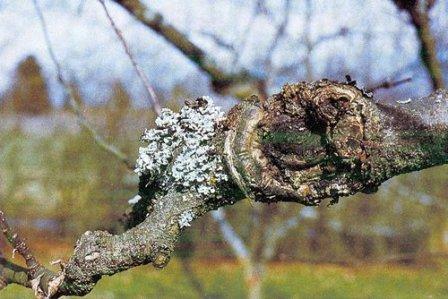 European, or common, bark canker is caused by the fungus Nectria galligena. The pathogen overwinters in tree bark and becomes active in the spring. It attacks fruit and tree crops, contributing to the rapid spread of infection in orchards. Fungal spores enter the bark through the slightest damage, improper pruning, and improper grafting. It primarily infests skeletal branches and trunks. The disease progresses relatively slowly, allowing the tree to be saved.
Dark brown, pitted spots form on the bark and branches where the fungus has entered. In the spring, red bumps—spores—appear around these. The bark then begins to die, separating from the trunk in perfect circles, exposing the wood and forming cavities and hollows. The wounds have extensive swellings along the edges.
The open form of canker creates deep lesions that can reach the tree's core. Tumor-like growths appear along the edges. The closed form is characterized by the formation of cone-like growths, growths, and tumors on the trunks and branches, concealing the wound.
Mature trees are more susceptible to the disease.
Bacterial cancer
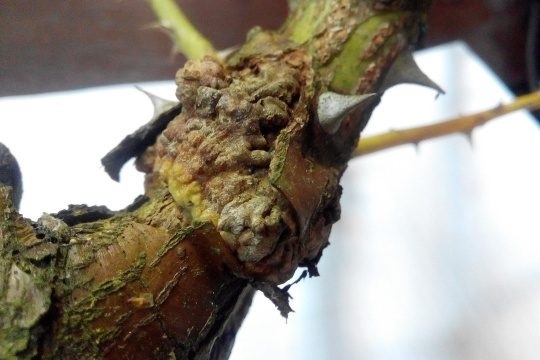 Bacterial canker is caused by gram-negative bacteria. This infection is most often adventitious and appears in gardens along with new seedlings that haven't been properly treated. The disease is extremely difficult to treat and can completely desiccate the tree, disrupting its vascular system.
The clinical picture of bacterial canker is as follows: in the spring, leaf buds on branches begin to die, affecting the adjacent bark. Leaves turn black, and flowers wilt without falling. Young shoots turn brown and gradually dry out. The bark becomes covered with spots of various colors, which develop into blisters. Inside the blisters is a soft structure with a rotten odor. The blisters crust over and crack, forming ulcers on the bark.
Treatment methods
Treatment of infectious wounds is similar to the treatment of mechanical wounds, but at the same time, depending on the pathogen, additional treatment is required.
- Wounds are cleaned by cutting off the affected tissue and capturing 2–3 cm of living tissue (it may also contain pathogens).
- The affected area is first treated with any antiseptic - copper or iron sulfate, potassium permanganate solution, and then with fungicidal preparations if the disease is fungal in nature.
- After disinfection, the wound is sealed with garden pitch, clay putty, or oil paint. All diseased remains are burned away from trees.
- Additionally, as a preventative measure, the entire tree and neighboring trees are sprayed with fungicides.
In case of extensive damage to the tree black crayfish It is better to uproot mature trees.
Apple tree bark diseases: what are the dangers?
Any diseases or wounds to an apple tree weaken the tree and its defense mechanisms, reducing the plant's resistance to disease and pest attacks. Mechanical wounds pose little threat to neighboring trees, but they do serve as entry points for pathogens.
Infectious diseases are dangerous due to the speed of spread and reproduction of pathogens.Fungal diseases spread very quickly through water and wind, can overwinter in the soil, and require special attention to treatment and prevention.
Prevention
Preventative measures include regularly treating trees with fungicides and insect repellents, and monitoring the condition of new seedlings. Any interventions that cause wounds require disinfection. The trunk is protected from rodents using mechanical methods.
The soil around the tree trunk is regularly dug up and treated against fungi and insects. mulchDon't forget about whitewashing.
Video
Conclusion
Infectious diseases are always easier to prevent than to treat. Careful attention should be paid to pruning and grafting, keeping tools clean, and handling cuts. Tree trunks should be protected from pests and environmental factors. Avoid overcrowding and planting; regularly thin dense branches and prevent crowns from growing together. Planting material should be checked for diseases and infections and avoided from untrustworthy vendors. Following these simple rules will help keep your garden healthy.