Using Bordeaux mixture in gardening: rules for treating gardens against fungi in spring and autumn
Fungal plant diseases are one of the most common problems in gardening. Bordeaux mixture can be used to prevent these diseases. This article explains what it is, what it does, and where and how it's used.
Content
What is Bordeaux mixture?
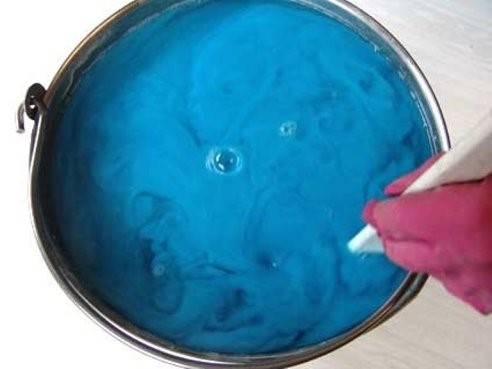 Bordeaux mixture is a mixture of solutions copper sulfate and lime milk. It is a protective contact fungicide. It is used in plant growing. to combat mold fungiIn addition to the pronounced protective effect, stimulates the growth of cultureUsed in early spring to disinfect orchards, vineyards, and berry patches. When properly prepared, the liquid is blue in color, adheres well to leaves, and remains on plant surfaces.
Mechanism of action
Fungi that actively proliferate on fruit trees and shrubs, as well as on vegetables, significantly reduce the quality of the harvest and lead to plant death. Fungicides, including Bordeaux mixture, are used to prevent fungal diseases. The copper ions in its composition destroy fungal spores and colonies upon direct contact. The chemical does not harm the crop.
Slaked lime is added to the composition of the preparation to prevent burns.
Application cases
Bordeaux mixture is equally effective against most types of fungi that affect cultivated plants:
- various rots;
- powdery mildew;
- cercospora and late blight;
- olive and holey spot;
- coccomycosis of stone fruit trees;
- scabies.
Symptoms of damage
The main symptom of a plant being affected by a fungal disease is changes in the surface of the leaves:
- the appearance of spots of different colors, blackness or whitish islands;
- darkening;
- the appearance of yellowing at the veins and along the edges of the leaf blade;
- twisting.
Fruits are also susceptible to fungal attack, which results in the appearance of dark spots, deep sogginess, and wilting of berries or root vegetables.
Cooking recommendations
 Bordeaux mixture can have a 1% or 3% concentration of the active ingredient. Accordingly, a certain amount of copper sulfate is required to prepare it.
3% Bordeaux mixture
Dissolve 300 g of copper sulfate in 1–2 liters of hot water. Dissolve the same amount of lime in another container at a rate of 300–400 g per 2–3 liters of water. Add cold water to each solution to bring the total to 5 liters. Then combine them by pouring the copper sulfate solution in a thin stream into the strained lime milk. Stir the mixture evenly until it turns a pleasant blue color.
It is not recommended to use metal containers for preparing Bordeaux mixture.
A properly prepared mixture is characterized by a neutral or slightly alkaline reaction. To check this, use litmus paper, which normally turns blue. If it turns red, it is recommended to add lime milk to the solution until the desired reaction is reached.
A nail or metal wire can be used as a good substitute for litmus paper. When the mixture is properly prepared, they won't change color.
1% Bordeaux mixture, preparation
Dissolve 100 g of copper sulfate and the same amount of lime in 1 liter of hot and 1 liter of cold water, respectively. Bring each solution to 5 liters, then strain the lime milk and add the copper sulfate solution in a thin stream.
Bordeaux mixture is stored for 24 hours, so it is used immediately after preparation and is not prepared for future use.
How to treat plants
Bordeaux mixture is used in gardening to prevent and treat fungal diseases on fruit trees, berry bushes, as well as grapes and roses.
Fruit trees
 Pear, apple, and quince trees are treated in the spring, before the growing season begins, with a 3% copper sulfate solution at a rate of 10 liters per mature tree and 2 liters per young plant. A similar procedure is repeated in late fall, at the end of the growing season. During active fruit set and fruiting, a lower concentration of the solution is used. Spraying should be done so that the solution runs down the branches and trunk, penetrating all bark crevices.
Plants are treated in dry weather, preferably in the morning and evening hours, so as not to provoke burn leaves exposed to direct sunlight.
Stone fruit trees
The skins of cherries, sweet cherries, plums, peaches, and apricots are very sensitive to products containing aggressive copper. Therefore, they are sprayed exclusively in early spring, before bud break, using a 3% Bordeaux mixture solution, following the same guidelines for young and mature plants.
Berry bushes
Garden raspberries, gooseberries, strawberries, and currants are sprayed with a 3% solution in early spring to prevent fungal diseases. If any do appear during the growing season, the plants are treated with a lower concentration, applying 1.5 liters of the mixture per 10 square meters.
It is recommended to carry out no more than three sprayings per season.
Vegetable crops
Tomatoes, cucumbers, potatoes, and beets respond best to Bordeaux mixture. They are sprayed during the growing season with a 1% concentration. The frequency of application varies for each crop. Cucumbers and beets are treated no more than three times per season, while tomatoes can be sprayed four times, and potatoes up to 14 times. The recommended application rate is 1.5–2 liters per 10 square meters.
How to treat soil with Bordeaux mixture
Bordeaux mixture is often used to disinfect closed soil in greenhouses and hotbeds, where pathogenic microflora multiplies very quickly. The work is carried out both early spring and late autumn.
- The first time the soil is watered with liquid in order to destroy pests, fungal spores and pathogenic microorganisms before the plants begin to grow.
- The procedure is repeated a second time in the pre-winter period, after removing plant debris, leaves and weeds.
Before administering the drug the soil is dug up and loosenedTreatment is carried out by spraying or glaze.
In loosened soil, the product penetrates deeper into the soil and acts more effectively.
Negative soil changes
Copper, found in some chemicals, including Bordeaux mixture, quickly accumulates in the soil and is slowly removed. This causes slow growth of crops, the formation of numerous lateral branches on their roots, a noticeable decrease in yield, and even death. This is why the use of Bordeaux mixture In gardening, spring and autumn treatments should be carried out in strict accordance with the recommendations on the packaging.
Useful video
A video review by a renowned expert will help you learn more about preparing Bordeaux mixture at home.
Bordeaux mixture is one of the most effective methods of preventing and treating fungal diseases affecting crops. In addition to its protective properties, the mixture also has a stimulating effect. To avoid harming plants and soil, Bordeaux mixture must be used strictly according to the instructions and application rates.