Why didn't the apple tree produce leaves in the spring?
Spring is a beautiful time of year, delighting gardeners with lushly blooming apple orchards covered in young foliage. At the same time, many gardeners encounter the absence of buds and leaves on overwintered apple trees. To successfully resolve this problem, it's important to determine its cause.
Content
The main reasons for unopened leaves
The absence of green mass on an apple tree with the onset of spring can be caused by several factors.
Frostbite of wood
Tree bark damage can occur at temperatures as low as -30°C, and in frost-resistant varieties, at -40°C. Early in the growing season, temperature fluctuations, with temperatures dropping to -6°C, are detrimental to orchards. In these cases, the color of the bark indicates the extent of damage:
- weak - light yellow;
- strong - dark brown.
In severe frostbite, tree branches become brittle and their bark becomes covered with a black coating. To prevent further damage, dead branches should be removed immediately upon discovery, and living branches should be shortened by a third. Cuts should be treated with garden pitch, and large cuts should be painted.
Mechanical damage to the bark
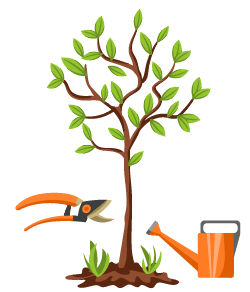
In spring, peeling and cracking of the apple tree bark are often discovered. This damage can be caused by harsh sun exposure or thinning of the bark due to frostbite. Minor injuries are treated with a disinfectant to prevent infection. With the cambium intact, such wounds heal quickly. Treatment of larger wounds requires scraping away dead tissue and then applying putty.
Load on the bark
Masses of adhered and frozen snow, as well as strong winds, often cause double trunks growing at an acute angle to break. This negatively impacts the health of the branches and hinders the growth of green mass in the spring. Depending on the specific nature of the damage, there are several ways to resolve the problem:
- Tie the broken twin trunks together with wire directly above the break. Create a hole to secure the trunks in place using a bolt and nut.
- When breaking thin trunks, perform a tie and then secure with construction staples.
- A small branch break can be repaired using a screw installed at the site of the damage with the end facing outward.
In each case, before installing the screed, it is necessary to treat the damaged area with a solution of potassium permanganate, and after installing the staples and screws, with garden pitch.
Infestation by rodents and hares
After the onset of cold weather, when food becomes increasingly difficult to find, mice and hares begin to raid orchards, causing significant damage. These infestations pose a particular danger to young crops and seedlings. By gnawing at the bark, the animals expose the trunk, disrupting the tree's natural processes. In this situation, the following actions are necessary:
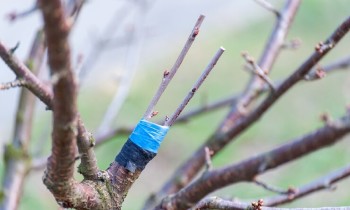
- A pointed-end rootstock graft is used when only the bark of the trunk is damaged, or when there is minor damage to the bast and wood. The graft is placed under the bark directly at the damaged area (bridged on three or four sides).
- Rootstocks or root suckers are tied to the trunk above the affected area when damage reaches ½ the diameter of the trunk.
- Treatment with garden pitch or Bordeaux mixture is carried out when the trunk is partially exposed.
To prevent mice and hares from gnawing on fruit trees, provide reliable protection for trunks when preparing for winter. For this purpose, you can use pine branches, burlap, matting, roofing felt, etc.
High groundwater level
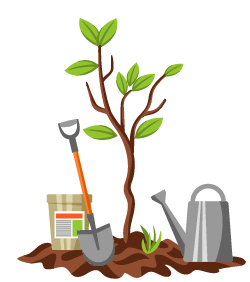
Young apple trees develop normally until their roots reach high groundwater levels. Once exposed to anaerobic conditions, the root system begins to die due to a lack of oxygen. The aboveground portion of the tree, deprived of nutrients, lacks the resources to form buds and grow foliage. This problem can be addressed in several ways:
- Balancing the two parts of the tree (underground and above ground) by pruning branches and shortening the crown, including the central conductor. This method allows the apple tree to return to full development within a year.
- Raising an apple tree to the level of the garden soil (useful for dying fruit trees aged 3-7 years). This technique involves using a support with a sturdy lever attached to the tree trunk and a weight. Before the procedure, the soil around the tree trunk is thoroughly watered (15-20 buckets).
As a rule, the close location of groundwater is indicated by the reddish-ocher color of the soil and the intensive growth of moisture-loving plants under the crown of the apple tree: coltsfoot, horsetail, nettle.
Infectious and fungal diseases
The absence of leaves on an apple tree may be due to the development of the following diseases:
- Black cancer – in most cases it causes the death of fruit crops;
- milky sheen - negatively affects the formation of ovaries and the growth of green mass, causing the branches to darken on the outside and develop a brown tint on the inside;
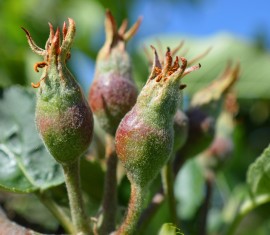
- Powdery mildew – causes the formation of a white coating and the cessation of growth of shoots and foliage.
For therapeutic and preventative purposes, it is recommended to treat the orchard with fungicides and effective remedies prepared according to folk recipes.
Other factors
The absence of leaves on an apple tree in the spring may be due to a number of other reasons:
- Zinc deficiency rosette - formation of small leaves that are too close to each other;
- an unfavorably chosen location for planting a seedling (shading, drafts);
- depleted soil composition;
- inappropriate time for planting;
- incorrect feeding;
- violation of the irrigation regime.
By participating in photosynthesis, green matter plays a vital role in the formation of the future harvest. Therefore, the absence of leaves in the spring requires immediate identification of the cause and corrective action.