Fertilizing apple trees in summer during fruiting: rules and fertilizers
Apple trees are a popular crop among gardeners, known for their low maintenance and delicious, vitamin-rich harvest. To improve the quality of the harvest, timely fertilization is essential, especially in the summer, when the fruit ripens.
Content
The need for summer feeding
During the ripening period, apple trees require intensive nutrition, as this process takes a lot of energy.
For summer feeding, it is recommended to use balanced formulations that have a positive effect on the abundance, taste, and shelf life of the harvest.
Furthermore, summer fertilization is necessary to prepare trees for winter. Trees growing in nutrient-rich soil better withstand harsh winter conditions with severe frosts.
Signs of nutritional deficiency in trees
Nutrient deficiencies can be identified by the appearance of fruit crops, for example:
- the leaf blades have changed shape, color and size;
- the position of the leaf has changed (drooped or lifted up);
- the shoots stopped growing;
- necrosis (death) and spots appeared;
- fruits fall off and become deformed;
- The apples began to taste bitter.
The deficiency of each element is expressed by specific symptoms:
- for nitrogen - leaves become smaller, turn yellow or light green, fall prematurely, shoot growth stops, and fruits become small;
- for phosphorus - prolonged flowering, dull color with a bronze tint on the leaves, their early shedding;
- for potassium - appearance chlorosis on leaf blades, poorly developed shoots;
- for calcium - lightening and curling of leaves, falling off of ovaries, absence of new growth points, slow growth.
At the first signs of nutrient deficiency, fertilizer is added to the soil. This prevents the development of various diseases and pests on the weakened tree.
Summer top dressing Apple trees should be treated comprehensively, using organic matter and ready-made preparations containing minerals.
Types of fertilizers
The modern market offers a wide range of fertilizers, allowing you to choose the right option depending on the age of your crop and the time of year. These fertilizers are generally divided into several groups:
- mineral;
- organic;
- mineral-organic;
- microbiological.
In addition, there are complex fertilizers containing nitrogen, potassium and phosphorus.
Organic
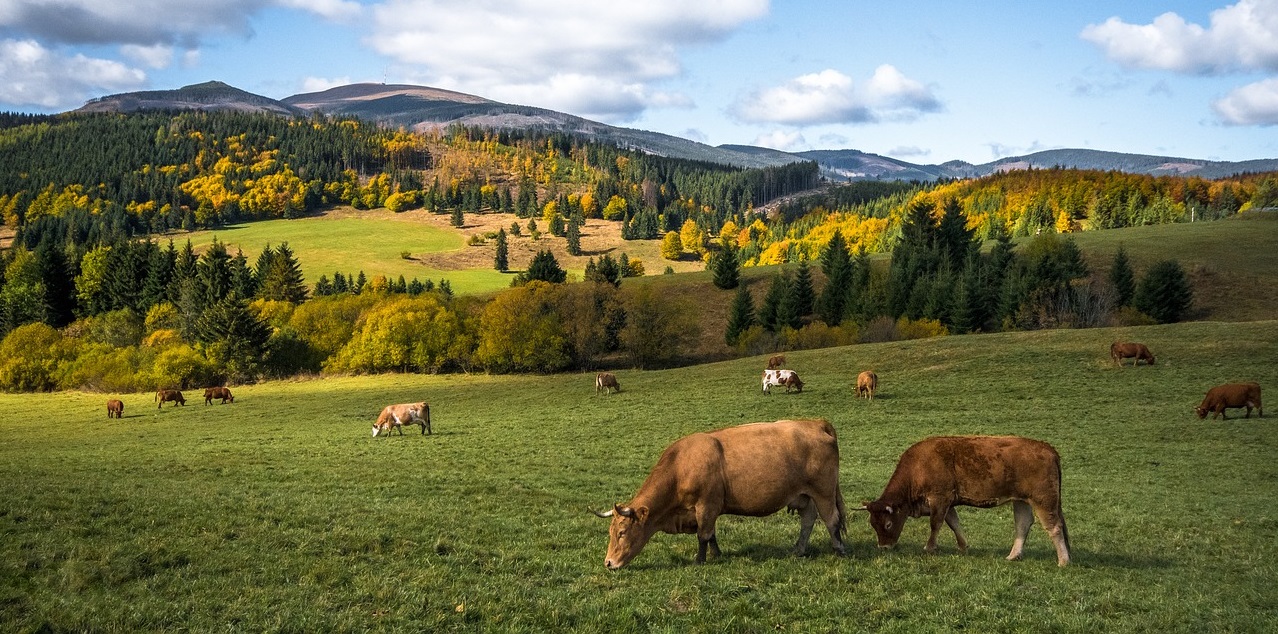 The following compositions belong to this type:
- humus;
- wood ash;
- manure.
The amount of organic fertilizers applied is determined by a number of factors:
- soil properties;
- age of garden crop;
- desired result.
Typically, 5-6 buckets of organic fertilizer are poured under each fruit tree trunk. Organic fertilizer can be liquid or composted, spread around the trunk. Experts recommend the former, as diluted micro- and macronutrients are absorbed more quickly. Organic fertilizers contain high amounts of nitrogen and potassium, which are retained in the soil even after heavy rainfall.
Humus and manure
After the fruit sets, fresh manure is added to the apple trees before digging. Approximately 5 to 10 kg is applied per tree trunk.
Before use, manure should be left to stand for some time to get rid of excess ammonia compounds.
When using horse manure, be aware that excessive application can damage the root system. To prevent this, dilute the manure with water at a ratio of 1 kg per 10 liters. Plant compost can be used safely, using the same dosage as cow manure.
Wood ash
This fertilizer effectively kills pests in the soil and prevents re-infestation. Its use also reduces soil acidity and the likelihood of fungal growth. Proper use of wood ash eliminates the need for potassium-containing fertilizers.
Wood ash contains a number of beneficial elements that help apple trees survive adverse winter conditions. Specifically:
- copper;
- phosphorus;
- manganese;
- boron;
- molybdenum;
- potassium;
- calcium.
The absence of chlorine is a major advantage of wood ash over store-bought fertilizers.
It should be added during digging at the rate of 1 kg per 1 m2However, the recommended dosage should not be exceeded, as excessive amounts of wood ash are detrimental to earthworms and beneficial microorganisms.
Minerals
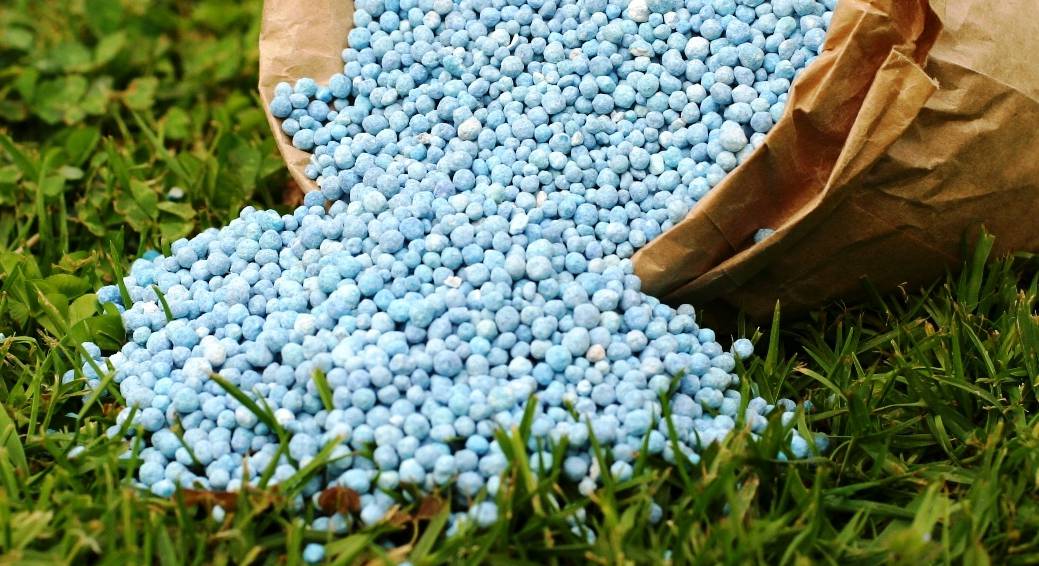 Despite the extensive use of organic fertilizers, it is almost impossible to replace mineral fertilizers with them. The advantage of mineral fertilizers is their inability to stimulate the development of microorganisms and weed growth. A combination of organic and mineral fertilizers is considered an effective option.
Complex fertilizers
Applying these preparations prevents the development of various diseases. Also, during the fruiting period, complex fertilizers prevent premature yellowing of leaves.
Potassium
Top dressing Potassium fertilizers are especially important during the fruit ripening period, as they protect trees from diseases and pests, and also help them endure long periods of heat and drought.
Experts recommend applying potassium compounds closer to autumn.
Phosphorus
Apple trees require periodic phosphorus supplementation, as complex fertilizers contain this element in small quantities. Sufficient phosphorus in the soil normalizes the fruit ripening process.
Even if phosphorus was present in the composition of a complex additive, it is recommended to add it to the soil separately.
Preparing for feeding
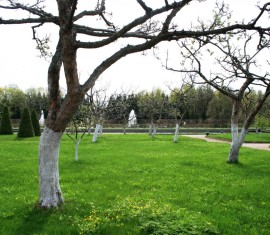
Before applying fertilizer, inspect fruit trees for moss and lichen growths on the bark. If detected, remove these organisms; otherwise, premature branch death may occur.
After cleaning, the trunks are treated with a solution copper sulfate, after which they are coated with garden pitch.
Before adding fertilizer to the soil, the tree trunk circle is watered generously.
Feeding technology
During hot summers, nutrient solutions can be applied repeatedly. It's important to maintain an interval of 10 to 14 days between applications. Fertilizing can be done in various ways: by digging, spraying, or by planting in holes.
Near-trunk method
This technique is considered the most common for preparing apple trees for winter. Before applying fertilizer, the soil is generously watered with clean water, otherwise concentrated fertilizers will cause damage. burn root system.
The trunk method should be used with caution in relation to columnar apple tree varieties, since their roots are located close to the surface.
The loosening depth of the trunk circles of columnar crops should not exceed 10 cm. When fertilizing young trees, it is recommended to dilute the preparations in water and apply them with irrigation.
Fertilizer is scattered around the trunk, with the boundaries determined based on the width of the crown. The trunk circles of regular apple trees are dug to a depth of 15 to 20 cm, after which they are watered and mulch peat, straw or wood sawdust.
Another variation of tree-trunk technology involves creating a furrow approximately 20 cm deep. These grooves are made 60 cm from the tree trunk. Nutrients are then added to the grooves, mixed with soil, and dug in.
Moon fertilizing
This method is typically used to fertilize mature fruiting plants closer to autumn. Holes are dug approximately 50 cm from the trunk at a depth of 40 cm, then fertilizer is added, dug, and watered. Finally, mulch is spread around the trunk.
The advantage of hole feeding is the gradual supply of nutrients to the root system.
Foliar method
This method involves applying fertilizer to the leaves of trees rather than to the roots. Its advantages include:
- rapid absorption of nutritional compounds: the effect is noticeable after 3-4 days;
- the ability to urgently add any missing element.
For foliar feeding, it is necessary to choose quickly dissolving preparations.
It's important to remember that spraying should only be done as a supplemental feeding. This is especially important during the ripening period of a bountiful harvest. During the summer, spraying should be done no more than once every 14 days.
Schedule of events by month
Each summer month has its own specific fertilization requirements.
June
This month, fruit tree shoots continue to actively develop, and fruit buds begin to form. During this time, trees require fertilizing with potassium and nitrogen fertilizers. Damaged and weakened trees are fertilized as soon as the flowering period ends, while healthy specimens are fertilized after the fruit buds have naturally fallen.
In summer, the garden is fed with organic matter using an infusion of chicken manure or liquid manure diluted with water in a ratio of 1:15 or 1:10, respectively.
The preparation of a composition of mineral preparations is carried out from components in the following proportions:
- ammonium nitrate – 40 g;
- potassium sulfate – 30 g;
- superphosphate – 30 g.
To breed them you will need 10 liters of water.
The prepared composition should be applied to the tree trunk circle at a distance of 50 cm from the rootstock.
To speed up the absorption of the fertilizer, the soil under the trees is generously watered with room-temperature water. The recommended dosage for each apple tree is 30 liters of the working solution. After it has been absorbed, repeat the watering and mulching.
July
This month, the fruit begins to fill with juice, and potassium-phosphorus fertilizers are used to fertilize the trees. A solution made from 10 grams of sodium humate (granulated) and 150 grams of nitrophoska is poured under each mature apple tree. The components are diluted in 30 liters of water.
You can also use solutions made from chicken manure or dung. To do this, steep half of the dried organic matter in a 200-liter barrel of water for 5 days. In the summer, an infusion of fermented grass is popular.
Root fertilizer for fruit crops is applied to dug trenches 30 cm deep. These trenches are formed around the entire perimeter of the tree's crown.
Before applying liquid fertilizers, the furrows are generously watered.
During dry summers, foliar feeding is considered the most effective. Apply early in the morning or after sunset to prevent leaf burn. Furthermore, at this time, the solution will not evaporate under the sun's rays, but will be fully absorbed by the leaves. Foliar feeding is performed using one of the following ready-made fertilizer complexes:
- Plantafol;
- Novofert;
- Benefit;
- "Effekton".
Some gardeners prefer fertilizers prepared according to folk recipes, for example:
- wood ash diluted in water in a ratio of 1 kg per 10 l (the strained composition is sprayed on the crown);
- ½ liter of infusion dissolved in 10 liters of water mullein.
Foliar feeding should be stopped 20 days before harvest.
August
In August, the harvest ripens and fruit buds set for the coming season. These processes require a great deal of energy from the trees, so they need additional nutrition. Minerals or organic matter are used as fertilizer; during the rainy month, they are applied dry. Well-rotted compost or manure is spread around the trunk, 1 meter from the trunk—this is where the tree's nourishing roots are located. This method prevents excessive shoot growth caused by excess nitrogen.
In August, you need to completely exclude nitrogen from your fertilizers, while simultaneously increasing the dosage of potassium and phosphorus.
Gardeners typically use a mixture of potassium sulfate (50 g) and superphosphate (30 g), as well as a complex compound—monopotassium phosphate. Dry fertilizers are added to a trench dug around the tree, then watered with 5 buckets of water. The dosage of fertilizer applied depends on several factors:
- age of the apple tree – young specimens require 2/3 of the norm intended for an old tree;
- soil type – the dose of preparations for black soil and clay soils is 25% less than the dose for light soils.
Late-ripening varieties of fruit crops can continue to be fed in August using foliar feeding with complex fertilizers.
Summer fertilization significantly impacts the quality and quantity of the harvest, as well as the formation of buds for the following season. Therefore, fertilization must be done correctly, alternating between root and foliar applications. This procedure should be performed in conjunction with watering, and the selection of the fertilizer should take into account the tree's growth stage and overall condition.