Fighting Hogweed in the Garden: How to Get Rid of the Most Dangerous Weed
If you don't spot hogweed in your garden early, you could be facing a real natural disaster in just a few weeks. Hogweed grows incredibly quickly, and in a short time, it can wipe out all your crops. But that's not the worst part.
Hogweed poses a serious health hazard. It's extremely poisonous, its sap leaves extensive, severe burns on the skin, and its pollen literally burns the mucous membranes when inhaled. This toxic "jungle" must be combated in the garden at the slightest sign of this plant sprouting, before it's too late.
Content
Features of hogweed
There are several dozen species of hogweed found in nature. It should be noted that not all of them are poisonous. For example, the Siberian subspecies and the Crimean subspecies are completely harmless and may only harm the aesthetics of your property by crowding out cultivated plants.
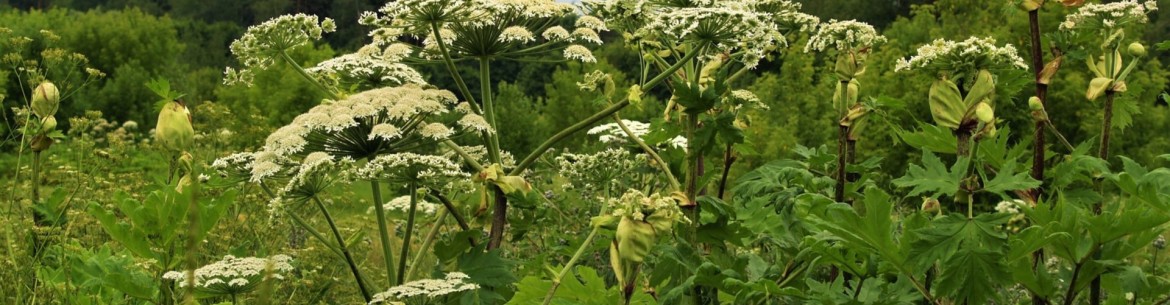
However, Sosnowsky's hogweed, Mantegazzian hogweed, and wild hogweed are extremely dangerous. The difficulty lies in the fact that they are all very similar to each other, but biologists have identified several characteristic features that can help identify toxic varieties and aid in controlling hogweed in the garden.
Signs of plant emergence
First of all, take a closer look at the appearance of the plant:
- The leaf blades are large, wide, and have rough and jagged edges.
- The bush grows to a height of two meters or more.
- The stem has a characteristic lilac pubescence.
It's impossible to miss the dense thickets of this dangerous plant. Its powerful root system quickly displaces any other plants from the area, and its powerful odor causes severe allergies even in those not predisposed to them.
Why does hogweed grow so much?
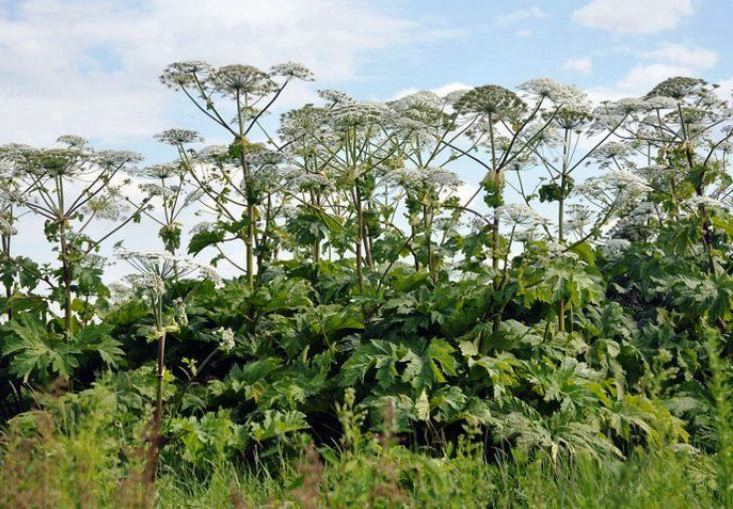
Hogweed grows quite quickly and covers vast areas. This is due to the following characteristics of the weed:
- the seeds remain viable for a long time, they are able to germinate even after 5–8 years of dormancy;
- hogweed is self-pollinating, so even one bush is capable of “giving birth” to offspring; on average, 20–70 thousand seeds ripen in one umbrella;
- phenomenal growth rate – hogweed can gain up to 10 cm in height in one day;
- resistance to low temperatures – hogweed easily tolerates even long, harsh winters;
- the seeds ripen even on cut umbrellas;
- the growth point is deepened, it is located below ground level by about 40–100 mm, so pruning to this point does not give any result;
- The seeds are light and quickly spread across the area even in a light wind (and can also spread to animals, water, clothing, etc.).
However, this green enemy also has its weaknesses. For example, the fact that the plant produces seeds only once during its life cycle. This lack of vegetative reproduction plays into the gardener's hands – by destroying all dormant buds, one can count on stopping the weed's growth.
Hogweed thrives on light and doesn't tolerate shade. Furthermore, it can't germinate from very deep soils and doesn't like overly wet soil. This is worth considering if you're looking for a way to get rid of hogweed in your garden.
Why is hogweed dangerous?
As mentioned above, not all species of hogweed are poisonous. However, don't let your guard down. Being careful never hurt anyone.
You need to be prepared for the fact that the plant can be dangerous:
- Hogweed sap causes severe, deep burns that take a long time to heal. Moreover, they don't appear immediately, but only after several hours or even days.
- If the plant juice gets on the skin in the open sun, the damage will be even more severe.
- Getting hogweed juice into your eyes can cause vision loss.
- Pollen flying from hogweed umbels easily enters the respiratory tract. It irritates the mucous membranes of the larynx, causing allergies, nausea, and vomiting. If you remain in the weeds for an extended period without a protective mask, you can faint. If you have a pollen allergy, even the slightest contact with hogweed can cause angioedema, which can be fatal.
What to do to really get rid of hogweed
Hogweed (especially its poisonous varieties) is extremely difficult to eradicate. A program to combat this plant has even been developed at the state level (the plant is being combated in all regions of the country, as it poses a danger to humans, animals, birds, as well as cultivated and medicinal plants).
If this malicious pest has appeared on your property, don't underestimate it. Fight it wisely.
Herbicide treatment

One of the most effective methods of controlling hogweed is chemical treatment. For example, the herbicide Roundup effectively combats one of the most dangerous species, Sosnowsky's hogweed.
Despite all the doubts, this method remains the fastest and most effective. Roundup is the least toxic of any on the market (it's also biodegradable).
To combat hogweed, it is best to use glyphosate-based products.
Analogues of the drug "Roundup":
- "Tornado;
- "Octopus";
- "Hurricane".
You can also use tools such as:
- "Buran";
- Ground;
- "Grader".
How to use chemicals against hogweed
When treating the area with chemicals to control hogweed, it's also important to be smart. Of course, the details of treatment will vary depending on the specific product you're using. However, the general procedure applies to most chemicals:
- Read the instructions for use. Dilute the preparation in a special container according to the recommended dosage.
- Treatment should be carried out only in warm and windless weather (make sure that it does not rain a couple of hours after spraying).
- Spray the leaf blades with a spray bottle until they're damp. If possible, spray the undersides of the leaves as well.
- A month after the first treatment, check to see if the product has produced results. If most of the growth has turned yellow and begun to wither, this is a good sign. Keep in mind that new shoots may appear near the withering growth. In this case, you should pull them out manually or re-treat with the chosen product.
- If the hogweed continues to turn green even after treatment, you need to figure out what might have gone wrong. Perhaps the concentration of the product wasn't sufficient, or the treatment was too light.
- A month later, repeat the treatment using the same method. Then repeat it again if necessary. After several treatments, you'll be able to completely get rid of the weed.
Observe safety precautions when working with chemicals. Wear protective clothing, gloves, a mask, and goggles.
Covering method of control
One effective method of controlling one of the most dangerous varieties of hogweed (Heracleum sosnowskyi) is to deprive the plant of sunlight. The weed is shade-intolerant, so covering it will help slow its growth, leading to its rapid death.
A special black, light-impermeable film can be used as a covering material. Choose a material with a thickness of at least 100 microns.
Hogweed control in your garden should begin when the plants are just beginning to grow, so you won't have to mow them first. Covering the plant should begin when it has already gained height and strength.
The film should not be lifted until the plant dies. Even after the weed dies, the film should be left in place to prevent sprouts from dormant seeds. The film should be left as a cover for a year, giving all plants and seeds time to die.
Plants against hogweed
The most environmentally friendly and effective method of weed control is using other plants. In this case, so-called remediators are used, which help to literally displace hogweed and suppress its growth in a short period of time. One such plant is Jerusalem artichoke.
Method of control:
- The hogweed that is still sprouting on the site must be covered with geotextiles (if it has already grown, it must be mowed).
- Next, the geotextile is covered with suitable soil.
- Cereals or turf-forming lawn crops are sown on top.
- Apply complex mineral fertilizers.
- Apply fertilizer for two seasons.
In about three years, you will have fully established crops on your plot instead of dangerous weeds.
Plowing and disking
If hogweed has spread over large agricultural areas, you can try plowing the area with a tractor. Subsequently, disking can be used to consolidate the effect. All plant residues should be removed from the field and immediately sown with replacement crops.
Control of individual plants
Individual hogweed bushes can be dug up right away, root and all. However, given the plant's tenacity, it's best to use one of the methods listed above to combat this invasive plant.
Prevention
The best prevention is careful maintenance of the site, regular seeding of various crops, weed removal, and the use of lawn grass. These plants will help create a dense turf that will protect the soil from the growth of such dangerous weeds.
Hogweed is one of the most dangerous and tenacious weeds. Controlling it can be a real challenge if you don't know all the intricacies. If you spot even one hogweed stalk in your garden, begin combating it immediately. Don't let this toxic jungle spread!