What is the growing season for fruit trees?
Every plant has a specific life cycle. Throughout its life, a plant goes through several developmental phases. By thoroughly studying these phases, you can learn to manage the growth of certain crops, increase their yield, accurately time their planting, and so on. However, not all gardeners know exactly what the vegetation period of fruit trees is, for example. Many confuse this concept with the growing season, which is not entirely accurate. Therefore, it's worth studying this concept in more detail to significantly facilitate your gardening.
Content
What is the growing season?
It's worth noting right away that vegetation and the growing season are different concepts. Vegetation is the state of growth and development of a plant, while the growing season is simply the period of time during which the plant goes through its complete development cycle. The growing season, in turn, is divided into several phases (these phases may vary for different crops), such as seed germination, bud swelling, flowering, fruit formation, and so on.
The growing season can be controlled. A thorough understanding of each phase can help a gardener, for example, accelerate crop growth and development, increase yield, and so on. Some crops may require accelerated growth, which slows down fruiting. Other crops, on the contrary, require slower growth, which improves harvest quality.
Factors affecting vegetation
The growing season for different crops, and even different varieties of the same crop, can vary significantly. This applies not only to timing but also to the number of phases. It is generally accepted that the average period extends from 3 days to 3 months. The exact timing depends on several factors, some of which include:
- soil condition;
- climate of the region;
- weather conditions;
- presence/absence of diseases and other pathologies;
- hereditary characteristics of culture;
- varietal characteristics of the crop.
Experienced gardeners recommend avoiding climate experiments and immediately planting fruit trees that are suitable for growing in your specific region. If you plant a heat-loving variety, for example, in the northern region or the Moscow region, there's a higher risk that the crop will simply fail to thrive or the harvest will not have time to ripen.
Under favorable climatic conditions and proper plant care, it is possible to obtain several harvests in one season (the increasing growing season in this case allows plants to develop quickly and transition from phase to phase in a shorter period of time).
The growing season of fruit trees
The growing season for fruit trees can vary from cultivar to cultivar. However, most species and cultivars share several common phases, which differ only in timing:
- It all starts with the swelling of flower buds. Usually, a week later, leaf buds begin to swell. What happens next will depend on the type of fruit tree.
- Apple trees begin to blossom when the temperature outside is a stable 10 degrees Celsius. Their flowering period lasts for about a week and a half, but fruiting easily extends throughout the summer and even autumn (here everything depends on the varietal characteristics).
- At +6 degrees, pear trees begin to slowly blossom. About two weeks after the growing season begins, pear trees will begin to bloom. If cold weather returns during this time, growth will stop. Fruiting will begin a week or so after flowering begins.
- Plum trees finish blooming in May. After this, the first fruits are formed on them, the ripening of which will end in August or even September (again, the variety plays an important role).
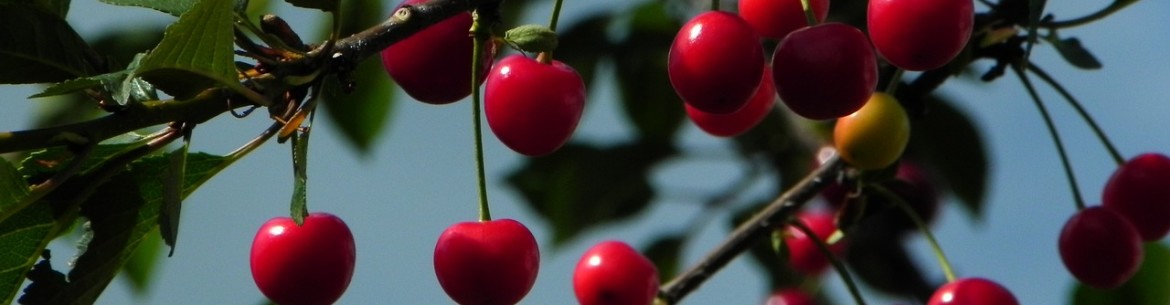
- Cherry trees aren't particularly demanding in terms of temperature, care, or even soil composition. Their growing season begins in April and passes fairly quickly. However, there's an important caveat: if frost returns during cherry blossom season, there's a high risk that the blossoms will fall off and fruiting will be sparse (or nonexistent).
List of conditions for favorable vegetation of fruit trees
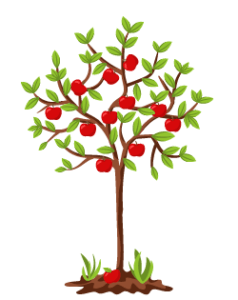 Many environmental factors influence vegetation. The more favorable the growing conditions, the richer and higher-quality the harvest.
Here are a few factors to consider first:
- Temperature conditions. For normal growth and development, any plant requires a certain temperature regime. Naturally, the above-ground parts of a plant require more heat than its rhizomes. However, too much or too little heat can pose a threat to the plant's life. Therefore, experimenting is not recommended.
- Watering mode. Water accounts for approximately four-fifths of a plant's wet weight. Crops consume enormous amounts of it at every stage of their development. The primary source of moisture is, of course, the soil, but air humidity also plays a role. Watering is an essential part of plant care. If you want a good harvest, you must strictly adhere to the watering schedule.
- Lighting. Sunlight is the only source of light for plants in their natural habitat. It enables photosynthesis and helps plants grow and develop normally. Lighting requirements may vary among different varieties. Therefore, carefully study the variety's characteristics and, if necessary, provide the plant with additional artificial lighting.
- Top dressing. Fertilizers are a valuable source of minerals for developing plants. Depending on the growing conditions, different compounds may be required to support the plant's growth and development. Optimizing plant nutrition is not difficult these days; there are many universal mixtures available commercially that are suitable for most fruit tree varieties.
All of the above factors are equally important for the normal growth of fruit crops. Don't neglect some in favor of others.
Many people wonder why most garden plants are propagated vegetatively. This is because the daughter plant directly inherits the characteristics of the parent variety. This allows the original plant to retain all its properties and avoid unwanted mutations, such as those that occur during seed germination.
List of methods of influencing vegetation
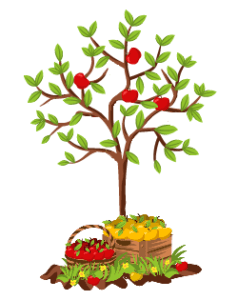 It's entirely possible to influence the vegetation of fruit crops. Control will allow you to achieve desired results from a particular plant (for example, faster fruit formation, longer flowering, etc.).
The rate of vegetation is affected by changes in the following maintenance conditions:
- watering plants;
- fertilization;
- temperature conditions;
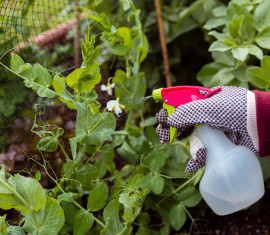
- spraying.
The methods will vary for each crop. Therefore, carefully study the characteristics of the fruit plant variety or species and select a personalized method to influence the vegetation of a specific plant.
Reasons for slow vegetation
Sometimes vegetation can slow down, leaving gardeners confused. There can be several reasons for this. Most often, a temperature imbalance leads to a slowdown.
This can be intentional (if the gardener decides to monitor the plant's growth), or it can be due to unfavorable weather. For example, a hot summer can lead to a significant reduction in yield for crops that cannot tolerate high temperatures and prolonged drought. And sudden frosts can slow plant growth or even kill a plant that is not winter-adapted.
Insufficient heat, moisture, light, and minerals can all impact the rate of vegetation. Sometimes, various diseases and pests can slow down the growth process.
How to speed up vegetation
With rapid vegetation, fruit crops produce a harvest earlier. Sometimes, artificially accelerating this process can be beneficial for both the quality and quantity of fruit. There are many ways to control the rate of vegetation:
- Using hydroponics. Growing plants hydroponically involves keeping the plant's rhizomes not in soil, but in a special substrate suspended in a nutrient solution. This substrate is typically made of mineral wool, crushed stone, expanded clay, or coconut fiber.
- Use of stimulant drugs. These products are based on phytohormones. Growth stimulants can accelerate root formation and flowering, increase the number of ovaries, and even speed up fruit ripening. However, be careful not to overdo it; read the instructions carefully and do not exceed the recommended dosage.
- Aeroponics technique. This method involves keeping the roots suspended. The roots should be regularly sprayed with a special solution containing nutrients.
Vegetation and the growing season are the foundation of the plant life cycle. By carefully studying the life cycle of fruit crops, you can take control of it, thereby increasing yield and improving its quality.