How to Make a Compost Pit: Step-by-Step Instructions and Filling Tips
Compost is a natural fertilizer that restores the vitality of soil, which becomes depleted during use. To make and store compost yourself, you'll need to set up a compost pit at your garden plot. Learn how to do this correctly in this article.
Content
Choosing a location for a compost pit
You can make a compost bin at your dacha yourself. You just need to place it in a suitable location. This is crucial, because if it's inconveniently located, it will be difficult to move a full composter without disassembling it.
When choosing a location, you need to take into account certain tips and requirements.
- Distance from the house. This is due to the odors emanating from the compost, as well as the constant presence of insects hovering over the pit and potentially entering the living space.
- Distance from drinking water sources. The compost should be located at least 25 meters from a body of water. If the site is sloping, the pit should be located at the lowest point.
- Placement on the leeward side. Rotting waste requires access to air, meaning it should be well-ventilated.
- Place in partial shade. Direct sunlight slows down the decomposition process.
- Easy access to fertilizer. The pit should be located so that it can be easily accessed for tasks such as turning the compost or removing the mature fertilizer.
Preparation and dimensions of the compost pit
To produce high-quality compost, it must rot, not rot. To achieve this, you need to keep the compost moist and saturated. This is possible if you know how to build a proper compost bin on your property.
Step-by-step instructions for constructing the structure
- Choose a shaded area in your local area with access to water.
- Clear the area of stones and debris.
- The pit should be at least 1 x 1 meter in size and approximately 0.5–1 m deep. However, its size may vary depending on the volume of waste you wish to process.
- Place pegs around the perimeter and tie ropes to them.
- Dig a hole. Save the removed sod layer and use it in compost.
If desired, the walls can be reinforced with available materials: roofing felt, slate.
Options for making a compost pit
Compost bins.
- Dig in beams around the perimeter of the hole. Assemble three walls with air holes. Install and level the box. Place drainage material on the bottom. Screw in the lid and front wall.
Wooden parts used to build a compost pit must be treated with an antiseptic impregnation, otherwise they will rot.
- Plastic composter. Make ventilation holes in the sides of the box, and have a drain hole at the bottom.
A drainage layer must be placed at the bottom. Tree branches, hay, or leaves can be used for this.
Layers of organic and inorganic waste are placed on top. Ventilation holes are essential to allow air to reach the fertilizer.
Materials for a compost pit
The following waste is suitable for placing in a compost pit:
- tree branches;
- fallen leaves, needles, bark;
- mown grass;
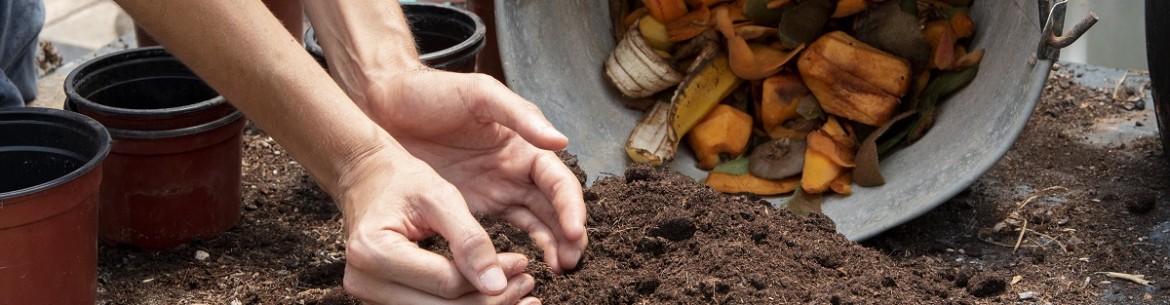
- vegetable peelings, fruit and berry waste;
- sawdust, shavings, straw;
- cardboard, paper bags.
Tips for green to brown ratios
Fertilizer ingredients are divided into 2 groups:
- Brown substrate. This includes fallen leaves, straw, small branches, shredded wood, and paper. These components contain fiber.
- Green matter. This includes green weeds, vegetable and fruit scraps, manure, and chicken manure. All of these substances contain nitrogen. They maintain the nitrogen-carbon balance in the compost that is suitable for composting.
When adding fertilizer, alternate the brown and green layers. This will speed up the composting process and ensure the finished fertilizer has a good structure.
The most suitable composition of compost fertilizer is the components of “green” and “brown”, taken in a ratio of 1:1.
Loading the compost pit
Approximate diagram of laying layers of compost fertilizer:
- Drainage should consist of pieces of branches, shavings or sawdust, spruce needles and leaves.
- The second layer should be about 10 cm high and consist of tops, weeds, fruit and vegetable waste.
- Then the layers are sprinkled with turf soil or old compost.
Every three layers must be watered with a solution of microorganisms.
To ensure high-quality compost, it must be turned. Before layering, check the substrate's moisture content. If the fertilizer is dry, moisten it; if it's too wet, sprinkle it with dry material.
Compost pit maintenance
To ensure the pit's contents decompose effectively, the waste must be properly managed. Furthermore, the duration of compost formation directly depends on the proper construction of the compost pit and its subsequent maintenance.
- Moisture level is the most important factor for composting. To maintain the desired level, water the compost periodically with a watering can. The compost should be moist but not wet, as excess moisture will negatively impact bacterial activity.
- At least once a month, turn the waste to ensure oxygenation. If this isn't possible, use a garden fork to puncture the compost in as many places as possible.
It is not recommended to add the following to compost pits:
- dairy products;
- fat;
- raw potatoes;
- meat;
- plastic.
The odor emanating from fat and meat products attracts rodents and insects. Furthermore, fats decompose very slowly, so the rotting process takes a long time.
Compost maturation
Before digging a hole in your plot, it's important to understand the processes that occur during composting. The substrate needs to be stirred occasionally to ensure good air exchange and maintain optimal moisture levels.
The process of compost production takes two years, but with the use of forced aeration or modern accelerators for fertilization it is obtained within one season.
You can determine whether compost fertilizer is ready for use by the following signs:
- the consistency became loose and crumbly;
- it is impossible to detect leaves and stems in the nutritional composition;
- fertilizer color – dark brown;
- smell - like forest litter or damp soil;
- absence of worms in the substrate – they feed on waste; worms leave the compost due to lack of food.
Fully matured fertilizer resembles black fertile soil, in which not completely decomposed components are visible, thanks to which the compost is loose and porous.
Application of compost fertilizer
There's no need to apply fertilizer to every bed. Organic matter is undoubtedly beneficial, but some plants can suffer from bacterial burn from direct contact with it. Therefore, compost should be applied selectively.
Using compost in the garden
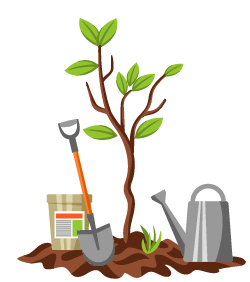
Organic matter is used when planting shrubs and trees. Fertilizer is added to the hole. For apple and pear trees, holes are prepared at least 60 cm deep and approximately 70 cm in diameter. Two to three buckets of substrate are poured into each hole, while holes for currants or gooseberries require no more than one bucket.
Mature plants can also be fed with compost. It is sprinkled under shrubs or trees, 30–50 cm from the trunk, and dug into the soil with a shovel. Then, water thoroughly. Use 2–3 buckets (10 liters) of substrate per square meter. Annual feeding is recommended.
Using compost in the garden
The fertilizer contains numerous beneficial substances that increase crop yields by 30%. Gardeners apply compost when planting seedlings and potatoes. This helps loosen the soil.
Many gardeners recommend applying fertilizer to their plots in the fall—even if it hasn't had time to ripen yet, composting will be complete over the winter. The organic matter is sprinkled onto the soil and dug in with a shovel. Use 5 kg of substrate per square meter of soil. Compost is also added:
- in holes when planting tomatoes, peppers, cabbage, provided that the soil has not been fertilized in the fall;
- in greenhouses for seedlings - one part of the substrate is mixed with soil and sand (4 parts);
- on the lawn - scatter over the lawn, water.
You can plant onions, greens, and melons using the prepared fertilizer.
Using compost for plants
When repotting houseplants, you can add fertilizer to the pot. Experienced gardeners recommend watering flowers with compost tea to provide nutrients.
In spring, compost is added to the soil on the lawn to improve its structure and provide it with useful elements.
A properly set up composting facility will provide your plot with excellent compost, which will allow you to harvest abundant fruits and vegetables. This method will also help you get rid of all kinds of waste in your garden.