How to remove a tree stump in the garden without uprooting it
Tree stumps left on a property after trees have been cut down often occupy valuable space, producing new growth that depletes the soil, hindering the planting of useful crops, and becoming breeding grounds for pests and diseases. Removing stumps is a difficult and labor-intensive task, so if possible, they should be removed by other means. This article will explain how to remove stumps on a property without uprooting them.
Content
Features of the procedure
When a stump on a property naturally rots, the process can take several decades. This can create a number of problems, from an untidy appearance to inconvenience. Therefore, it's best to remove this obstacle as soon as possible or get the most out of the stump.
There are two ways to accomplish this: physical and chemical. The first method involves using available tools and applying physical force to remove the stump. For example, you can dig up the root or grind it using special tools.
Methods using chemical reagents are less expensive and require less time and effort. However, caution should be exercised when using them; it's better to use harmless substances that are safe for humans and the environment.
Deadlines
Removing an old tree stump can take anywhere from 15 minutes to several years, depending on the method chosen.
It's important to choose the right time for such work. Fall or late summer is the optimal time to apply chemicals. By this time, most nearby plants have already harvested their fruit, so you can safely apply chemicals to the soil. Before using them, carefully read the information on how to remove a stump without uprooting it, to avoid harming yourself and others.
Urea

This substance accelerates wood decay, making the wood dust easily removed from the soil with a regular shovel. This process takes at least a year.
Urea and ammonium nitrate are made from substances found in nature. However, they are two different substances. Ammonium nitrate is a toxic explosive, while urea is virtually harmless.
Stump removal using urea is similar to using saltpeter. The only difference is that the stump, wrapped in film, is left alone for two years. This is the only drawback, as urea, unlike saltpeter, does not damage the soil. Once the stump is gone, the garden can be planted.
Sodium and potassium nitrate
Sodium nitrate can destroy the old root system, but this process will take years. This substance is a high-quality fertilizer, but in large doses it is a powerful poison. The owner will need to water the stump with this concentrated solution for many years.
Ammonium nitrate will work faster if you drill deep holes (at least half a meter) in the stump and fill them with ammonium nitrate, then add water. To speed up the process, wrap the snag tightly in plastic film. After the stump dries, set it on fire. This method is not suitable for those living in areas with peaty soils, as smoldering roots can cause a fire within the soil. If time permits, you can simply sprinkle ammonium nitrate near the stump, and precipitation and melting snow will do the rest. However, this will take over a year.
Fire
Once the stump is completely dry, it can be burned. This method takes longer than digging, doesn't remove the roots below ground level, but requires less physical effort.
Charcoal is a useful fertilizer.
This procedure requires some preparation. Before starting a fire, clear the area of flammable materials and dig up any debris within a radius of at least 5 meters from the stump. Running a water hose close to the fire can quickly extinguish an uncontrollable flame.
You should stay close to the burning stump to constantly monitor this process.
Burning a stump doesn't require lining it with wood. Such a fire typically lasts for several days. The process can be sped up with incendiary mixtures.
When preparing a stump, several deep holes are drilled. The effectiveness of the process depends on their depth. A deep cross-shaped cut can be made in the stump with a chainsaw.
The holes are filled with kerosene. The heat depends on the quality of the product. A stump soaked in kerosene will burn faster than one surrounded by firewood, which is needed to scorch the snag. Since large, heavy objects burn poorly, only smoldering, the process can take several days. If kerosene is used, the stump burns from the inside. The flames will spread to the outside. The intense fire will quickly consume the entire snag, provided it is not too large.
Drilling
Stump removal by drilling is useful when it's sufficient to remove the above-ground portion of the tree, without the need to completely destroy it or extract the roots. This method uses specialized attachments mounted on excavators or tractors. Excavators offer greater maneuverability and reach, making them preferable for working with multiple stumps located close together, while tractors are ideal for working in hard-to-reach areas.
Removing large stumps is more convenient with an excavator or a truck with a crane, as maneuvering a tractor is very difficult. At the end of the drilling process, instead of a stump, what's left is a hole of shredded wood, which can be easily burned or removed.
The drilling method is used when preparing a site for construction or repair work, where herbicides can be used to prevent new growth. Drilling units are only installed on vehicles with wheels or tracks, as they generate powerful torque during operation. Excavators have more powerful hydraulic rotary units.
Milling
Stump removal using milling is a relatively quick process if the stump is small. The machines are equipped with horizontal or vertical discs. The teeth on the disc or drum remove a small amount of wood with each pass, but because there are many teeth and the disc rotates at maximum speed, the work proceeds quickly. The narrow width (1-3 cm) of the milling cutter allows for the removal of residual wood in sections (strips). After cutting a strip to an accessible depth, the user lifts the milling cutter and moves it sideways to remove the next section of the stump.
The main disadvantage of this method is the rapid wear of the cutting edge of the knives that need sharpening.
If the stump is large, the operator destroys it in several passes.
Growing mushrooms
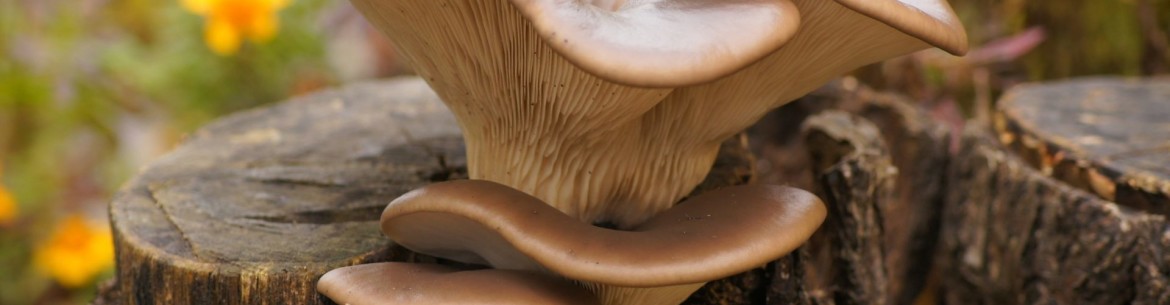
Fungi are the most efficient organisms for breaking down wood fibers, so many people sow mushroom spores into stumps. This time-tested method for accelerating stump decomposition is simple: simply cut grooves in the stump, fill them with soil containing honey mushroom or oyster mushroom mycelium, and cover the stump with a tarp to promote microbial growth. The germinating fungi feed on the wood until it is completely destroyed. Delicious meals for the whole family are guaranteed for 5-6 years. After that, the stump will turn to dust.
Explosion
This method is used where specialized equipment (such as tree stump pullers) cannot be used, and manual work is undesirable due to time constraints. The blasting operation during stump removal must be supervised by a specialist with access to explosives and the right to store them.
When laying the charge, a trench or borehole is prepared in the form of a vertical hole. The trench is dug with a shovel or a motorized drill. An experienced explosives expert determines the quantity and type of explosives and the depth at which they should be laid.
Which removal method is the fastest and easiest?
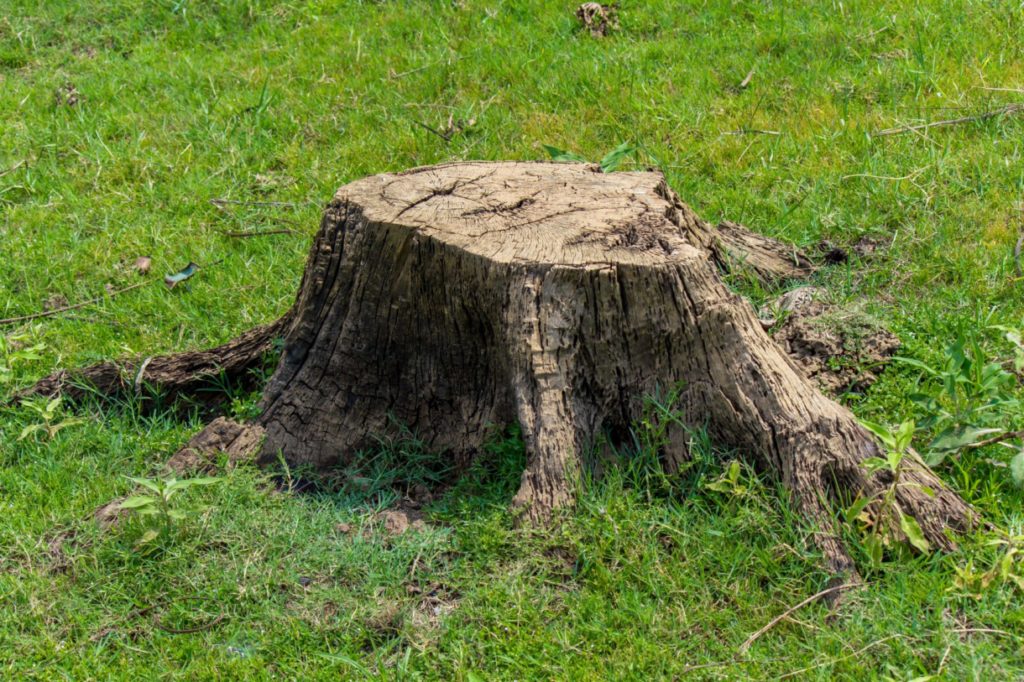
Removing unwanted tree stumps isn't easy. It's either labor-intensive or expensive. Therefore, before you begin, consider the most efficient method to avoid having to redo the work later.
When choosing a method to quickly get rid of a stump without uprooting it, it is important to consider the specific circumstances and characteristics of the site.
For a construction site, it is more rational to use saltpeter, which acts faster than urea.
If the area is intended for planting beds and flower beds, it is better to use urea, it is practically harmless to the soil.
To facilitate the process of removing rhizomes, you can use a winch, while observing safety rules.
It's difficult to say which method is best. Mechanical removal is quick, but requires a large investment. Specialized equipment is only suitable for large areas and will require owners to restore order afterward.
It's wiser to use methods that don't require large investments or physical exertion. You can choose between powerful chemicals, the beauty and benefits of a mushroom-covered stump, or watching a stump engulfed in flames.
When stumps cannot be removed without uprooting them
There are cases when the only possible solution is to uproot the stump. Such situations are few:
- After felling trees with extensive root systems, the land is cleared for further plowing. In this case, there is a risk that equipment could break down under excessive loads.
- After cutting down trees to eliminate roots located at shallow depths.
- When cutting down trees with damaged root systems for sanitary purposes, so that new seedlings can be planted in the same place.
- Prepare the land for construction. This ensures complete removal of the root system.
- When fighting wild bushes in areas where it is planned to plant cultivated species.
The choice of a suitable method for stump removal without uprooting depends on the landowner. The most important thing is that it is inexpensive, quick, and safe for others.