Why don't apple trees take root in my plot?
Apple trees can be found in almost any garden. They thrive and delight their owners with their harvest. But some gardeners struggle to grow fruit trees. Time after time, the seedlings die. The reasons can be varied.
Content
- Choosing the wrong material
- Purchasing a seedling with an open root system
- Excessive root pruning
- Planting too deep
- Nearby groundwater
- Crowding during planting
- Incorrect watering
- Incorrect pruning of branches
- Planting a new tree in place of the old one
- Incorrect application of fertilizers
- Mistakes when preparing for winter
Choosing the wrong material
When buying seedlings from sellers, gardeners rely on stories about their hardiness, frost resistance, and fertility. Often, sellers mislead buyers by passing off a heat-loving variety as a regionalized one. In temperate climates, such plants die during the first winter after planting. Furthermore, the seedling may be diseased or weakened due to improper cultivation practices. Its survival rate is extremely low.
Don't trust street vendors. Purchase from a nursery or trusted supplier. They'll accurately describe the varietal qualities, advise you on which seedlings to plant in your garden, and provide planting and care recommendations.
Purchasing a seedling with an open root system
When purchasing a bare-root tree, there's a high risk that it will die soon. The root system can't survive in the open for long, as the roots will dry out and won't be able to recover.
It's best to purchase planting stock with a closed root system, meaning it's placed in a bag or burlap. If you do manage to buy a seedling with bare roots, don't delay planting it. While you're preparing the planting hole, soak the plant in water.
Excessive root pruning
When planting an apple tree, you may find that the roots are too long to fit. When trimming the roots, remember that the tree will expend a lot of energy regenerating them.
Only diseased or rotten roots should be trimmed. If all the roots don't fit into the hole, widen it. This will ensure smooth rooting.
Planting too deep
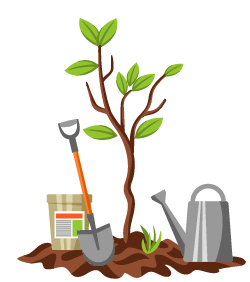
When placing the seedling in its main location, pay attention to the root collar. It should be 3–5 cm above ground level. If the root collar is covered with soil, it will rot and weaken the plant. Fungus may develop on the roots, which will result in the death of the tree.
Nearby groundwater
Planting an apple tree in a low-lying area where water stagnates will lead to the subsequent death of the seedling. If the entire plot is in such conditions, the following steps can be taken:
- raise the ground level;
- drain the area;
- plant trees on an artificial hill created with your own hands (the height should be at least 80 cm);
- Choose apple trees with a shallow root system for planting.
Crowding during planting
People tend to cram as many plants as possible into a small space. As a result, the grown seedlings shade their neighbors and hinder their development. Some trees may die from lack of nutrients and light.
When planning plantings, it is important to know what height and crown size the selected apple tree will reach so that it can grow strong and blossom.
Incorrect watering
The suction hairs on apple tree roots are located at the crown perimeter. When watering the tree, don't run the hose directly to the trunk; instead, water it along the crown perimeter by creating a groove.
Incorrect pruning of branches
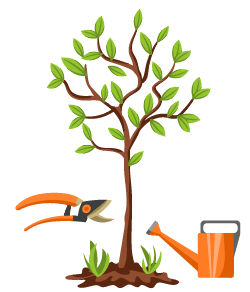
Young trees under three years old shouldn't be pruned to avoid weakening them. The largest buds, which will later form foliage, are located at the ends of branches. Shortening these branches will delay the development of the remaining buds, and the bark on the shoots will begin to dry out.
Planting a new tree in place of the old one
After a tree dies, pathogens remain in the soil, which immediately attack the young plant.
The vacated area should be dug over and the soil disinfected. Another crop can be planted, but an apple tree should not be planted in this area for at least five years.
Incorrect application of fertilizers
Gardeners sometimes make the mistake of fertilizing young seedlings annually. The apple tree won't bear fruit as soon as expected, but its crown will grow excessively. Aggressive fertilizers should be avoided during the first two years for the following reasons:
- the plant has enough nutrition added to the hole during planting;
- Fertilizers can burn the roots of a fragile seedling.
You can feed the trees with compost or ash. When applying mineral fertilizers, dissolve them in water first and use a concentration three times lower than for mature apple trees.
Mistakes when preparing for winter
Fragile trees can freeze and die in winter. This also applies to frost-hardy varieties. They need to be protected from the cold. Here's what we recommend:
- Provide good watering at the end of September.
- Dig up the soil under the tree and cover it with mulch to protect the root system from the cold.
- At the end of autumn, wrap the branches with a heat-retaining material (for example, burlap).
- When snow falls, cover the seedling completely with it.
There are many reasons why young apple trees die. Choosing the right variety, planting, and careful care will help you grow a full-fledged, productive tree with fragrant fruit.