Fitosporin instructions: use in the garden and vegetable garden
Fitosporin is a biological fungicide. It is used in agriculture and home gardening to protect garden, vegetable, and houseplants from fungal and bacterial diseases, as well as adverse environmental factors. Let's look at the main advantages, spectrum of action, and detailed instructions for using Fitosporin.
Content
Composition of biofungicide
Fitosporin contains:
- a live culture (spores) of a gram-positive bacterium called Bacillus subtilis strain 26D;
- growth-promoting additive based on potassium humate;
- auxiliary substances - white coal, chalk.
The drug is available in three forms:
- Light grey powder in 10g and 30g sachets. 1g contains approximately 2 billion bacteria.
- Paste in 100 and 200 g packages. 1 g contains 100 million bacteria.
- Aqueous suspension in containers with a capacity of 100 ml to 10 liters. 1 ml contains 1 billion bacteria.
The powder and paste should be dissolved in water before use. The liquid is ready for immediate use.
Mechanism of action of Fitosporin
Fitosporin has a contact-systemic mechanism of action based on the properties of its components:
- Bacillus subtilis is characterized by its ability to form a symbiotic (mutually beneficial) relationship with plants. The microorganism easily penetrates their vascular system, actively reproduces, and secretes waste products (oligopeptides) that suppress the growth of pathogenic microflora (disease-causing bacteria and fungi).
- Humic compounds promote accelerated crop growth, strengthen their immune defenses, and increase crop yields.
- A complex of active substances improves the soil structure and increases its fertility.
Purpose of the drug

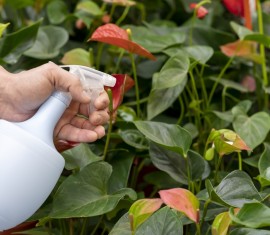
Fitosporin is used in greenhouses and open ground. The solution can be used to water and spray plants, treat compost and substrate, and soak planting material. Main indications:
- disinfection and improvement of seed quality before planting;
- soil disinfection;
- treating seedlings in spring to increase their resistance to diseases and stimulate the development of the root system;
- treatment and prevention of bacterial and fungal pathologies in garden, vegetable and indoor crops;
- treatment of plants to stimulate immunity and resistance to drought, frost, temperature changes and other unfavorable environmental factors;
- acceleration of root formation of cuttings;
- disinfection of plant tubers and bulbs before long-term storage to prevent rotting.
Bacillus subtilis combats diseases such as:
- various types of rot - root, dry, wet, white, gray, black, fusarium, penicellosis;
- bacterial cancer, spotting;
- powdery mildew;
- Alternaria, bacteriosis, septoria, downy mildew;
- brown rust, scab;
- monilial burn, rhizoctonia;
- snow mold;
- tracheomycosis, late blight;
- phomosis, cercospora, and so on.
Fitosporin's effectiveness ranges from 65% to 95% for various diseases. Its effects can be seen within 3-4 days of use. The protection period lasts up to 3 weeks.
Benefits of using
The main advantage of Fitosporin is its safe use at any stage of plant growth (budding, flowering, fruiting). Other benefits:
- Effective against a wide range of pathogenic bacteria and fungi.
- Safe for humans, pets, beneficial insects and the environment.
- Maintains properties in the temperature range from –50 to +40 °C.
- No addiction in plants even with frequent and long-term use.
- Compatibility with other preparations - fungicides, insecticides, antibacterial agents.
- Reducing the toxic effects of herbicides on plants.
- Stimulating growth and increasing crop yields by 15–30%.
- Improvement of shelf life of fruit and vegetable products by 2-3 times when processed before storage.
- Relatively low cost.
Fitosporin is most effective as a preventative measure. To achieve a high yield or promote vigorous growth of ornamental plants, it should be used regularly, starting from the soil and seed (cuttings, tubers) preparation stage until harvest. In the later stages of disease development, the product is ineffective and should be used only as a supplementary treatment.
The main drawback of Fitosporin is Bacillus subtilis' sensitivity to ultraviolet light. Spraying should be done in cloudy weather or in the evening.
Features of solution preparation
How to properly dilute Fitosporin? The method depends on the form of the product and its intended use. In any case, it is necessary to use settled or bottled water no hotter than 38°C. Tap water contains impurities harmful to Bacillus subtilis, and higher temperatures can kill it.
Rules for preparing the solution:
- The powder should be poured into a small amount of water, mixed thoroughly, and then liquid should be added to obtain the required volume.
- The liquid preparation in the required dose can be poured directly into water and stirred.
- A stock solution should be prepared from the paste: combine 1 part of the preparation with 2 parts of water. This can be stored in a refrigerator for 6-7 months. Before use, measure the stock solution according to the instructions and add it to the water.
- After preparing the working solution, wait 15–30 minutes for the bacteria to "wake up." However, it must be used within 2 hours of mixing.
The paste dissolves poorly in water. You'll need a fork or whisk to mix it.
Application of Fitosporin for garden crops
For garden crops, "Fitosporin" should be used before planting for the following purposes:
- Soil treatment to eliminate pathogens and improve fertility. This procedure is carried out in the spring at temperatures above 15°C, 7–10 days before planting. The tilled soil should be watered with a biofungicide solution at a rate of 15 ml of stock solution or 5 g of powder per 10 liters of water per 2 m².
- Soaking rhizomes and cuttings when planting/replanting prevents diseases and combats root rot. Dissolve 10 g of powder or 30 ml of stock solution in 5 liters of water, soak the material for 1–2 hours, and then plant in the soil.
- Spray fruit trees, shrubs, and garden flowers to prevent or treat diseases in the early stages. Dilute 15 ml of the stock solution or 5 g of powder in 10 liters of water. This amount is sufficient for 100 m² of area. Apply once every two weeks. The first spray should be applied when the leaves are just beginning to unfurl.
- Water the roots of affected ornamental plants and fruit bushes. Dilute 6-10 ml of the stock solution in 10 liters of water (per 10 plants). Water once every 7-10 days. This method is not suitable for trees; spraying is better.
- For treating infected flowering plants, prepare a solution of 1 liter of water and 3.5 g of powder. Spray once every 7–10 days.
In the fall, Fitosporin is used to prepare perennial plants for winter. After fruiting and pruning, it's useful to spray them with the solution. You can also water the soil after digging.
The product is washed away by rain. It is recommended to apply it during dry periods or immediately after precipitation.
Use for garden plants
It is recommended to use Fitosporin to prepare soil in a vegetable garden or greenhouse using the same method as in a garden. You can also treat compost at a rate of 1 tablespoon of the stock solution per 1 liter of water per 50 kg of raw material.
This product greatly improves seed germination. Treatment options:
- Soak seeds (tubers, bulbs, rhizomes) for several hours before planting in a solution of 3 g of powder or 2–4 drops of mother liquor and 200 ml of water.
- Spray or soak potatoes in a solution of 1 liter of water and 4 tablespoons of mother liquor (for 10 kg of material).
The preventative use regimens for Fitosporin for various crops are provided in the table. These regimens are also used when the first signs of disease are detected.
| Culture | Consumption | Peculiarities | ||
| Mother solution from paste, ml | Water, l | Square | ||
| Potato | 10 | 10 | 100 m2 | Spraying at the budding stage, then after 10–15 days |
| Cabbage | 5 | 1 | 100 plants | Immersion of seedling roots 2 hours before planting |
| Tomato | 7 | 5 | 20–30 plants | Watering the seedlings at the roots 2–3 days after planting |
| 10 | 10 | 100 m2 | Spray 7–10 days after planting. Repeat after 14–20 days. | |
| Cucumber | 10 | 10 | 100 m2 | Three sprayings with an interval of 10–15 days. |
When growing crops indoors, you can use Fitosporin not only to treat the plants and substrate but also to clean the structure itself. To do this, mix 15 ml of the stock solution, 10 liters of warm water, and a little laundry soap.
Safety rules
Fitosporin's active ingredient is bacteria that are completely safe for humans and the environment. They pose no threat to birds, beneficial insects, or animals. Fruits treated with the product can be eaten immediately, provided they are thoroughly washed.
The scientific community classifies Bacillus subtilis as a GRAS (generally recognized as safe organism). However, it's worth noting that systematically overdosing on Fitosporin can disrupt the soil microflora in the area.
The drug is classified as hazard class 4 for humans, meaning contact with its components could potentially cause irritation of the mucous membranes. Therefore, standard guidelines should be followed when using it:
- Wear gloves, a respirator, glasses, and protective clothing.
- Do not drink, eat or smoke during treatment.
- If the product comes into contact with skin or eyes, rinse with clean water.
- If the solution is accidentally swallowed, drink several glasses of water, induce vomiting, take an absorbent and consult a doctor.
The drug should be stored until the date indicated on the packaging (approximately 4 years) at a temperature of –20 to +30 °C in a hermetically sealed package.
The biofungicide cannot be combined with growth stimulants to prevent excess active substances and alkaline agents due to the risk of reduced effectiveness.
Fitosporin, used for watering soil, soaking seeds, and spraying plants, is a biofungicide and growth-promoting agent capable of preventing the development of a wide range of fungal and bacterial diseases. Thanks to its natural mechanism of action, the product is completely safe for people and the ecosystem. It is important to strictly follow the dosage instructions, apply the product regularly, and prevent deterioration of the plants, as Fitosporin's effectiveness decreases sharply in the later stages of infection.