
How to Feed an Apple Tree After Flowering: 16 Fertilizer Options
Content
Why is post-flowering fertilization important?
The apple tree is the most common fruit crop, found in almost every garden. These trees are low-maintenance, thrive in a variety of soil types, and can relatively easily tolerate both excess and dehydration. However, obtaining a bountiful and high-quality harvest is impossible without fertilizing, and a specific type of fertilizer should be applied at each time.
It depends on how competently it is carried out top dressing, the yield, taste and shelf life of the fruit depend.
Fertilizing apple trees after flowering is crucial, as flowering trees draw large amounts of macro- and micronutrients from the soil. To restore depleted soil composition at the beginning of fruit set, it's necessary to apply fertilizers appropriate for the growing season. Otherwise, nutrient deficiency will cause the death of a significant portion of the fruit, causing the fruit to become smaller and lose the flavor characteristic of the particular variety. Young trees blooming for the second or third time are particularly vulnerable in this situation. Their immature root systems are unable to absorb nutrients from a significant distance around the trunk.
Fertilizing apple trees after flowering in June simultaneously performs several actions:
- replenishment of mineral elements in the soil, expended during the flowering period;
- maximum preservation of formed ovaries;
- improving the quality of future fruits;
- strengthening the immunity of trees – preventing the development of various diseases and increasing resistance to stress and adverse environmental factors;
- ensuring the full formation of annual shoots.
When fertilizing apple trees, special attention should be paid to young trees and high-yielding varieties, which are losing their ability to reach their full potential due to a lack of nutrients.
After flowering, the apple orchard not only produces fruit but also actively grows foliage. Therefore, fertilizers should be generous, varied in composition, and application method (conventional watering under the root and spraying).
Methods of fertilizing apple trees
 When caring for an orchard, it is important not only to know when and what feed apple tree after flowering, but also what is the best way to do it. There are two fertilization techniques:
- Application of a nutrient preparation directly under the root. The procedure is performed after glaze tree. After fertilizing the soil in the tree trunk circle mulch peat.
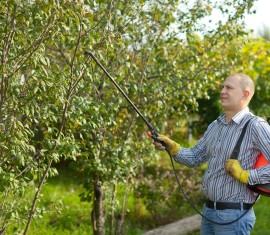
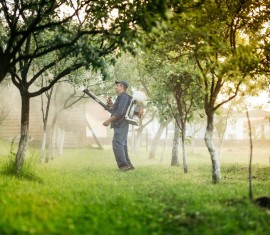
- Spraying is the application of a nutrient solution to the foliage using a sprayer. It's important to ensure that the liquid reaches not only the crown but also the skeletal branches. This technique ensures rapid penetration of minerals into the tree and their subsequent absorption.
Each technology has its own advantages and disadvantages.
Advantages of root feeding:
- the possibility of using compounds that are poorly absorbed by leaves, such as phosphates;
- saturating the soil with micro- and macroelements, restoring its fertility;
- precise dosing of the volume of fertilizers applied;
- the ability to extend the intervals between feedings thanks to longer absorption, which ensures a uniform supply of nutrients.
For root feeding, you can use either liquid or dry fertilizers. The former are quickly absorbed, while the latter take longer to work. The downside of this technique is the loss of some nutrients.
Advantages of foliar feeding:
- rapid absorption, allowing you to quickly respond to a deficiency of a particular nutrient;
- the ability to save fertilizer.
The main drawback of this method is that sudden rains wash away the compounds applied to the apple tree. Another drawback is the difficulty of treating tall trees.
Therefore, it's necessary to use both root and foliar feeding techniques. This way, every part of the fruit crop receives balanced nutrition.
What fertilizers should I use?
Before fertilizing apple trees after flowering, it is necessary to find out exactly what elements they need during this period.
 In June, apple trees will need:
- Nitrogen activates all metabolic processes occurring in the apple tree's body. It is especially important during the period of green growth.
- Phosphorus – stimulates the energy processes that occur during the formation and growth of ovaries.
- Potassium – increases the production of vitamin C, improves the taste and increases the shelf life of developing fruits.
- Bor, iron, calcium, magnesium, sulfur – ensure the full development of fruit crops.
After flowering, apple trees are fed with organic fertilizers to enrich the soil with nitrogen. Organic fertilizers include:
- Mullein. Cow manure, diluted with water in a ratio of 1:10, infused for 7-8 days, and then added to the soil at a distance of 60 cm from the trunk.
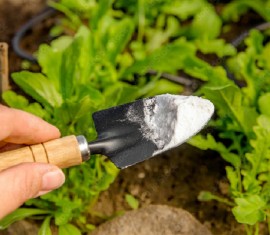
- Ash (contains up to 12% potassium and up to 40% calcium). Ash is applied to the soil dry or dissolved in water and sprinkled over the tree trunk area. The recommended dosage is 200 ml/1 m2.
- Bird droppings. Before application, dilute with water at a ratio of 1:15 to avoid burning the apple tree's root system.
- Succinic acid. This product stimulates metabolism and improves photosynthesis.
In addition to organic matter, the following are recommended for fertilizing apple trees after flowering:
- Nitroammophoska contains nitrogen, potassium, and phosphorus. All these elements are essential for fruit crops in June. To prepare a working solution, dilute the substance at a ratio of 40 g per 10 liters of water.
- Monopotassium phosphate is absorbed almost instantly. The product is diluted at a ratio of 15 g per 10 liters of water.
- Azofoska is recommended for liquid application. It is diluted with water at a ratio of 1 matchbox per 10 liters. This fertilizer provides apple trees with a wealth of nutrients.
- Superphosphate – used in combination with potassium sulfate. Each product is mixed with water at a ratio of 1 tbsp. per 10 liters.
- Borofoska is a complex, nitrogen-free fertilizer. It accelerates metabolic processes in trees, ensuring abundant and prolonged fruiting.
- Boric acid stimulates fruit formation. It is used for foliar application. It is diluted with water at a ratio of 5 g per 10 l.
- Humates are a group of fertilizers enriched with microelements.
When thinking about what to feed an apple tree after flowering, when the fruit is setting, it is important to remember that the fertilizer must be balanced in composition.
When using nitrogen as a fertilizer, it is important to remember that an incorrect dosage can destroy the fruit crop.
During the fruit ripening period, the following compositions have proven themselves to be effective:
- 50 g of nitrophoska and 1 g of sodium humate, diluted in 10 liters of water;
- infusion of herbs mixed with water in a ratio of 1:10.
For foliar feeding during this period you can use:
- urea (50 g/10 l of water);
- ash infused in warm water (200 g/10 l).
To prevent leaf burn, apply these products in the morning or evening. An interval of at least 14 days is required between all types of fertilizers.
The higher the concentration of the nutrient composition, the further from the trunk it should be added to the soil.
What else needs to be done with the apple tree after flowering?
 After the flowering period, the orchard should be treated with pesticides to prevent disease and pest infestations. Insecticides are used to control harmful insects, such as:
- "Spark";
- "Actellic";
- "Karbofos";
- Inta-Vir
- Fufanon;
- boric acid solution, etc.
To prevent the development of diseases, fungicides are used to treat trees: ferrous sulfate, Fitosporin, Bordeaux mixture, Hom, Horus, etc.
When treating apple trees after flowering, it is important to adhere to the following schedule:
- the first - immediately after flowering;
- the second - 14 days after the first spraying, in conditions of high humidity and frequent rains, the interval can be reduced to 8-10 days;
- the third – 2 weeks after the previous treatment.
In the future, the apple orchard is sprayed as soon as signs of pest presence appear.
Proper care of fruit crops during all growing seasons, and especially after flowering, is the key to a good harvest.