Treating a site with ammonia: what it's used for and how to use it correctly
Ammonia is used in gardens and vegetable plots as a fertilizer and pest control. It's a popular folk remedy, effective and easy to use. It can help address low yields, promote plant growth, and prevent disease.
Content
Can I water my garden with ammonia?
Ammonia is used to care for many plants: flowers, trees, and shrubs. It provides an accessible form of nitrogen, essential for garden plants. The effect is almost immediate. The nitrogen concentration in ammonia reaches 82%. It must be diluted before use; one bottle is enough to treat a large number of plants.
What are the purposes of irrigation?
All plants require nitrogen, but in varying concentrations. It accelerates photosynthesis. A deficiency disrupts chlorophyll synthesis, causing plants to become diseased, their leaves to turn yellow, and flowers and buds to dry up and fall off.
Every gardener should know how to use ammonia in the garden. Using this product helps:
- protection from pests such as moles, mole crickets, wireworms, ants;
- alkalization of acidic soil;
- increase in green mass;
- strengthening the stems;
- increased budding;
- good fruiting.
This is an excellent way to prepare trees, berry and fruit bushes, and perennial vegetables for winter by boosting their immunity. Ammonia helps weakened plants recover quickly. The effect is noticeable as early as the fourth day of ammonia irrigation. Plants revive, transforming as if by magic, actively growing, and pests that plague them die.
Which plants can be treated and which cannot?
Ammonia has proven effective against garden pests. Ammonia is a source of nitrogen and is beneficial to all crops. However, some plants require more, while others require less.
Onions and garlic, cucumbers and potatoes, and cabbage and pumpkin respond positively to ammonia treatments. Rhubarb, raspberry bushes, blackberries, gooseberries, and currants also respond well. An ammonia-based solution is recommended for watering cherry and plum trees. It is beneficial for beets, tomatoes, peppers, eggplants, strawberries, and virtually all flowers, from geraniums to lilies.
Carrots, corn, and pears require less nitrogen. Crops that obtain it from the air or enrich the soil through their roots, such as legumes, do not require it.
Basic rules for using ammonia on the site
Ammonia must be used correctly in the garden to control aphids and other pests. Always remember that this is a concentrated substance and must be handled with care. Ammonia should only be diluted outdoors to avoid the risk of suffocation. When using ammonia, wear personal protective equipment (PPE): goggles, gloves, and a respirator.
As for the propagation proportions, much depends on the type of plants, their condition and the intended goal: to strengthen the crop, increase yield or budding.
The minimum concentration is 10 ml of ammonia per 10 liters of liquid. This dosage is considered optimal when transplanting seedlings to their permanent location, from a greenhouse to open soil. This solution is used to treat plants for disease prevention and pest control.
The average ratio is 20 ml of 10% ammonia per 10 liters of water. This fertilizer supports active growth, budding, and fruiting.
A concentration of 20–50 ml per 10 liters of liquid is considered high. The solution is used when signs of nitrogen deficiency appear.
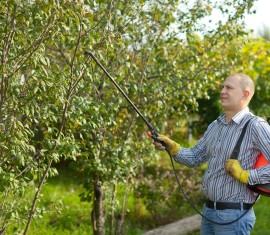
Fertilizer is applied at the roots, between rows, or by spraying. This helps repel pests, strengthen plants, and prevent disease. A single application accomplishes three goals.
It is important to follow simple instructions:
- Treatment of plants with ammonia is carried out early in the morning, in windless weather.
- The soil is first watered and then loosened.
- During spraying, the foliage is treated from both sides.
- Weakened crops, those affected by diseases and parasites, require a more concentrated solution.
- To prevent rapid evaporation of the alcohol, it is acidified with citric acid or apple cider vinegar. This mixture lasts longer.
- Shrubs are irrigated with ammonia in the spring when buds begin to emerge. If signs of nitrogen deficiency appear, a secondary treatment is performed at the flowering stage.
Purposes and subtleties of use
Ammonia solution is used as a fertilizer for garden crops, as well as for pest control and disease prevention. The application method and dosage vary for each case.
As a fertilizer
To ensure good growth, plants must be fed with nitrogen. This component is found in urea, ammonium nitrate, and carbamide. If desired, they can be replaced with a more affordable and readily available solution: ammonia.
The need for this type of fertilizer can be determined by the appearance of the plantings. Nitrogen deficiency can be recognized by the following signs:
- slow growth;
- death of plantings after winter (this occurs as a result of decreased immunity);
- the appearance of yellow spots on the leaves, their complete yellowing (lack of chlorophyll synthesis);
- thinned stems;
- shedding of flowers with buds.
If your garden plants exhibit at least two of the above symptoms, the soil is low in nitrogen. They should be fertilized with an ammonia-based solution.
Healthy plantings are fertilized with ammonia diluted in 10 liters of liquid. The fertilizer is applied to the roots once a week, after moistening and loosening the soil to prevent evaporation and ensure the nitrogen reaches the rhizomes.
Do not exceed the recommended dosage. Excess nitrogen is just as harmful to plants as too little. Fertilizer applications should be spaced two weeks apart.
Onions and garlic with yellowed foliage respond well to this type of feeding, as do tomatoes immediately after being transplanted into open soil, at the stage of bud formation and growth of green mass.
Sick and weakened plants require a more concentrated solution. During the growing season, the ammonia dosage in fertilizers is increased.
To prepare the solution, dissolve 30 ml of ammonia in 10 liters of liquid. It is also applied at the roots, but once every 10 days.
Watering plants with ammonia requires a slightly different approach. During the ovary formation stage, a more concentrated fertilizer is applied. 1.5 teaspoons of alcohol are diluted in 1.5 liters of liquid. The fertilizer is applied every four days. Fertilizing irrigation is usually performed before flowering and immediately after harvest (this applies to perennials).
From pests
Ammonia is effective against onion flies, rhinoceros beetles, and other soil-dwelling pests that regularly attack plantings. Many gardeners use it to control pests in their gardens. Mix 10 ml of detergent with 100 ml of ammonia and 10 liters of water. Mix all ingredients thoroughly until smooth, and water each plant generously.
Ammonia is considered one of the most effective remedies for ant in the garden. The solution is carefully poured into the anthill's tunnels or directly into the center. The ants themselves don't harm the plants, but they create a nest near garden plantings, which damages the roots and attracts aphids.
Ammonia is just as effective against mole crickets, moles, and wireworms. Mix 4 tablespoons of ammonia with 10 liters of liquid and sprinkle it over the planting holes before planting. Repeat the treatment after 10 days.
If pest burrows are identified, place a cotton swab soaked in ammonia inside. This will protect your plants not only this year but also next year.
To prepare an aphid solution, mix 50 ml of ammonia with 10 liters of water and 100 g of finely chopped laundry soap (crushed with a knife or grater). Allow the solution to steep until it reaches a smooth consistency. Spray the foliage on both sides.
To combat soil-dwelling pests, the soil is thoroughly irrigated with an ammonia solution to a depth of 20–25 cm. This is the distance from the ground where numerous pest larvae reside.