Dolomite Flour in Gardening: A Miracle Protector
Content
What is dolomite flour?
This fertilizer is a natural limestone product consisting of dolomite crystals. Using dolomite flour in gardening and horticulture helps protect plants from diseases and pests, as well as liming the soil.
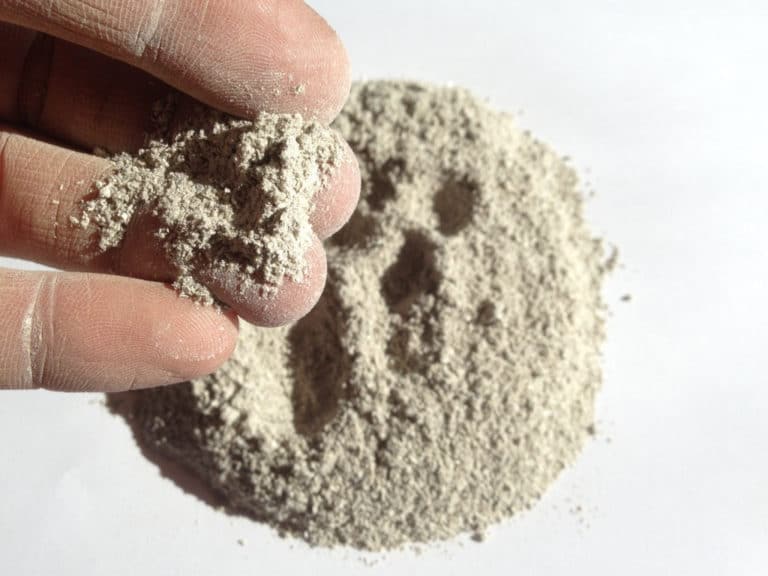
Limestone flour is produced in powder form due to its texture. Its color, appearance, and consistency are comparable to cement.
When is the best time to use fertilizer in spring?
 Dolomite flour can be added to lawns, flowerbeds, or garden beds in the spring, as soon as the weather warms up. Apply the mixture on a dry day to prevent precipitation from washing it off the soil surface.
Add dolomite to the vegetable bed 2–3 weeks before planting crops.
How to use dolomite flour in the garden in spring
Spread the mixture evenly over the soil, then dig the area to a depth of at least 10 cm. On heavy soil, use 200 grams of dolomite per linear meter of a prepared bed 42–45 cm wide, while on light soil, 100 grams will suffice.
To adjust soil pH, determine the required volume of dolomite and spread it over the soil. For example, if your soil pH is 5.5 and you want to raise it to 6.5, apply 2 kg of dolomite flour per 9 square meters.
What plants can be fertilized in spring?
Spring is a good time to apply dolomite flour. However, the dosage varies depending on the crop variety.
When planting vegetables

Before planting vegetables, especially tomatoes, turnips, cabbage, and potatoes, add one cup of dolomite flour per square meter of soil. Mix the mixture into the soil. Onions, zucchini, melon, beans, and asparagus respond well to the fertilizer.
Other vegetable crops can be water In the spring, use "dolomite milk" once every seven days. To prepare the solution, add dolomite flour (1 kg) to 10 liters of water and mix thoroughly.
In the orchard
Sprinkle 250 grams of fertilizer evenly over an area of 1 square meter around the plant. After fertilizing, carry out wateringApply dolomite to gardens annually.
When planting fruit crops, add the following to the planting hole:
- for pome plants – 600 grams;
- berry bushes – 100 grams;
- stone fruits - 300 grams of dolomite flour.
You can add up to 0.5 kg of the mixture under mature bushes.
You cannot apply fertilizer to garden strawberries and gooseberries.
In the future, you can feed stone fruit plants (plums, cherries) annually: 1–2 kg per tree after harvesting the fruit.
Fertilize pear and apple trees once every five years.
After adding dolomite flour, be sure to water it.
Application on lawns
Apply the substance to your lawn annually at a rate of 100 g per square meter. Lawns with yellowish and brown spots, weed overgrowth, or excessive moss will benefit from dolomite fertilizer.
The presence of both weeds and moss indicates that the pH of some areas of the lawn is too low. For example, moss thrives in an acidic environment, which can be corrected with this fertilizer. Spread it evenly over the area.
Adding to compost
When making compost, sprinkle each layer with 100 grams of dolomite mixture.
How to use dolomite flour in autumn
Due to its ability to normalize soil acidity and its unique composition, dolomite flour is also used in the fall. The fertilizer is used as a plant food and to deoxidize the soil.
Liming
The spring soil deoxidation procedure can be replaced with a fall procedure, carried out after the fruit harvest. Melting snow promotes the rapid decomposition of the beneficial substances contained in the product.
Fertilizer can be used for any crops except those that love acidic soil.
Sequence of actions:
- First of all, check the acidity level;
- if the pH is low, use a combination of boric acid (7–8 g) and dolomite flour (1 kg);
- use 200 g of mixture / 1 sq. m of soil;
- After application, level the area with a rake;
- After seven days, apply mineral fertilizer containing potassium, nitrogen and phosphorus, and dig up the area.
Fertilizing fruit trees
In the fall, stone fruits and pome crops require fertilization. This is necessary to enrich the soil with beneficial elements and protect plants from various diseases. Although limestone powder is beneficial, it's important to pay attention to its proportions.
Example of fertilizer application:
- the volume of the substance per tree is no more than two kilograms;
- Sprinkle the powder in the tree trunk circle (diameter – two meters);
- loosen the bed well with a rake;
- carry out the manipulation in the period from the last days August and until the end of September;
- Frequency: once every two years.
Fertilizing berry bushes
Top dressing Dolomite can help increase the fruiting of berry bushes and reduce the risk of various diseases. For example, currant bushes like the fertilizer.
Proper feeding:
- use 0.5–1 kg of the product per crop;
- Spread the powdered flour around the bush (diameter – one meter);
- apply fertilizer in September-October;
- Apply the powder every 2–3 years, taking into account the soil acidity level.
Fertilizing strawberries
It's best to fertilize garden strawberries in the fall. This helps strengthen the bushes' roots, allowing them to survive the winter without any adverse effects.
Carry out the procedure on a dry day in early September.
The order of actions:
- make a mixture by taking dolomite fertilizer (400 g), ash powder (200 g) and nitrophoska (2 tbsp);
- take the number of components based on 1 sq. m (approximately 6-10 bushes);
- Sprinkle the well-mixed powder under the foliage;
- then loosen the soil.
Tree processing
The use of dolomite flour in gardening consists not only of fertilizing, but also of treating tree trunks before wintering.
Fruit plants can be whitewash A diluted solution of dolomite powder will help protect the trunks from the harsh winter sun.
Preparation of solution for whitewashing:
- dilute the product (3–4 kg) in liquid (10 l);
- the solution should be slightly runny, but not run down the trunk;
- treat the main trunk of the crop before frost sets in;
- perform the manipulation once every two years.
Which plants should not be fertilized with dolomite flour?
Any crops classified as "acid-loving" are not recommended for feeding with dolomite flour. This includes gooseberries, blueberries, cranberries, sorrel, lingonberries, as well as ornamental shrubs such as azaleas, heathers, rhododendrons, ferns, and holly.
These crops grow and develop well in high acidity.
When changing plants in the spring, you need to add dolomite flour or another deoxidizing agent.