Apple tree Augusta: characteristics of the variety and care
| Color | Reds |
|---|---|
| Ripening season | Summer |
| Size of apples | Average |
| Taste | Sweet and sour |
| Crown type | Average tree height |
| Shelf life | Low shelf life |
| Application | Fresh , For recycling |
| Winter hardiness | High winter hardiness |
| Fruiting age | From 5 years old |
 History of origin and regions of growth
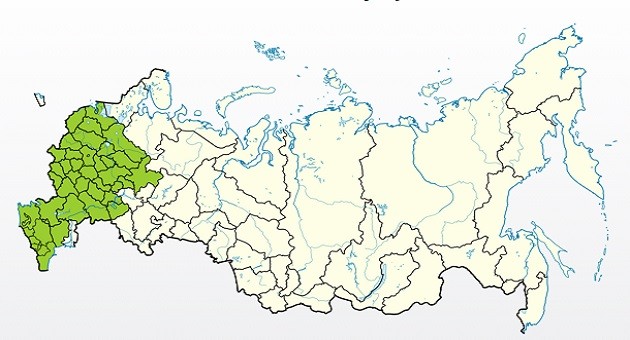
Growing regions
- European part of Russia.
- Moscow and Moscow region.
- North Caucasus.
- Leningrad region.
- Crimea.
- Southern regions.
Origin
Development of the Augusta apple tree began in the mid-1970s, and by 1982, the first hybrid seedling of the cultivar was obtained at the All-Russian Research Institute of Fruit Crop Breeding. The new apple tree's "parents" are considered to be the tetraploid Papirovka and Orlik. The cultivar's creators were renowned Russian breeders Zoya Mikhailovna Serova, Evgeny Alekseevich Dolmatov, and Galina Alekseevna Sedysheva, working under the supervision of Evgeny Nikolaevich Sedov.
In the fall of 2001, the Augusta apple tree was first registered in the register of varieties approved for cultivation, but it was only approved seven years later. In October 2009, the apple tree was officially included in the State Register of Breeding Achievements and zoned for the Central Black Earth Region. In reality, it can be grown without much difficulty throughout almost the entire central part of the Russian Far East, as well as in the northern and southern regions, Crimea, and the Caucasus.
Content
Description of the Augusta variety
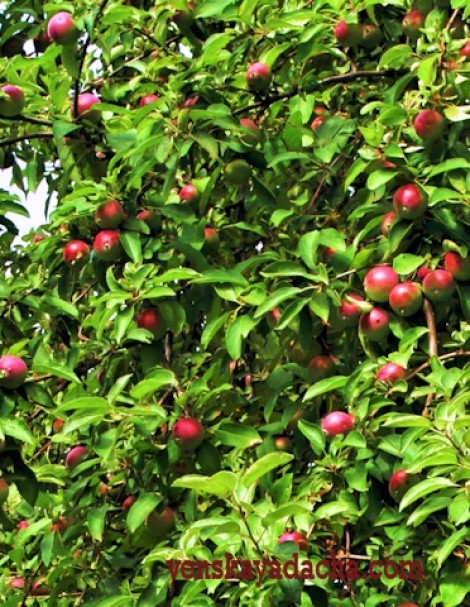
 The main advantage of this apple tree is its enviable resistance to low temperatures. It can easily withstand harsh and changeable weather in the Moscow region and the Leningrad Region, it tolerates hot and dry summers. It has increased resistance to scab and other apple tree infections, consistently produces high yields, and is easy to care for and undemanding of soil conditions.
Apples have high commercial and consumer qualities: they are tasty, very attractive, and have a strong, pleasant aroma. However, their shelf life is rather short, making them more suitable for processing into juices, jams, preserves, and compotes. They are recommended for intensive commercial orchards and small backyard gardens.
Apples: What do they look like?
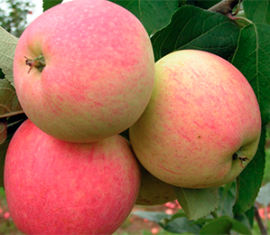
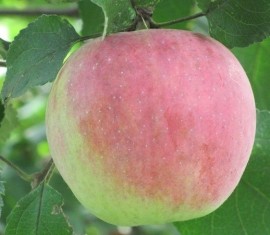
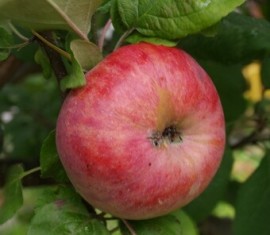
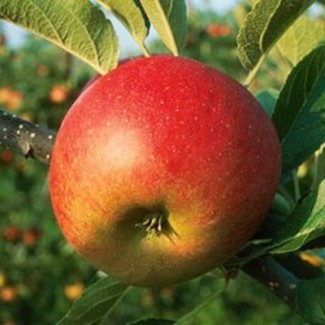
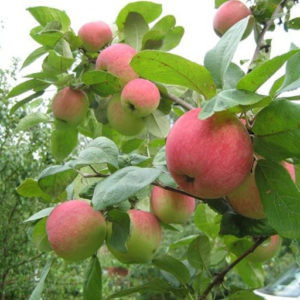 The fruits are generally medium or slightly larger than average in size, but not large. They grow to 140-170 grams in weight. They are round, slightly conical, and elongated, and may be slightly asymmetrical, slanted to one side. The apples are smooth, with ribbing visible at the calyx and smoothed out over the rest of the surface; the lateral seam is not visible.
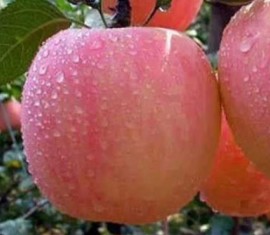
The skin is dense, smooth, and highly shiny, glossy; at full maturity, it may have a dense waxy-oily coating. The base color is green, turning yellowish-green with a distinct golden sheen as it ripens. The blush is dense, thick, and mottled, red, bright red, or crimson. Subcutaneous punctures are numerous, light greenish, and large. Chemical properties are best understood by analyzing the composition:
- Sugar (fructose) – 10.9%.
- Ascorbic acid (vitamin C) – 13.2 grams.
- Pectins (fiber) – 11.5%.
- P-active substances – 264 milligrams.
- Titratable acids – 0.76%.
The flesh is medium-firm, coarse-grained, very juicy, breaks easily, is crisp, prickly, and slightly refreshing, with a pleasant consistency. It has a greenish or lemony hue, sometimes veering toward creamy, and a sweet and sour, harmonious, and balanced dessert-like flavor. Experts rate the taste and appearance 4.5 out of 5 stars.
Apple tree Augusta: characteristics
Crown and root system
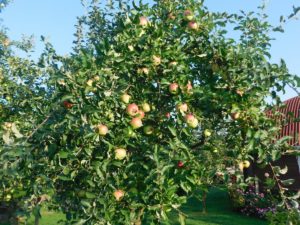 The trees are of medium height, but are often classified as semi-dwarf. At maximum, without formative pruning, they can grow up to 4.6-5 meters.The crown is often oval when young, but as it grows, it becomes broadly oval, sometimes even spreading, weeping, or drooping. The branches extend from the main trunk at right angles; they are thick, strong, and straight, covered in gray or gray-brown bark, pubescent, and bear mixed fruit.
The leaves are fairly large, oval-elongated, short-pointed, heavily wrinkled, dense, leathery, but not shiny, matte, with coarse ribbing. The edges of the blade are coarsely serrated and serrated, the blade itself is concave, with a light felt-like pubescence on the underside. The root system is robust, deeply embedded, and may or may not have a central branch.
Productivity and pollination
It is more logical to classify this variety as early-fruiting and medium-yielding, since it cannot be compared with the most fruitful apple trees.
A good grower will typically yield at least 110-125 kilograms of delicious and beautiful fruit per season from one mature Augusta tree. In some of the most favorable years, the yield can reach 140-150 kilograms, but no more..
Augusta is a tripoloid variety, so it can produce fruit even without outside pollinators, but the yield will then be no more than 25-30% of the potential. Such results are usually unsatisfactory for gardeners, so they prefer to plant it within 40-50 meters of other apple trees with suitable flowering times.
Winter hardiness and disease resistance
Experts note that during testing and subsequent cultivation over many years in natural conditions, even at winter temperatures of -32-35°C, the trees did not suffer any serious damage. Augusta is considered to be very winter-hardy, which is why many grow it in harsher regions than those specified in the zoning regulations.
Apple trees are naturally highly resistant to scab, powdery mildew, cytosporosis, and other fungal and bacterial threats. They have true genetic immunity to the former, but for the latter, it's best to spray fungicides and insecticides promptly to prevent any risks.
Rootstocks and subspecies
There are no subspecies of Augusta, and it's likely that none will ever appear, but this is currently unknown. The plant can be grown on a variety of rootstocks, the most suitable of which are semi-dwarf and dwarf varieties. These will ensure the most compact crown size and large fruit. True, winter hardiness is reduced somewhat, but not significantly.
Features of growing Augusta
Landing
 Basic conditions
 Basic conditions
- Apple trees thrive in open spaces that receive full sun throughout the growing season. In the shade, trees grow poorly and may die or fail to bear fruit.
- Good crown ventilation is another crucial factor when choosing a planting location for Augusta. However, you'll also need to ensure the trees aren't exposed to drafts, which can also lead to disease and death.
- Proximity to groundwater can be a fatal mistake when planting a garden. Trees can easily reach the groundwater if it's at least 2-2.3 meters deep, and then begin to rot.
- The soil suitable for the tree is airy and nutritious, but it also grows well in loam, sandy loam, and black soil, if you prepare the holes properly and then feed it on time. water and fertilize the trees.
- Holes are dug 6-9 months before planting. They are dug 80-90 centimeters deep and the same diameter. The bottom is filled with soil from the recently removed topsoil layer, mixed with organic matter and minerals. Next, add a small amount of soil or drainage if needed (for swampy areas, nearby natural and artificial reservoirs, or floodplain meadows), and then filled with 30-35 liters of water. The holes should not be covered; they should be left outdoors.
- Root collar When planting, the tree should always be above the soil surface, at least 3-5 centimeters.
- It's advisable to leave approximately 4-4.5 meters of space between trees, and the same amount between rows, even with dwarf rootstocks. This will significantly simplify maintenance and harvesting.
- Place the seedling vertically, straightening the rhizome, directly on the drainage or a pile of soil, cover with soil, tamp it down tightly with your hands, water with 15-20 liters of water, the surface mulch.
Landing dates
Augusta can be planted at any time if purchased with a closed root system. This variety can be transplanted into the garden throughout the spring, summer, or fall. With open root systems, spring planting is preferable, allowing the apple trees time to adapt to the new conditions before winter.
Tree care
 Tree care
Protection from frost and pests
The variety is not typically covered with a tent, although in some specific regions this method is still used. However, the most common method is to lay spruce branches, bales of hay or straw, or mats of dry grass on the root zone, and wrap the trunks in burlap or old tights.
To protect young seedlings from attacks by hungry rodents in winter, the trunks are coated with fuel oil, grease, old lard, or melted lard. Regular application of whitewash lime to a height of 1-1.3 meters in autumn and spring.
Loosening the soil, watering: proper agricultural technology
The tree's trunk area is typically dug twice a year, in spring and fall. This is usually done carefully to avoid damaging the shoots located close to the surface. Hoeing is done more frequently, simultaneously removing all weeds, shoots from other plants, and root suckers.
Young trees are watered every 10-14 days, when there's no rain and the soybean season is very hot. As the trees mature, watering can be reduced, and only applied during the driest periods, when the tree can no longer cope on its own. Fertilizer is usually added with the water, as this ensures its absorption is much better.
Pruning: simple crown shaping
Augusta should be pruned correctly, creating a sparse, tiered form. This means the branches are spaced far apart and at different heights, with the top higher and the main shoots shorter and lower as they descend. The first pruning is done in the year of planting, with the entire crown cut back by a third, and all excess is immediately trimmed off.
Trees are regularly inspected and broken, dead, or diseased branches are removed. These simply suck the tree's sap and provide no benefit. Around 18-10 years old, you can begin light rejuvenation, removing 2-3 mature branches at a time to allow the new growth to develop.
Pollinator varieties
- Mantet.
- Arkad.
- Grushovka.
- Quinti.
- Kate.
- Melba.
- Stark Erliest.
- Lungwort.
Reproduction
- Grafting.
- Rooting.
- Layers.
- Growing from seeds.
Diseases and pests
- Cytosporosis.
- Green aphid.
- Bacterial burn.
- Scale insect.
- Codling moth.
- Leaf roller.
- Hawthorn.
Ripening and fruiting of Augusta
The beginning of fruiting
 The beginning of fruiting
The variety's early fruiting is relatively good, meaning it compares favorably with some varieties, but not so well with others. A tree grown on a vegetative rootstock begins bearing fruit only in the fifth or sixth year after planting. However, even then, it produces a record-breaking amount of fruit, at least 12-15 kilograms, and sometimes even more (up to 20-25). Dwarf and semi-dwarf trees begin bearing fruit as early as the second or third year, but are inferior in yield and frost resistance to their standard counterparts.
Flowering time
Early apple trees usually bloom quite early. Augusta begins blooming as early as the first half of May and usually completes the process by mid-May, but may be delayed in poor weather or a cold spring. The flowers of this variety are large and beautiful, gathered in clusters of 6-9, with delicate, slightly ruffled petals, usually snow-white but sometimes pink, and intensely fragrant.
Fruiting and growth
The tree grows quite quickly, gaining 35-40 centimeters per year. This rate is significantly higher, almost double, before fruiting begins, but then declines. It quickly reaches its maximum height and begins producing full crops by the 14th to 16th year.
The fruit ripens as early as August, which is where the apple tree gets its name. This period most often occurs in the middle or end of the month, so it's logical to classify the variety as a late-summer variety. All fruits should be picked immediately and, if possible, processed. Even under the best conditions, they can only last for 3-4 weeks, after which they become deformed, lose their juiciness, and become soft, crumbly, and sour.
Top dressing
- Mineral complexes.
- Peat.
- Superphosphate.
- Compost.
- Manure.
- Chicken manure.
- Humus.
- Ammonium nitrate.
- Humus.
What to do if it doesn't bloom or bear fruit
- Inspect for diseases or pests.
- Organize regular watering.
- Fertilize.
- Transplant to a more suitable location.
Why do apples fall?
- Natural weather conditions (wind, rain, hurricane, hail).
- Pest damage.
- Various diseases.
- Overripe.
Share your own experience with the Augusta apple variety so everyone can get to know it and get maximum yields with minimal effort.