Drying Apples in an Electric Dryer: Slicing, Temperature, and Time
Concerned about strengthening their immune systems during the cold season, people have learned to preserve fruits and vegetables for future use. Trying to preserve as many nutrients and vitamins as possible, homeowners resort to various preservation methods, and household appliances help them. This article will discuss electric dehydrators and how to quickly and efficiently produce large quantities of a beloved winter treat: dried apples.
Content
Preparing apples for drying in an electric dryer
Experienced housewives know that to achieve a nutritious and healthy product, it helps to know a few tricks. Even the simplest tasks have their own nuances. Drying apples in a household electric dehydrator is no exception. The correct selection of raw materials, the optimal temperature, and the drying time guarantee high-quality dried apples, rich in vitamins, micro- and macronutrients.
Which fruits are best to choose?
 Any apple variety is suitable for drying in an electric dehydrator. However, experienced home cooks often prefer sweet and sour autumn varietiesAntonovka, Aport, and Pepin are characterized not only by their pleasant taste but also by the high dry matter content of their pulp. It is this latter characteristic that ensures that after drying, the fruit segments retain their shape, flavor, and aroma, making them the perfect choice for a perfect fruit. drying has an attractive appearance.
As for sweet summer apples, the evaporation of sugar makes drying less appealing and loses their flavor. Winter varieties can also be processed in an electric dryer, but obtaining the finished product requires more time and energy, as the dense, firm flesh of the fruit is slower to withstand high temperatures.
For drying, select winter apples that have fallen from the tree on their own and do not have significant mechanical damage.
Once the variety has been selected, the fruit selection process begins. Preference is given to ripe, medium- to large-sized apples, as they are easier to slice. Minor skin damage and shallow wormholes are removed with a knife, and the remaining fruit is used for drying.
Apples with signs of rot, deep wormholes, and significant mechanical damage are not recommended for winter storage.
How to cut apples for drying
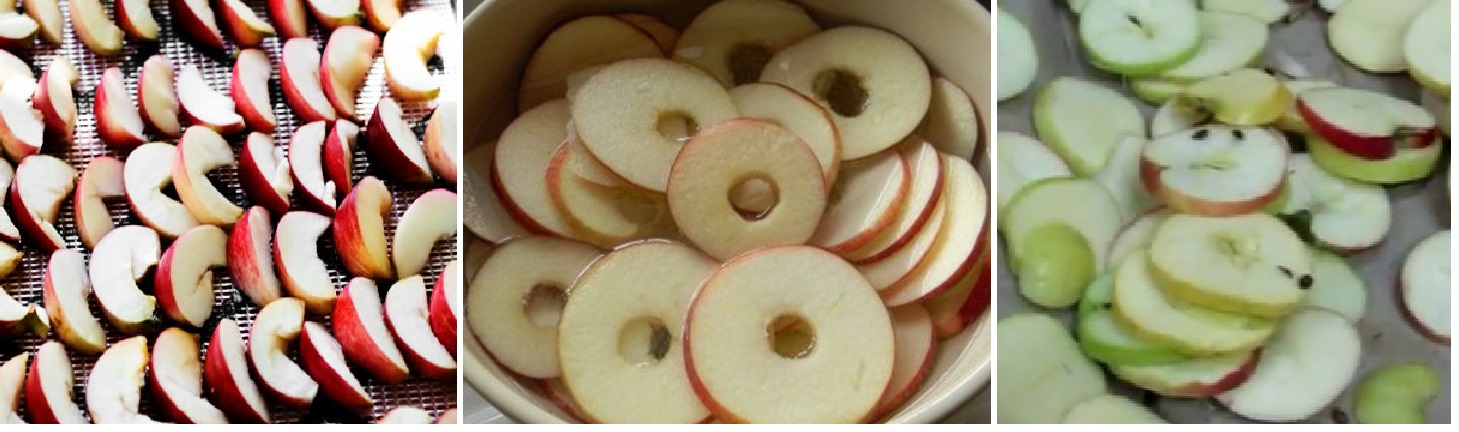
The selected fruits are thoroughly washed and dried before cutting. a special device is used to remove the core Alternatively, cut the apple into quarters using a sharp knife. Then, slice the fruit into arbitrary shapes. The recommended thickness of the slices is 5–7 mm.
Slices that are too thin will dry out under the heat and turn into a tasteless film. Drying thick slices takes a long time and consumes a lot of electricity.
Some homemakers peel apples beforehand, as the peel becomes too tough when dried. However, keeping in mind that the peel contains the most vitamins, nutritionists advise not peeling apples before drying. The exception is for minor imperfections, which are removed with a sharp knife.
Temperature and time
Prepared apple slices are laid out on the sieves of an electric dryer in one thin layer.
It is not recommended to pack apples too tightly, otherwise the free circulation of hot air between them will be disrupted, which will lead to a violation of the technology and possible spoilage of the product.
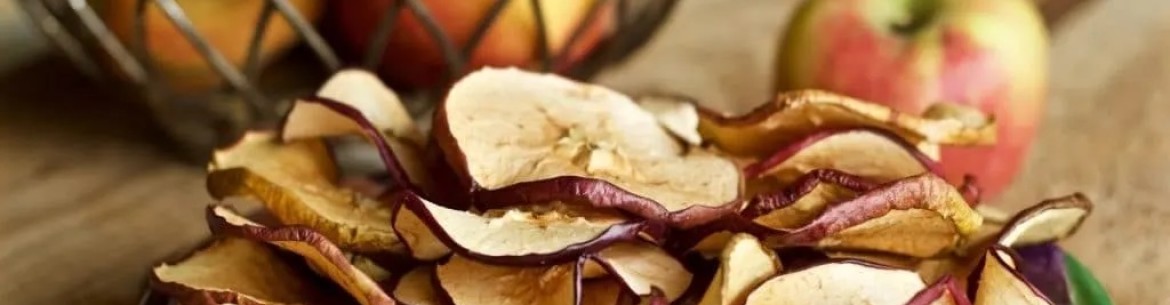
The electric dryer is set to a temperature of 65 to 70 °C, periodically (every 2 hours) changing the trays for even cooking throughout 8–10 hoursCooking time is determined by a number of factors: the juiciness of the raw material, the thickness of the slices, and the model of the dehydrator. Therefore, the optimal cooking time can be determined through trial and error in each specific case.
How to choose the drying mode for apples in an electric dehydrator
Most household electric dehydrators are equipped with a temperature controller that allows you to select the optimal temperature setting. For example, for drying apples the most optimal temperature is considered to be between 65 and 75 °CIt is at this temperature that a thermal effect similar to natural drying occurs, allowing the fruit to retain all its beneficial components.
Drying at higher temperatures (+100… +110 °C) is also possible. It takes much less time, but the finished product will be qualitatively different: the apple slices will acquire a dark, crispy color, and the flavor and useful properties may change in a negative direction.
If the design of the electric dryer does not include a temperature controller, it is recommended to use the prompts in the form of pictures located on its body and select the controller position that matches the image of fruit, in particular apples.
How to Dry Apples in an Electric Dehydrator: Step-by-Step Instructions
The recommended sequence of actions for drying apples in a household electric dehydrator:
- Select medium-sized fruits without rot or significant skin defects.
- The fruits are washed under running water and dried, then the cores are removed along with the seed pods.
- The apples are cut into slices (circles) of equal thickness, approximately half a centimeter.
- Place the slices on the drying trays in a single layer so that they are not tightly adjacent to each other.
- Filled pallets are placed in the dryer.
- Select and set the temperature mode, as well as the timer (if any).
- During the dryer operation, the upper and lower trays are periodically swapped, placing the lighter apples at the bottom of the unit.
- The readiness of the dried fruit is checked based on its appearance and the condition of the pulp (no juice is released).
- Once drying is complete, the lid of the device is opened and the trays are emptied of apple slices.
- Allow the dried fruit to cool, then transfer it to glass containers or natural fabric bags.
- Store the workpiece in a dry, dark and cool place.
Drying apples in an electric dehydrator is a quick and efficient method of preserving, allowing you to create a significant supply of this healthy product in a short period of time. Furthermore, this method is environmentally friendly and safe for humans, as all the vitamins and nutrients contained in apples are fully preserved after processing. Following the recommendations above will help you not only prepare but also preserve dried apples until the next fresh fruit season.