How to get rid of maple trees on your property forever
Maple is a beautiful and useful tree that can enhance any garden. However, if left unchecked, maple can become a problem. It has a powerful, deep root system that draws water and nutrients from other plants. Furthermore, it reproduces rapidly through airborne seeds.
In just a few years, a plot can become overgrown with maple shoots, which make soil management difficult and hinder the growth of other plants. In this article, we'll explain how to get rid of maple trees in your plot, what control methods exist, and what precautions to take.
Content
Characteristics of maple
Maple is a genus of trees and shrubs in the Sapindaceae family, comprising approximately 200 species. Maples are common in Europe, Asia, and North America, as well as in some regions of Africa and Australia.
Different species differ in leaf shape and size, bark color and texture, crown height and shape, propagation method, and winter hardiness. Among maples, there are ornamental species (Japanese, ginnala, and silver maple) and weedy species (American maple, box elder, and Norway maple).
American maple (Acer negundo) — This is one of the most common and undesirable maple species in garden plots. It is a fast-growing tree up to 20 m tall with a broad crown and complex pinnate leaves.
It reproduces both by seeds and rhizomes. Seeds They have wings and are easily carried by the wind over long distances. The rhizomes have a powerful system of suckers that grow through any obstacles. This species has low-quality wood; it rots and breaks quickly.
American maple is an allergen for many people.
Why you need to get rid of maple
Maple can be a problem for a gardener for several reasons:
- It takes up a lot of space on the site and shades other plants, which negatively affects their growth and development.
- Competes with other plants for water and nutrients in the soil, which reduces its quality and fertility.
- It reproduces very quickly, making it difficult to control. Maple can take over an entire plot in just a few years.
- Roots and decaying leaves release toxins that inhibit the growth of other plants.
- Various diseases and pests can develop on maple trees, which then spread to other crops.
- Can pose a danger to humans and animals. Branches often break under the weight of snow or in strong winds.
- Pollen during flowering and sap can cause allergic reactions in some people.
Methods for getting rid of maple trees on your property
If you've decided to get rid of this tree in your garden, you need to choose the right method. There are various ways to control maple trees in your garden. Let's look at the most popular ones.
Physical (mechanical)
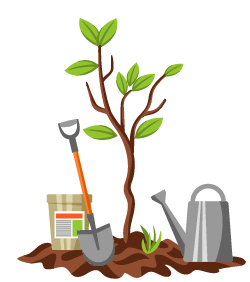
The physical method involves manually or mechanically removing the maple tree from the site. This is the most labor-intensive method, but when performed correctly, it can be effective and reliable. The process involves the following steps:
- Cutting the tree down at a height of 1–2 m from the ground. This is necessary to facilitate root removal and avoid damaging surrounding plants.
- Digging around the trunk and pruning all lateral roots. This exposes the main root, making it easier to uproot the tree.
- Pulling the main root out of the ground using a winch, tractor, or by rocking the trunk from side to side. The root must be removed completely to prevent new shoots from appearing.
- Removal of all tree debris and roots from the site and their disposal.
After completing the work, you must ensure that no new shoots appear from the remaining roots or seeds.
Agrotechnical (mulching)
The agronomic method involves creating unfavorable conditions for maple growth and development in the area. This is a simpler method, but it requires more time and patience. It involves the following steps:
- Digging the area to a depth of 20–30 cm. This is done to damage the tree roots and bring them to the surface.
- Covering the area containing the growth with black film, cardboard, newspaper, or other light-blocking material will deprive the plants of the light, air, and moisture they need to thrive.
- Keep the area covered for one season or until the shoots are completely dry. The maple tree usually dies completely by this time.
- Remove the covering material and all tree and root debris. After this, the soil will be ready for planting other plants.
Chemical
You can also control maple trees in your garden using specialized products that kill the tree from the inside. These can include herbicides, pesticides, or mineral fertilizers. You can spray the tree with the product, apply it to the bark, or inject it into cuts on the trunk. This way, you poison the tree and block its vital processes. This method is quick and effective, but you must be careful not to harm yourself, surrounding plants, or animals. You must also follow safety precautions and the instructions for using the product.
Maple is a plant that can be both a decorative asset and a nuisance to gardeners. If you want to remove maple from your property, you need to choose the most appropriate control method and follow the recommendations. Each method described has its own advantages and disadvantages, effectiveness, and safety.