How to get rid of goutweed in your garden
Goutweed is a perennial plant native to the Apiaceae family. It's frost-hardy and shade-tolerant, and easy to grow. Many gardeners ask: what are the ways to control goutweed in the garden? Before attempting to eradicate it, it's important to first understand the benefits and harms of this plant.
Content
Distinctive features of goutweed
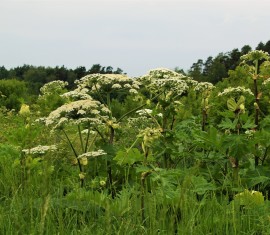
Mature plants reach a height of approximately 1 meter. They have single, erect stems that are quite strong and slightly branched at the top. The stems are covered with longitudinal grooves.
The leaves of goutweed are large, approximately 8–10 centimeters long, trifoliate, oblong-ovate, and finely serrated along the edges. The leaves are smooth and green on the outside. The undersides are paler in color, and the surface is slightly pubescent.
During flowering, which lasts throughout June and July, lush umbels emerge, bearing numerous pale green, thin rays emanating from the top of the peduncle. The compact umbels are composed of miniature, fragrant, snow-white or cream-white flowers. The distinctive scent of goutweed attracts numerous pollinating insects to the garden.
The structure of the plant's roots deserves special attention. They are superficial, strong, long, and branch extensively. This characteristic ensures good survival and the ability of goutweed to thrive in less favorable conditions. Even a small root fragment left in the soil during digging or weeding can give rise to new growth.
Goutweed is difficult to eradicate. This plant tends to self-seed from numerous seeds.
Harmful effects of goutweed on a plot
The harmful effects of goutweed on a garden are its rapid spread, overtaking everything around it. This weedy perennial displaces neighboring plants, taking up all available space. It deprives flowers, shrubs, and vegetable crops of the optimal amount of nutrients for growth.
Goutweed sucks moisture from the soil, turning a vegetable garden into a "one-plant garden." The variegated carpet of leaves with numerous snow-white umbels is beautiful on the one hand, but harmful on the other. Goutweed takes over well-moistened and nutritious soils, reproducing by self-seeding.
Is there any benefit from goutweed?
Goutweed does have some benefits for the garden. It attracts pollinating insects to the garden. This also benefits other plants, increasing the number of fruit sets. Goutweed also has medicinal properties and is used in folk medicine, making ointments, infusions, and healing teas.
Methods for eradicating goutweed
Removing goutweed from your property isn't easy, but with enough effort, you're sure to succeed. Consider one of the methods below.
Manual weeding
Weeding before the leaves emerge is extremely effective in controlling weeds. By this time, the rhizomes haven't yet "gained strength" and are more easily exhausted. The key is to immediately pull out all young plants noticed in the spring, preferably with the roots. Otherwise, the goutweed will focus all its energy on developing its above-ground growth, making it virtually impossible to control the overgrown weed.
Regular hand weeding will help the weed gradually die out.
Regular mowing
How do you get rid of goutweed in your garden? With regular mowing. If your garden has become neglected and weeds are growing, it's time to grab the mower. This method of fighting goutweed requires a lot of time and effort. It's not much different from the previous method, but you won't be fighting the weeds by hand. They should be cut down to the roots, right at soil level. This procedure should be performed regularly until the root system is exhausted.
Many gardeners struggle with goutweed in their gardens, and in both cases, it's important to remember that mown down, removed bushes, especially those with umbel-like flowers, should not be simply tossed into the compost heap, much less used as mulch or stored near a fence. In such cases, the weeds will quickly "recover" and begin to re-invade the area.
To prevent goutweed from spreading throughout the garden, dispose of grass clippings properly. Store them in sealed, airtight plastic bags or other containers, such as barrels.
Thanks to the "additives," goutweed quickly turns into humus, after which it begins to benefit garden crops. The greens of this plant can be used along with other weeds, soaked in water with a small amount of manure, to fertilize garden crops.
Weed cover
The weed is a shade-tolerant plant, renowned for its undemanding nature, but it still requires sunlight. Without sunlight and water, it dies. To control the weed, isolate it by covering it with a thick black membrane, airtight fabric, or cardboard. You can simply sprinkle straw on top. If done correctly, the plants under this cover will gradually wither.
Constant digging of the soil
This method is the most questionable, but there's nothing stopping you from trying. Ground elder has creeping horizontal rhizomes that extend deep into the soil. If you're careful, you can try to extract them from the soil while digging. However, such work is very tedious and requires endurance.
When performing this procedure, it's important to ensure that the root pieces chopped up with the shovel don't remain in the soil, otherwise the weeds will re-infest the garden. The remaining rhizomes are removed from the excavated soil with a pitchfork and moved outside the garden or destroyed.
Herbicides
If a summer cottage owner rarely visits the countryside or neglects regular weeding due to lack of time, herbicides are recommended for controlling goutweed. Specialized herbicides will inhibit its growth. They penetrate through the leaves or rhizomes, affecting the entire plant.
This method is effective and proven, but two conditions must be met: carefully follow the instructions for use (processing times, dilution dosages) and select the correct product.
Many gardeners prefer general-purpose herbicides. These are concentrated solutions that are easy to use. They come in various dosages, in both small and large bottles. They are diluted in water according to the instructions, then sprayed on the goutweed.
One treatment per season is usually sufficient. It is applied after harvesting (in the fall) or before sowing lawns and planting flowers and vegetables. These products suppress the roots of perennial weeds and destroy root suckers. They accumulate in plant tissue, disrupting physiological processes, ultimately resulting in their death.
These products kill not only goutweed but also other weeds, such as couch grass, dandelion, sow thistle, and spurge. With proper control, even the most persistent weeds can be eradicated. It's important to take action quickly and use effective methods and products.