How to prepare the soil for planting
Soil A soil medium is a substrate containing solid particles of organic or inorganic origin. These particles are spaced apart, ensuring good oxygen and water penetration into the soil. Fertility and, consequently, crop yield depend on the condition of the soil medium, its mineral content, moisture, and air supply. Every gardener should know how to prepare the soil for planting.
Content
Basic properties of soil
Soil is an important agricultural resource, its main properties are:
- in irreplaceability;
- limited quantity;
- inability to move;
- fertility.
The above-mentioned characteristics indicate that the soil must be treated with care and its fertility, a property that ensures the free supply of moisture and mineral components to the plantings, must be increased in various ways.
Features of different types of soil
Soil preparation for crops can vary depending on the soil type. There are several varieties, each with its own characteristics. Soils can be clayey, loamy, sandy loam, sandy, or gravelly.
- Clay soil is hard and, when over-watered, becomes sticky and prone to deformation. Roses and raspberries thrive in such soils. They are also ideal for growing legumes, nightshades, irises, figs, hawthorns, cherries, and apple trees.
- Dry loams are ground to a powder. Close inspection reveals sand grains and dust particles. This type of soil deforms easily when wet. Legumes, brassicas, and nightshade plants thrive in this type of soil.
- Sandy loam soil, when rubbed between your fingers, turns into a powder of uniform consistency. If you look closely, you can see the sand. Moist soil is difficult to deform. It can be used to grow root vegetables, legumes, and cruciferous plants.
- Sandy soil resembles a coarse powder when dry and does not deform when moistened. It's ideal for growing nightshades and root vegetables.
- Crushed soil, also known as gravelly soil, contains particles of clay, sand, crushed rock, and gravel. It is suitable for growing conifers.
Preparing the soil before planting: general rules
Soil preparation is essential for planting; this can significantly increase crop yields. There are various preparation methods, but we'll list the most popular and effective ones.
Mechanical loosening
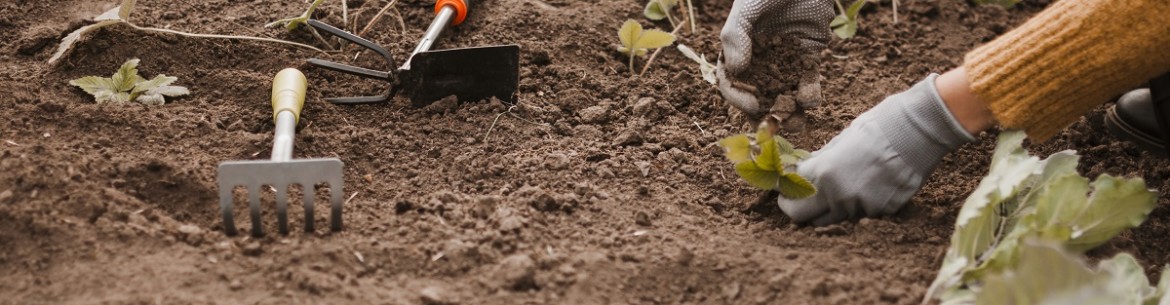
Preparing soil for sowing seeds is often accomplished through mechanical loosening. This technique is one of the most popular, used by both experienced and novice gardeners.
Mechanical loosening saturates the soil with oxygen and reduces root barriers. It can be done manually or with specialized tools. Before you begin, determine whether it's necessary. If the soil at a depth of 8–20 cm crumbles easily, then loosening is recommended. Otherwise, it's best to postpone the procedure.
Before getting started, the garden needs to be cleared of plantings. First, the topsoil, approximately 8–10 cm, is removed. Double tillage, also known as subsoiling, is performed to a depth of 45–60 cm, which improves drainage and breaks up hard soil layers. After removing the soil in strips, trenches up to 30 cm wide are formed across the entire plot. The soil removed from one of these trenches is moved to another. After subsoiling, the soil surface is slightly raised. Planting begins after the ground level has been leveled.
Improving the quality of the composition
Deficiencies in organic and mineral components are compensated for with fertilizers. If the acid-base balance is elevated, fertilizers containing sulfates are added to the soil. When the acidity decreases, limestone is added. Special instruments are used to determine the mineral balance of the soil.
Organic matter can include various plant wastes: fallen leaves, pieces of tree bark, dead grass, sawdust, and rotted fruit. Collect all of this in a container, cover with water, and use it to treat the area after two months.
Preparing the soil for sowing:
- Preparations are carried out every year.
- It is important to create a fertile soil layer 35–40 cm thick, which increases by 3–5 cm over time.
- It is essential to cultivate the soil.
Treatment with chemically and biologically active substances
Soil preparation and cultivation contribute to increased crop yields. Chemical and biologically active preparations are often used for this purpose. Microorganisms significantly influence soil fertility. They participate in various processes, including organic decomposition. The microbial community on the rhizomes of garden crops is specific. Microorganisms provide nutrition to plants and sometimes provide protection. Some microorganisms have the ability to break down toxic substances such as phosphates. Humus formation occurs through the activity of microorganisms.
Before planting, products such as EM-1, Oxyzin, and Baikal-1 are added to the soil. These products contain microorganisms that maintain soil fertility. Phytoncides are used to protect plants from pests, always following the manufacturer's instructions.
Knowing how to properly prepare the soil can help avoid reduced yields. Sometimes, gardeners use several methods at once, doing everything possible to improve soil fertility.