Soil for planting apple trees: acidity requirements, correction, fertilization and increasing fertility
Despite the apple tree's low maintenance, it still requires care to enhance its fruit-bearing potential. First and foremost, it's important to examine and cultivate the soil into which the young sapling will be transplanted.
Content
The Importance of Soil in Growing Apple Trees
Before deciding where to plant a young tree, be sure to familiarize yourself with the soil composition in the area. After all, it has a key influence on the future development of the seedling. Let's consider how soil can affect the overall health of a fruit-bearing plant:
- Clay soils block the flow of air to the root system, as a result of which the plant's immunity weakens and fertility decreases.
- Acidic soil can cause wilting and frequent occurrence of diseases.
- Soil characterized by a high alkali content also suppresses the immunity of apple trees.
- Soils with a high groundwater level reduce the resistance of trees to frost and also cause root rot.
Based on the above, before planting a seedling in open ground, it is imperative to conduct an analysis of its future habitat, or study the vegetation prevalent in the prepared area.
What should the soil be like?
The apple tree is known for its preference for loose, moist, and well-tilled soils. Black soil, loamy soil, and sandy loam soils are ideal for its growth. Groundwater depth in areas intended for planting apple tree seedlings should be at least 1.5-2 meters.
Before moving the planting material, the area should be dug up well.
If the soil is highly acidic, it should be treated with alkaline water. To do this, dissolve 100 g of lime in 5 liters of water. Unsuitable soil is cultivated directly during the planting process. To do this, after placing the young tree in the hole, fill it with fertile soil collected in the field or forest. After this, re-cultivate the soil every three years, undermining the area around the tree and filling the space with fertile soil.
How to determine acidity
 Each soil type is characterized by a specific acidity level. Based on this numerical value, a determination is made as to whether a given site is suitable for planting apple trees.
According to the level of acidity, soils are divided as follows:
- peat-podzolic (from 3 to 5) – planting of seedlings is not recommended;
- podzolic (from 4.5 to 5.5) – can be used if cultivated;
- salt marsh (from 7.5 to 9.5) – not suitable;
- gray (up to 4.5 to 6.5) – suitable, provided that lime is added;
- taiga (from 4.5 to 7.5) – suitable for planting apple trees;
- Black soil (from 6.5 to 7.5) is the best soil option for young apple trees.
The approximate acidity of a soil can be determined based on the type of weeds growing in it. After all, for weeds, just like for cultivated plants, the specific composition of the soil is important. Based on this characteristic, soils can be classified as follows:
- crowberry, marjoram and mosses grow in very acidic soils;
- mint, wild rosemary and bearberry call moderately acidic soils their home;
- Solomon's seal, bellflowers, quinoa, rose hips, nettles, and coltsfoot indicate slightly acidic and neutral surfaces;
- Sedge, wormwood and alfalfa prefer alkaline surfaces.
Precise methods
For a more accurate determination of soil pH, experts recommend using litmus strips, which can be purchased at pharmacies or specialty stores. Another proven method is chalk. Here's how to use them:
Litmus papers
- A small soil sample is taken at a depth of about 30 cm.
- It is filled with purified water until a mushy mass is obtained.
- The mixture is left for 20 minutes, then a pre-prepared litmus strip is dipped into it, which immediately turns the appropriate color.
- It is this that needs to be compared with the scale on the packaging.
Crushed chalk
- Mix 50 g of soil with 1 teaspoon of chalk and half a glass of water.
- The mixture is poured into a glass container with a narrow neck, and a rubber finger cot is placed on top.
- If it begins to rise as it fills with gas, the sample is acidic.
Correction of soil acidity
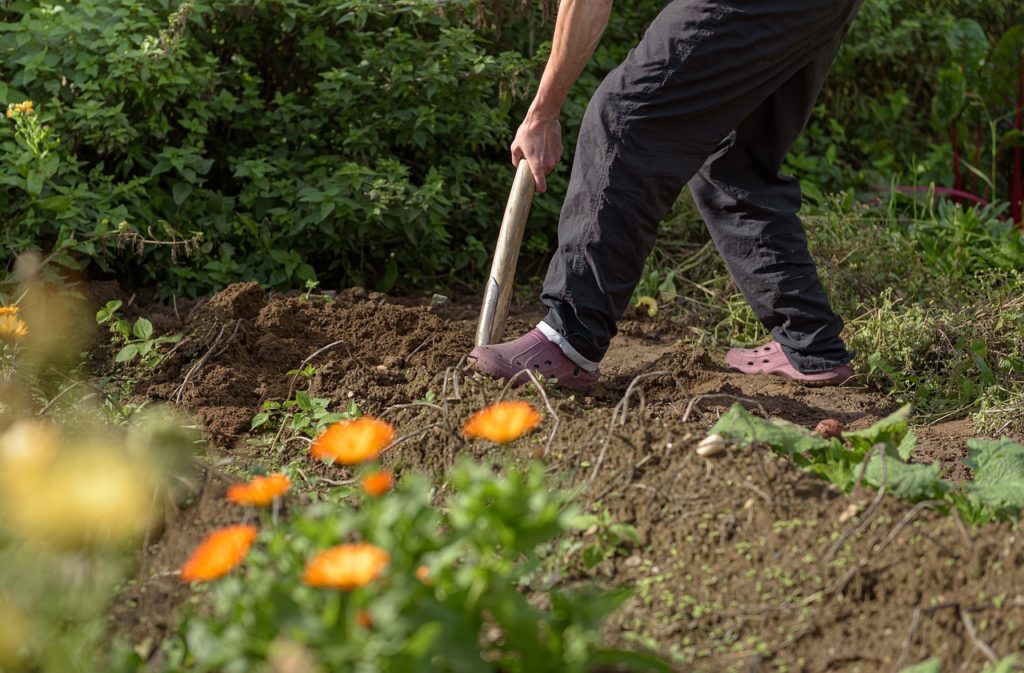
Before beginning soil cultivation, it's necessary to determine its acidity. It's possible that the chosen location isn't characterized by a high pH, but by excessive alkalinity, which apple trees tolerate even worse. Based on this information, begin gradual liming. If the soil is slightly acidic, a small dose of wood ash or horse maize will be sufficient. manure, which will not only reduce excess acidity, but also significantly increase fertility.
It's much more challenging to adjust a soil layer characterized by high alkalinity. In this case, it's recommended to use special store-bought mixtures containing:
- high-moor peat;
- vermiculite;
- sand.
They have an optimal pH level for apple seedlings.
For normal growth and development of young apple trees, regular digging of the upper soil layers and the addition of peat and ammonium sulfate are required.
Soil preparation and fertilization
Soils, depending on their type, can provide plants with essential nutrients in varying degrees. Therefore, soil preparation for planting young trees and fertilization should always take the soil type into account.
On clay
Clay soil is heavy and infertile. When preparing to plant apple trees in such soil, the following is added a year in advance:
- 50 kg of river sand;
- 15 kg of sawdust;
- 15 kg of manure, humus, peat, compost;
- 0.5 kg of slaked lime.
At the same time, for fertilization, it is recommended to plant green manure, which is mown and dug over before flowering.
In such soil, holes for young trees are dug significantly larger than usual, with small stones and branches placed at the bottom.
On peat
Peat soil is poor in nutrients, although it does allow water and oxygen to pass through easily. You can fertilize this type of soil with wood chips, compost, manure, and phosphorus-potassium fertilizers. If the soil is uncultivated, it's likely overwatered—install a drainage system.
For 1 square meter of land you need:
- 2.5 kg of cow manure;
- 250 g phosphate flour;
- 200 g superphosphate;
- 50 g potassium sulfate.
Before planting, dig the area to a depth of 25 cm and plant it with green manure, followed by mowing.
On the sand
A year before planting young trees, sprinkle the following components onto the area at a volume per 1 square meter:
- 15 kg of humus;
- 50 kg of clay;
- 500 g lime;
- 40 g potassium;
- 70 g superphosphate.
Then dig up the soil to a depth of half a meter, plant the area with green manure at an angle, and place drainage of silt or clay at the bottom of the planting hole.
On loam
The clay and sand found in loam soil don't provide enough nutrients for apple tree seedlings. Therefore, when digging the soil, add the following to each square meter:
- 15 kg of manure or compost;
- 40 g potassium sulfate;
- 70 g superphosphate.
On black soil
Since black soil is the most suitable type of soil for planting material, no special additives are required. Simply loosen the top layer of soil.
Peculiarities of preparation in autumn, summer and spring
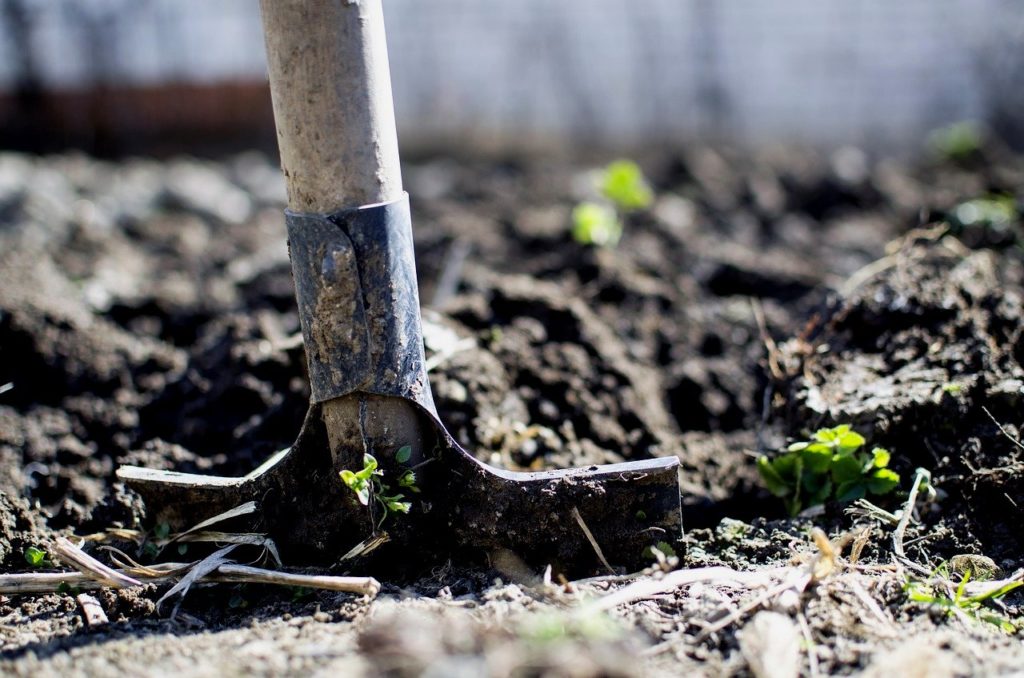
When preparing to plant apple trees, you should not only ensure the hole is properly prepared but also the soil is improved, as the vigorous plant extends its roots up to 12 meters wide to absorb nutrients from the entire area. Proper preparation is essential for each season.
Digging should be done when the soil is moist, but not when it's too wet on a rainy day. It's also best to delay planting during drought conditions.
To plant an apple tree in the spring, the seedling should have a hole ready, dug 2-3 months before the desired planting date. The hole should be deep and wide. Try to avoid creating air pockets and balance the soil composition according to the soil's characteristics.
Autumn is considered the best time to plant seedlings. Prepare the hole as follows:
- The hole is dug six months in advance.
- When digging, cover the area with film and place the top part of the soil on the right and the bottom on the left.
- Loosen the bottom with a crowbar.
- First, return the top soil to the hole, then the bottom soil. Pre-mix both with two buckets of humus, 1 kg of nitroammophoska, and 0.8 kg of wood ash.
- Compact it. After a while, the fertile soil will settle and you can plant the young tree.
Before planting a young apple tree in open ground in summer, you need to prepare a hole up to half a meter in diameter and up to 60 cm deep. Peat can be used as an organic fertilizer, humus, vermicompost, compost, and last year's straw. Phosphorus and potassium are excellent mineral fertilizers. Fill the hole approximately one-third full with cultivated soil and water it.
Cultivated soil for planting apple trees in summer consists of the top fertile soil layer with the addition of organic fertilizers and mineral additives.
How to increase fertility
 To improve soil fertility, you can do the following:
- regularly water area, thereby attracting earthworms, which contribute to loosening and the formation of vermicompost;
- use organic fertilizers;
- plant green manure to enrich the soil with calcium, nitrogen and other macronutrients;
- adhere to proper crop rotation so as not to deplete the soil;
- Don't forget about mulching to prevent freezing and to provide additional fertilizer.
Common mistakes when choosing soil
When choosing soil for planting apple trees, inexperienced gardeners make a number of mistakes. Here are the most common ones:
- they choose any free area, without paying attention to the quality of the soil;
- a young tree is planted in a place where an apple tree previously grew, which is fraught with problems with the glycoside accumulated in the soil;
- They carry out cultivation without preliminary research, creating conditions that are absolutely unsuitable for the existence of young trees.
For an apple tree, not only the soil but also the terrain are important. If, for example, a slope is proposed for planting, the seedling should be placed at the top, not at the bottom.
The selection and preparation of soil for planting young apple trees requires careful consideration. Otherwise, the plant will suffer and produce poor fruit.