Aktara for apple trees
The apple tree is one of the most popular and widespread fruit crops in our country. It not only produces tasty and healthy fruit but also decorates the garden with its blossoms and aroma. However, to reap a good harvest, it's necessary to care for the plants and protect them from various pests that can cause serious damage. This requires treating apple trees with Aktara.
Content
Aktara: purpose
The instructions state that this is a systemic insecticide with stomach and contact action, designed to protect apple trees from red bloodworm aphids, as well as other insects such as leafhoppers, leafhoppers, and flower beetles. The product is also effective against soil-borne pests.
Aktara belongs to the class of neonicotinoids—synthetic analogs of nicotine with insecticidal properties. The active ingredient is thiamethoxam, a compound that affects the nervous system of insects, causing paralysis and death.
What is it effective against?
Aktara is effective against a wide range of apple tree pests:
- Red blood aphids (Eriosoma lanigerum) are small greenish-yellow or pink insects with long legs and a proboscis. They form colonies on the undersides of leaves and young shoots of apple trees. They feed on plant sap, causing deformation. They secrete honeydew, which is the source of sooty mold fungi. They can also transmit viral diseases of apple trees.
- Psylla (Caliroa cerasi, Hoplocampa testudinea, Hoplocampa brevis) are small yellowish-white or brown insects with transparent wings. Psylla larvae feed on the pulp of leaves and fruits, leaving holes in them. Adults feed on pollen and nectar from apple blossoms, damaging them. Psylla can reduce crop yields by 30–50%.
- Leafhoppers (Psylla mali, Psylla pyri) are small greenish-yellow or brown insects with long wings and a proboscis. They feed on the sap of apple tree leaves and shoots, causing them to curl, wilt, and fall off. They secrete a honeydew that harbors fungal organisms.
- Apple blossom beetles (Anthonomus pomorum, Anthonomus quadrigibbus) are small brown or black beetles with long antennae. Apple blossom beetle larvae feed on the ovaries of apple blossoms, preventing pollination and fruit set. Adults consume the petals and stamens of the flowers.
- The wireworm (Agriotes spp) is a large brown or black beetle. Wireworm larvae concentrate on the roots of apple trees, damaging them and weakening the plant. Adults attack leaves and fruits. Wireworms can cause death or significant weakening of apple trees.
Compound
Aktara is available as granules that are dissolved in water before use. Its active ingredient is thiamethoxam, a neonicotinoid compound that affects the nervous system of insects. The concentration of thiamethoxam is 250 g/kg.
What pests does it help get rid of?
Aktara helps to get rid of the following apple tree pests:
- red blood aphid;
- copperheads;
- leafhoppers;
- flower beetles;
- wireworm.
If you regularly spray your apple tree with Aktara, pests will not be able to damage the future harvest.
Pros and cons of the drug
Aktara has a number of advantages over other insecticides:
- Highly effective against a wide range of apple pests, including those resistant to other preparations.
- Systemic action provides long-term plant protection against pests. "Aktara" penetrates the plant and spreads throughout its entire body, including roots, stems, leaves, and fruits. Pests are killed upon contact.
- Fast action.
- Low toxicity to humans, animals, and beneficial insects. "Aktara" does not accumulate in soil or water, but decomposes under the influence of sunlight and microorganisms.
- Convenient release form in the form of granules, which easily dissolve in water and do not create dust when used.
However, the drug has some disadvantages:
- High price compared to other insecticides.
- Pests may develop resistance with frequent and improper use of the product. To prevent this, follow the recommended dosage, timing, and application methods, and alternate the product with other insecticides of different classes.
- Potential for phytotoxicity for some apple varieties at high air temperatures or increased solution concentrations.
Application instructions for apple trees
Aktara can be used to protect apple trees from pests throughout the growing season. However, it's important to note that the fungicide has a 21-day quarantine period for apple trees. This means at least 21 days must pass between the last treatment and harvest. Otherwise, the fruit will contain residue. After using Aktara, do not water the apple trees.
Consumption rate of the product
To understand how to dilute Aktara for apple trees, it's important to consider some of the product's features. Application rates depend on the pest species, plant development stage, and infestation severity. General recommendations:
- To control red blood aphids, leafhoppers, and leafhoppers, apply 1.5–2 g of the product per 10 liters of water. Apply at the beginning of the plant's growing season and also at the first signs of pest activity. Repeat treatment after 10–14 days if necessary.
- To control flower beetles, apply 2 g of the product per 10 liters of water. Spray during the budding phase.
- To control wireworms, apply 4 g of the product per 10 liters of water. Apply during the flowering phase.
Step-by-step preparation of a solution for treating apple trees
To prepare a working solution of Aktara, you must do the following:
- Determine the required amount of the preparation based on the consumption rate of the product and the area of the area being treated.
- Fill the sprayer one-third full with water.
- Open the package with the preparation and pour the required amount of granules into a separate container.
- Stir the granules with a small amount of water until completely dissolved.
- Add the resulting solution to the sprayer and add water to the required volume.
- Mix the product thoroughly before use.
Safety precautions
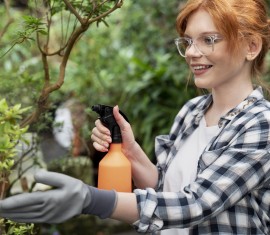
Aktara is classified as a hazard class 3 substance—moderately hazardous. When working with it, it is necessary to observe safety precautions and use personal protective equipment:
- rubber gloves;
- protective glasses;
- mask or respirator;
- protective clothing;
- headdress.
The first symptoms of poisoning and further action
If the product accidentally comes into contact with skin or eyes, rinse immediately with plenty of water. If the fungicide gets into your mouth, drink large amounts of water or milk and induce vomiting.
If symptoms of poisoning appear, such as nausea, vomiting, weakness, convulsions, shortness of breath, or loss of consciousness, you should immediately call an ambulance and show the doctor the packaging from the drug.
Storage rules and shelf life
Aktara should be stored in its packaging in a cool, dry, and dark place, out of the reach of children and animals. The shelf life of the medication is 3 years from the date of manufacture.