Fungicides for apple trees
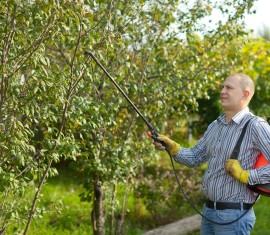
Spring and autumn are the time for gardeners to treat their plants for various diseases and pests. The quality of care will directly impact health crops and harvest quality. First of all, it's worth considering treating apple trees with fungicides, as these fruit trees are most vulnerable to various diseases. Fungicides for apple trees can help combat fungal diseases, harmful insects, and various rots. The main thing is to follow the instructions.
Content
What are fungicides?
Fungicides are preparations based on chemical and biological active components that help combat various diseases of cultivated plants.
Although considered primarily antifungal agents, fungicides are actually capable of killing a variety of pathogenic flora. They are used for both treatment and prevention. These agents help kill fungi that inhabit both plant tissues and the surface of plant parts.
- aboveground parts of crops;
- plant rhizomes;
- soil;
- seed material (can be used for seed treatment).
Fungicides suppress the activity of fungi and also prevent the formation of new spores and an environment favorable for the development of mycoses of various etiologies.
When are fungicides used?
The primary purpose of fungicides is to combat various fungal diseases that can affect plants. These products destroy fungal flora and also serve as a preventative measure against fungal infections.
Fungicides are used not only for gardens and vegetable plots. These products are also used for the prevention of indoor plant diseases. However, it's important to keep in mind that systemic fungicides should be used to kill pathogenic flora, while contact-type formulations are more suitable for preventative purposes.
Fungicides for apple trees by application methods
Of all fruit trees, apple trees are most susceptible to various fungal diseases. Therefore, this crop requires special attention when treating it. Fungicides for apple trees should be selected based on the symptoms detected. Different diseases require different formulations to kill pathogens. Therefore, it is essential to carefully inspect the affected tree, identify the main symptoms, determine the type of disease based on these, and then seek treatment.
Against powdery mildew
Powdery mildew It often affects fruit and vegetable crops in the garden. Currants, gooseberries, cucumbers, and apple trees all suffer from it. This fungal infection should not be ignored, as the mycelium powdery mildew It is capable of penetrating so deeply into plant tissue that both the green parts and the harvest cannot be separated from the pathogenic formations.
At an early stage, before the disease has affected most of the plant, the fungicide "Horus" can be used. This solution is suitable for spraying apple trees at the very beginning of their growing season (before flowering and from the beginning of the "green cone" stage).
If powdery mildew affects trees during bud formation (before the fruit has formed), you can try using the fungicide Tersel. It can not only eliminate the source of the infection but also preserve a healthy harvest during later treatment periods.
Tersel treatment is carried out in courses, maintaining an interval of 10-14 days.
Topaz is a universal fungicide suitable for treating apple trees at all stages of the growing season. However, it can be used on plants no more than 4 times per season.
Against scabies
Scab Scab is one of the most common diseases affecting apple trees. Many have encountered porous crusts affecting apple fruit, as well as blackened shoot tips. Scab is insidious because it is resistant to many popular fungicides, so treatment for this disease requires particular care.
At the very beginning of the growing season (before bud break), apple trees should be treated with Bordeaux mixture (a 3-4% solution is sufficient). At the "green cone" stage and during inflorescence formation, "Kupidon" and "Raek" can be used, but it is important to maintain intervals of 7-15 days.
When full buds are forming (but before flowering), treat the plants with "Tsikhom." This special compound specifically targets the pathogen. Treatment should be repeated every 10-12 days until symptoms disappear completely.
You can also consider using fungicides such as:
- "Delan";
- "Captain";
- "Colfugo Super";
- "Cuproxate".
In the future, the use of contact fungicides for apple trees can be considered as a preventative measure to prevent re-infection.
Against moniliosis
Another very common condition, caused by a harmful fungus that enters the plant tissue during pollination by bees and other pollinators, causes the shoots and foliage of apple trees to appear scorched.
In case of infection moniliosis Affected areas should be cut off and burned away from healthy plants. Treatment should be given not only to the affected plant itself, but also to nearby trees (even if they show no signs of infection).
The following fungicides can be used for treatment:
- Horus;
- "Topsin";
- Abiga Peak.
To reduce the risk of re-infection, treatment should be carried out in several stages:
- before flowering;
- after flowering is complete;
- two weeks after the second treatment.
Against Alternaria, Sooty Mold and Fly Beetle
All three diseases should be controlled using the products "Strobi" and "Zato." Most often, just three treatments are enough to completely cure the plant. Treatments are carried out during the growing season, but it's important to keep in mind that both products belong to the strobilurin class, meaning they can induce resistance in pathogens. Therefore, experts recommend alternating these products with fungicides with different mechanisms of action (for example, "Skor" and "Horus").
Against rust
To combat rust For apple trees, the universal product "Poliram" is suitable. It can be used at all stages of the growing season. The first treatment is carried out at the "green cone" stage, the second at the "pink bud" stage. The third treatment should be carried out immediately after flowering, and the last when the fruits reach the size of a walnut (but no later than 65 days before harvest).
Against phyllostictosis
Phyllosticta leaf spot is successfully controlled with the aforementioned "Zato" product. For treatment, use a working solution at a concentration of 0.014%. Treatment is carried out just before flowering and then immediately after. Spraying is also carried out when the fruit reaches 40 mm in diameter, but an interval of 9-10 days should be observed. Once the apples have reached 40 mm in diameter, treatments are carried out every 12-14 days.
"Zato" should only be used in conjunction with other fungicides, such as "Tersel."
Against rot during storage
To strike fungus Not only the ripening harvest but also fruits that have already been stored can be affected. At this time, the products "Tersel" and "Fitosporin-M" will help combat rot. The latter product is used to spray apples on the day of harvest.
Be sure to carefully read the instructions before using any of the products listed above. Also, ensure you have the proper personal protective equipment when handling plants with chemicals.