How to treat a garden with urea in the fall: important steps and rules of treatment
Autumn is the best time to treat your garden with solutions to prevent diseases and pests. Preventative spraying is recommended every year in the fall. Plants should be treated promptly using products designed for this purpose. Urea is often used to prepare the solution. By reading this article, you'll learn about the benefits of urea for your garden in the fall, as well as all the intricacies of this effective treatment.
Content
Composition and properties of urea
Urea fertilizer contains a large amount of nitrogen (46%). The fertilizer is presented in the form of ammonium salts, which participate in biochemical processes. Nitrogen is essential for all metabolic processes.
Urea is rapidly absorbed by every plant. It is more active than other nitrogen-containing fertilizers.
Nitrogen is essential for crop growth. It is essential for the root system.
Advantages and disadvantages of using urea
The advantages include:
- immediate action of the drug;
- the effect lasts for a long period;
- quickly dissolves in liquid;
- can be used both in a greenhouse and in an open area;
- Urea is especially effective if the soil around crops is very moist;
- remains in the top layer of soil and acts as a fertilizer after processing.
Don't forget about the disadvantages:
- If plants are not watered regularly after treatment, the nutrients quickly evaporate from the soil;
- the acidity of the soil increases after treatment with urea;
- Urea may not be compatible with some other medications.
The need to comply with safety measures
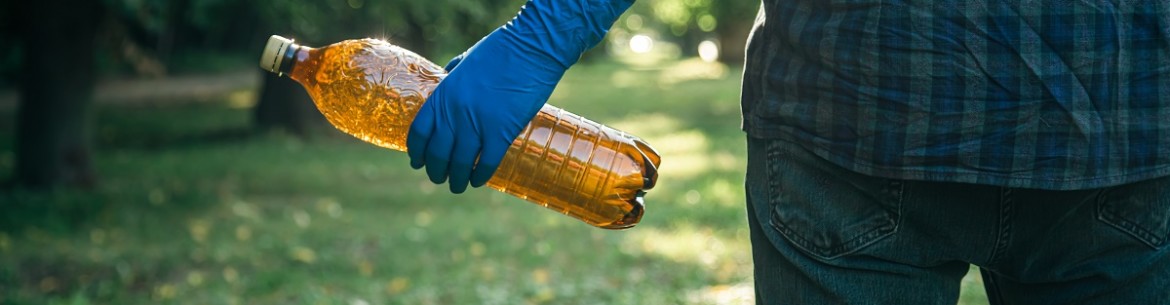
Urea is considered a low-toxicity substance. It poses no significant risk to humans. However, safety precautions must still be observed when working with urea.
- To prepare the working solution, use a suitable container. Choose a container large enough to prevent the solution from overflowing when stirring. A container made of plastic or stainless steel is recommended.
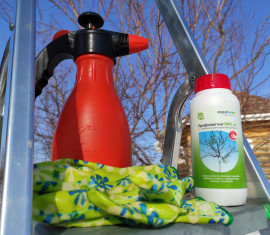
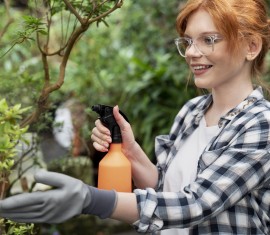
- Carry out the procedure using a special sprayer.
- Work in clear, windless weather. This will help prevent the solution from coming into contact with exposed skin or eyes. If the solution accidentally gets into your eyes or mouth, stop working, rinse your eyes, and rinse your mouth with water.
- When treating your garden with urea, wear protective equipment. This includes safety glasses, gloves, and a hat.
- After finishing work, wash your hands and face with soap.
Using urea in autumn
Why treat a garden with urea in the fall? Before winter sets in, nitrogen loses its ability to stimulate active growth because shrubs and trees have already shed their leaves.
However, in late autumn, garden trees cannot be protected from pests and some diseases. However, urea concentrate (8–10%) easily protects gardens.
Late autumn treatment of the garden with urea helps control certain pests (nematodes, aphids, and others). Furthermore, a urea solution helps protect crops from canker and spotting.
It is prohibited to use urea together with certain products, such as lime, chalk, and superphosphate. However, urea is compatible with copper sulfate.
However, it is important to remember that eradicating treatment of the garden with urea in the fall is not recommended for young seedlings planted this year.
Preparing for garden cultivation
A list of necessary actions to achieve the desired effect. What work should be done before spraying the garden with urea in the fall?
- First, collect fallen leaves. Leaves often harbor pathogens and various parasites. Don't fill compost bins with such plant debris. Remove it from the area and burn it.
- Thoroughly loosen the soil under bushes and trees and remove weeds. To control weeds around the tree trunks, use phacelia, a green manure crop. It will also increase soil fertility.
- Inspect the plant trunks with particular care. Remove damaged bark and any pests that may have accumulated underneath.
- Perform sanitary pruning. This involves removing all broken and diseased branches from trees and shrubs. This procedure is recommended throughout the growing season.
Necessary tools to perform the work
- hoe (loosening the soil in the tree trunk circle);
- garden rake (for collecting fallen leaves);
- pruning shears (for cutting thin branches);
- brush cutter (cutting thick branches);
- garden saw;
- knife.
Methods and rules for treating a garden with urea
As soon as the leaves have fallen, you can begin treating the garden with urea. This procedure should be carried out on a dry, windless day.
Preparation of the solution
A concentrated urea solution can be used to combat pests. If trees and bushes are infested, the solution should be diluted at the following ratio: 500 g of the solution per bucket of liquid. For healthy plants, 300 g per 10 liters is sufficient.
The solution is stirred and filtered before use. To enhance the effectiveness of the product, ferrous sulfate can be used in combination with urea (250–450 grams of ferrous sulfate, 350–450 grams of urea, 10 liters of water).
To combat pests, you can use a solution consisting of the following ingredients:
- copper sulfate (40–50 grams);
- urea (500–650 grams);
- warm water (10 l).
This mixture performs two functions simultaneously: it nourishes the soil and kills pests. The recommended application rate for all solutions is 1 liter of the prepared solution per square meter.
Rules and methods of processing
To eliminate pests in your garden and provide additional nutrition for your crops, you can apply the mixture directly to the soil. Also, follow the instructions carefully. Mature fruit trees, such as pears, peaches, apples, and plums, should be treated first. Shrubs, such as raspberries, strawberries, currants, and gooseberries, should also be fertilized. A urea mixture can also be used to spray grapes. Flower beds can also be treated with urea.
Spraying
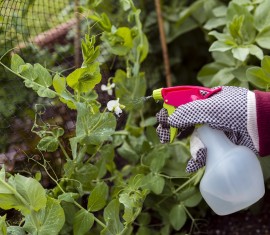
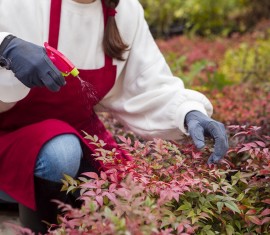
This method is quite effective. It's especially suitable for tall trees, as it sprays not only the trunks but also the crowns. Remaining foliage under the trees can also be treated with urea.
Don't skimp on the solution; it won't cause any harm. Repeat the spraying after a couple of weeks to consolidate the effect.
Introduction into the soil
Urea is often added to the holes before planting seedlings, but many gardeners continue to use this method. It's best to apply it to a depth of 6–9 cm.
After adding dry urea to the soil, it should be watered. If organic matter was added beforehand, reduce the amount of urea by a third. When treating vegetable crops, urea is also added to the soil in the fall. First, scatter the dry fertilizer, then dig the soil.
Precautions and safe handling rules
When treating crops with urea, certain safety precautions must be strictly observed.
- First and foremost, you need to protect yourself. When preparing the solution and spraying, it is recommended to wear rubber gloves, goggles, and a respirator.
- The treatment should be performed on a calm, windless day. Make sure there are no children or animals near the treatment.
- After treatment, remove your gloves and thoroughly wash your face and hands under running water. Be sure to wash your work clothes.
Before preparing the solution, carefully read the instructions included with the product. Strictly follow the manufacturer's recommendations and do not exceed the recommended dose to avoid harming yourself or the plants.
Urea in concentrated doses can combat fungal diseases and effectively kills parasites. However, to avoid burning leaves and buds, it is recommended to apply it to garden plants in late autumn. Don't forget to care for trees and shrubs after harvesting, so they can reward you with a bountiful harvest next year.