Mullein is the best fertilizer for fruit trees and other plants: composition, solutions, feeding rules
Cow's milk is often used as organic food for garden plants and trees. manureIn addition to being a natural growth stimulant, it's also inexpensive. However, improper use can not only ruin crops but also render the soil infertile for several years. Before using mullein as a fertilizer, it's important to study its quality and properties.
Content
What is mullein?
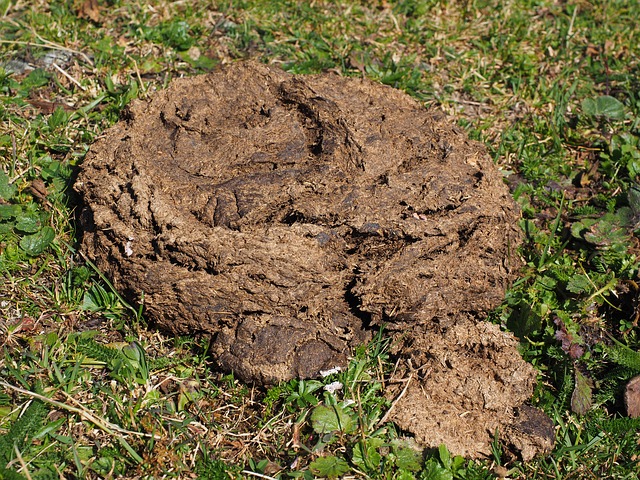
Mullein is cow manure, the excrement of cattle, with a distinctive odor. It is a natural organic fertilizer, containing all the necessary nutrients for plant growth and development, as well as for enhancing disease resistance and significantly increasing yields. During fermentation, it forms humic compounds, which significantly enhance the natural fertility of the soil.
Chemical composition and beneficial properties
Cow dung contains:

Nitrogen (0.5–0.6%) – is a basic element found in every living cell. It has the following effects on plants:
- promotes the emergence of young shoots;
- enhances the growth of green mass;
- participates in the process of laying peduncles and flower buds;
- increases crop yield by increasing the number of flowers and the size of fruits;
- enhances the regeneration of tree trunk tissue damaged by pests or weather conditions;
- promotes rapid healing of wounds after mechanical impact;
- increases frost resistance.
Calcium (0.12–0.56%) – participates in metabolic processes within the plant, while:
- participates in the formation of the structure of cells of leaves and fruits;
- promotes the development of the root system and increases its resistance to decay;
- increases the plant's ability to absorb micro- and macroelements;
- increases fruit resistance to diseases during growth and storage;
- reduces soil acidity;
- regulates water balance;
- improves the mechanical composition of the soil, which leads to greater saturation of the roots with oxygen.
Potassium (0.45–0.62%) – a key element in nitrogen metabolism. Prevents the accumulation of ammonia, which causes plant tissue death. It has the following effects:
- ensures the formation of supporting tissue;
- maintains water balance;
- increases drought and frost resistance;
- participates in the formation of the size and quality of fruits (including root crops);
- Increases immunity to diseases and pest damage.
Phosphorus (0.25–0.42%) – a component of DNA and RNA, affects the plant in the following way:
- regulates metabolic processes of a young plant;
- actively participates in the process of photosynthesis, which is the basis of plant life and nutrition;
- promotes the development, formation and strengthening of the root system;
- is the main element for the formation of flower buds and peduncles;
- increases resistance to diseases and pest damage.
Magnesium (0.4–0.7%) – an essential element for phosphorus absorption and cell division. Positive effects:
- significantly improves the quality of fruits – the content of vitamin C, sugar, starch and protein increases;
- improves the quality of seeds – their germination percentage and germination intensity increase;
- increases plant resistance to fungal diseases;
- promotes the growth of green mass;
- increases the frost resistance of the plant.
In addition, mullein contains small amounts of zinc, sulfur, boron, manganese, cobalt, copper, molybdenum and silicon.
The reduction in soil acidity when adding manure occurs due to its alkaline properties – the pH of cow dung is 8.1–8.3.
NOTE: Water content in manure ranges from 72% to 98% of the total volume, depending on the cattle's diet and living conditions.
Types of cow manure and its uses
Cow manure is divided into several types according to the degree of decomposition, each of which should be applied at a certain time.
 Fresh manure without bedding

Fresh, unbedding manure is thick excrement without any additives or water. It has the consistency of thick sour cream and contains all the essential nutrients in a concentrated form. It is not recommended to use it as a fertilizer in its pure form. for the following reasons:
- high concentrations of nitrogen can cause burns and death of the plant;
- unprocessed seeds or the roots of weeds take root well and grow in the soil;
- Live parasite eggs continue to develop and negatively impact the soil and crops.
To reduce the negative impact, fresh manure should be kept on a separate area of soil for 3-5 days To evaporate and absorb some of the contained moisture. This prepared material is used for plant fertilizer in several ways:
- Liquid solution (slurry)It has a lower ammonia concentration and contains all the necessary nutrients. To prepare it, follow these steps:
- prepare a basic solution: mix 1 part manure with 10 parts water, cover the container with a lid and leave to ferment for 5–7 days until a swampy smell appears;
- prepare a secondary solution - for this, dilute the prepared main solution with water in a ratio of 1:10;
- For enrichment, you can add 100 g of phosphorus fertilizer or 300–500 g of wood ash.
Apply for top dressing after glaze or spraying plants and trees.
The fertilizer can be stored for 10-14 days in a closed container and in a cool room at a temperature not exceeding +12 OWITH.
If parasites appear on the surface of the infusion during the fermentation process, it is strictly forbidden to use the solution!
- Creating a "warm bed". Recommended for growing heat-loving crops - cucumbers, melons and othersIts production takes place in early spring and consists of several stages:
- install a wooden frame 0.8–1.0 m high;
- cover the bottom with fine river sand to a height of 3–5 cm;
- lay straw mixed with compost (rotted grass) in a layer of 0.5–0.6 m;
- lay out a layer of fresh manure of 1–2 cm;
- fill the bed to the top with fertile soil.
Such a bed warms up on its own due to the rotting of fresh manure up to +50 OWITH.
- Underground soil heating. Applies for planting crops in a greenhouse or under cover in early springThis is accomplished using the heat generated by the rotting manure. To achieve this heating, you should:
- dig a trench of the required length and depth of 0.5–0.6 m;
- fill the trench with fresh manure in a layer of 0.1–0.15 m;
- fill the bed with fertile soil.
You can begin planting seedlings or sowing seeds 7–10 days after formation.
- Application to individual areas left fallow. Applies on poor soilsThe effect of saturating the soil with nutrients and improving its structure is achieved in several stages:
- in the fall, fresh, litter-free cow manure should be spread over the entire surface of the area or dug in with the soil to a depth of no more than 10–20 cm;
- Snow-covered manure does not rot, and therefore the product contains a high concentration of ammonia, which, when warm weather sets in, affects all weeds and their seeds;
- to increase the number of bacteria and to speed up the process of rotting in the spring, the soil can be treated with any bacterial preparation (Bitoxibacillin, Siyanie-3, Baikal-M);
- During the summer, under the influence of sunlight and moisture, the manure gradually decomposes;
- Spring plowing of the plot is used to evenly distribute the prepared nutrient soil.
The fertility of such soil is maintained for 5–6 years.
Fresh bedding manure
The basis of the bedding mullein is fresh excrement with grass, straw, hay or sawdustIt holds its shape well and doesn't crumble. The concentration of organic matter is approximately half that of litterless litter. It is used:
- for the preparation of a liquid solution; in this case, the primary solution should be prepared at a ratio of 1:10, and the secondary solution at a ratio of 1:5;
- to create a “warm” bed or warm the soil, while its quantity should be increased by 1.5–2 times;
- To nourish fruit trees after harvesting to increase frost resistance, apply a small amount to the tree trunk circle and dig to a depth of 5–10 cm.
Partially rotted manure
Partial rotting of manure occurs exposed to sunlight and rain moisture for 4–6 monthsDuring this period, the mullein dries out, and the straw and grass turn dark brown, but are clearly distinguishable in the mixture. It tears and crumbles easily. The toxic content is reduced by 2-3 times, while the nutrients are retained in full. This fertilizer is used in the following cases:
- For winter mulching fruit trees, including apple trees. Fertilization should be performed 3-5 weeks before the onset of sustained frost. The fertilization effect occurs in several stages:
- autumn temperature fluctuations contribute to the loosening of the mullein;
- in early spring the rotting process will resume, but there are practically no toxic substances in such material;
- The release of organic matter during the summer rotting process is continuous, so the soil and tree are nourished after each watering or rain.
The thickness of the mulch layer is 3–5 cm, while it is important to retreat 15–30 cm from the trunk to avoid burning the bark.
- Mulching areas left fallowThe layer thickness should be 8–10 cm.
- Making organic liquid fertilizerThe process is similar to preparing an infusion from fresh manure, but to obtain a secondary solution, the main one should be diluted with water in a ratio of 1:2.
- Production of organic solid fertilizers. At 1 m2 3-5 kg of manure should be added to the soil of the area, while it is necessary to retreat 15-20 cm from the trunks of trees and shrubs.
A liquid solution prepared from mullein of any stage of maturity cannot be applied directly to the plant root! Watering should be carried out along the perimeter of the tree trunk circle or in furrows at a distance of 10–20 cm from the garden bed.
Humus, or rotted cow dung
Humus - fully rotted cow dungIt is a homogeneous, loose material, black or dark brown in color, free of inclusions. It is dry, does not hold its shape, and easily crumbles into powder. It has a slight, earthy odor or none at all. It matures in 1.5–2 years.
Compared to fresh mullein, the nutrient content is reduced by 2-3 times, but it is completely free of toxic substances and parasites.
Adding humus to the soil helps to:
- significant improvement in porosity and oxygen saturation;
- moisture retention;
- activation of plant growth and development;
- increasing resistance to diseases and pest damage;
- improving the decorative properties of flower crops.
Humus is used:
- For mulching areas and tree trunks, while the possibility of burns is excluded;
- for direct plant fertilizers by digging with soil;
- for cooking nutritious soil for seedlings (in a ratio of 1:1);
- to prepare a liquid aqueous solution at a ratio of 1:2.
How to prepare humus
You can make compost yourself. This process consists of several steps:
- prepare a metal or plastic container or dig a hole in the ground measuring 1.5 × 1.5 × 1.5 m;
- fill the container with alternating layers 10–15 cm high: fresh manure and plant waste (straw, plant tops, leaves);
- each layer should be watered with a liquid solution of mullein or hot (70–80 OWith water;
- cover with a thick material that completely protects against moisture;
- periodically ventilate and stir the composition;
- To speed up fermentation, you can add "Baikal-M" or "Siyanie-3" to the mixture.
The maturation period is 2 years. The readiness of the humus is determined by its physical properties and the absence of moisture.
Granulated mullein
Cow manure granules manufactured at chemical industry plantsThis product contains the same beneficial and nutritional properties as natural fertilizer. The granules are used according to the included instructions for:
- preparation of a liquid solution;
- direct fertilization of plants;
- application to soil;
- making "warm" beds;
- fertilization of fallow areas.
 preparation of a liquid solution;
Seasonal use of mullein
Depending on the time of year, cow manure fertilizer is used for various purposes. However, each season has its own contraindications.
Spring:
- preparation of material for humus;
- creation of “warm” beds and warming the soil;
- fertilization of plants, shrubs and trees with a liquid solution of manure of any degree of maturity;
- adding humus to the soil.
It is prohibited to add fresh bedding or non-bedding manure, as well as partially rotted manure, to the soil.
Summer:
- liquid fertilizer;
- preparation of material for humus;
- mulching and digging the soil with humus.
It is not advisable to fertilize fruit-bearing shrubs and trees to avoid excessive growth of green mass.
Autumn:
- fertilization of areas left fallow;
- adding humus to tree trunk circles;
- mulching fruit trees with partially rotted manure;
- adding fresh manure to create humus.
Winter:
- fertilizing areas to be left fallow;
- adding fresh manure to create humus.
Which crops should not be fed with cow manure?
Using natural organic fertilizer is not only effective but also a safe way to achieve high yields. However, there are several crops that are harmed by the use of mullein:
- legumes - increase green mass, yield and quality of fruits are significantly reduced;
- cabbage - voids form inside the heads of cabbage, the leaves become tough and dry;
- root vegetables (beets, carrots, radishes, turnips) – accumulate nitrates, the fruits become deformed, dry and hard, and lose their taste;
- onions, garlic – lose immunity to diseases, yield decreases;
- tomatoes, potatoes – lose immunity to late blight;
- bulbous flowers - acquire an unpleasant odor;
- Asters and marigolds grow excessive green mass, do not bloom, and are susceptible to disease.
 legumes - increase green mass, yield and quality of fruits are significantly reduced;
Advantages and disadvantages of use
The advantages of using cow manure as an organic fertilizer are:
- environmental friendliness;
- safety of use;
- fast and complete absorption by plants;
- improving soil structure;
- formation of a fertile soil layer;
- complete replenishment of soil nutrients spent on plant growth and development;
- maintaining a constant and sufficient level of humidity;
- penetration into deep soil layers (up to 80 cm);
- long period of decomposition: in sandy and sandy loam soils – 3–5 years, in clayey and loamy soils – 6–8 years.
The only drawback is the presence and proliferation of bacteria and parasites in fresh manure, but timely preparation of a liquid solution or the addition of humus material will eliminate this problem.
Harm from the use of manure can only occur if plants and soil are fertilized incorrectly:
- vegetables and fruits oversaturated with mullein cannot be stored for a long time and are susceptible to fungal diseases;
- untimely top dressing may reduce the frost resistance of a tree or shrub;
- The use of an undiluted liquid solution or fresh mullein in its pure form can destroy all vegetation on the site and make it sterile for the next 2–3 years.
Conclusion
Mullein is an indispensable organic fertilizer that, when used correctly and within the recommended timeframes, will not only increase garden and vegetable yields but also improve soil quality. Natural soil fertility is the key to an environmentally friendly and healthy harvest.