Green aphids on apple trees: how to treat trees to get rid of them for sure
The appearance of aphid colonies on apple trees is a common occurrence, caused by the high amino acid content of the foliage. Despite their small size, these insects cause significant damage, contributing to the loss of not only the crop but also the trees themselves. Failure to control the pest can lead to the loss of the orchard.
Content
General characteristics
Aphids (Aphidoidea) are members of the insect superfamily, belonging to the order Hemiptera. These pests gather in large colonies and settle on plants, sucking their vital fluids. They also transmit plant viruses.
Description of the insect
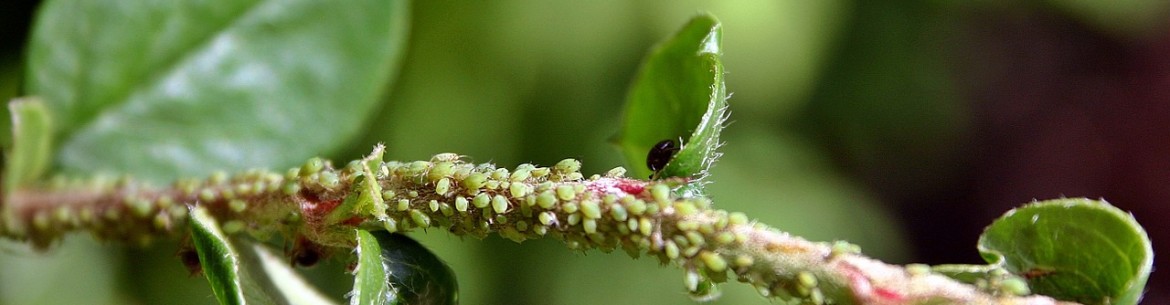
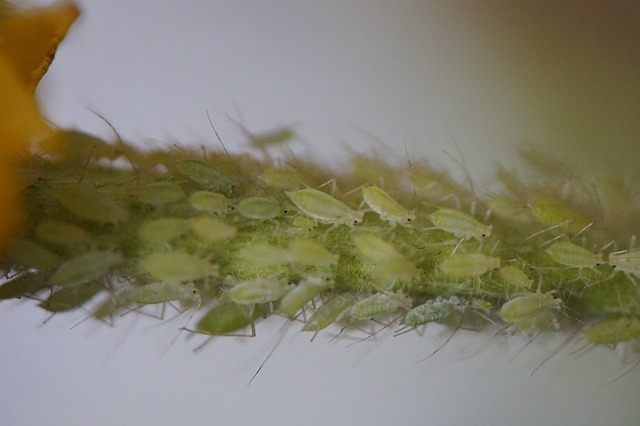 Depending on the species, aphids can have a variety of appearances and shapes: oblong, egg-shaped, hemispherical, elliptical, or teardrop-shaped. The insect's size ranges from 0.3 to 0.8 mm. Its body is soft and transparent, its surface covered with hairs of varying density and length, as well as distinctive projections and tubercles.
The color of the aphid corresponds to the plant on which it parasitizes At the moment, in the case of the apple tree, it's green. The head resembles a trapezoid, with antennae located at the top, and on them are the organs responsible for hearing and touch. Aphids have excellent eyesight; their eyes can be black, brown, or red.
The pest's mouthparts are like proboscises, which the aphid uses to pierce plant tissue and suck out sap. This organ can be long and sharp or short and blunt. Aphids are classified as winged or wingless; the presence of wings determines the structure of their thorax.
The insect has long, thin legs, allowing it not only to walk but also to jump. The abdomen consists of nine segments, the first seven containing the spiracles, while the remaining seven contain the sap tubes responsible for excretory and secretory functions. The last segment is underdeveloped and resembles a bristly tail.
Life cycle
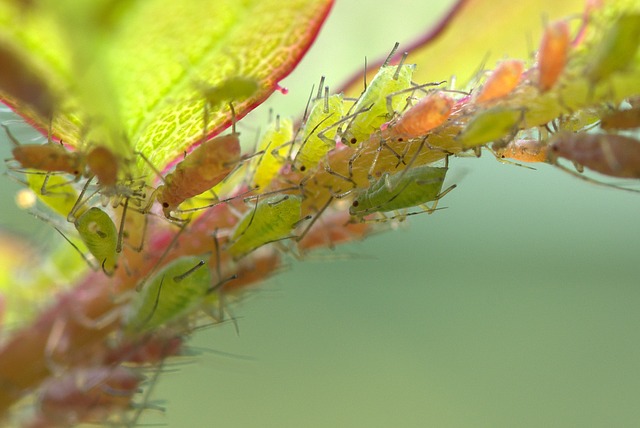 In the fall, the insect lays a clutch of eggs, which hatch into larvae in the spring during bud formation. This process lasts approximately 6–7 days. Initially, the larvae feed on green buds, then begin to consume flower buds and leaves.
Shortly before flowering begins, adult insects appear: the mother gives birth to 80 to 120 larvae in 20–30 days, from which wingless individuals develop in 8–12 days.
Around late May or early June, you can see the emergence of winged females, which fly to neighboring apple trees and thus spread a new generation throughout the orchard. The females spread their offspring on the undersides of leaf blades, petioles, and shoot tips. Sometimes, colonies parasitize the fruit.
The maximum aphid population occurs in mid-July.
In the fall (September – October), males and females begin laying eggs. Each individual lays between 1 and 5 eggs, which she attaches to young shoots with a sticky substance. Initially, the eggs are light green, but later turn black and shiny.
Area of distribution
Apple aphids can be found in virtually all European countries, North Africa, the Caucasus, Central Asia, North America, Pakistan, and eastern India. They are active in orchards from early spring to late fall.
Signs of aphid infestation
Apple aphids typically begin infesting trees from the tree's tops, making their presence difficult to detect immediately. It's easier to identify the pest once it reaches the center of the tree.
Colonies ants and the presence of a sticky substance on the back of the leaf blades are sure signs that the tree is infested with aphids.
In addition, the following factors indicate that the problem has arisen:
- unopened buds during the flowering period;
- deformation of the upper parts of young shoots (sticking and twisting);
- formation of swellings and red spots on the leaf blades;
- curling of leaves followed by blackening and drying out.
The spread of apple aphids is accompanied by the appearance of sooty mold, since the honeydew secreted by the pests is favorable for the development of this organism.
Damage caused
Ignoring the problem of aphid infestation will lead to the following consequences for garden crops:
- growth retardation;
- decrease in fruit quality;
- late formation and maturation of fruit buds;
- decreased immunity, which is an unfavorable factor when preparing for winter;
- susceptibility to damage by other types of pests;
- increased vulnerability to infectious agents;
- excessive contamination of leaf blades due to the attraction of dust by a sticky substance.
When a colony infests en masse, it can infest a significant portion of an orchard in a short period of time, negatively impacting the health of the apple trees and the harvest.
Pest-resistant varieties
Aphids are a fairly common insect whose natural food is the sap of garden trees and plants. Since the primary reason for the infestation of these pests is their very existence, there is no way to influence this. Therefore, there are no apple tree varieties resistant to aphid infestation.
Options for aphid control
 The appearance of red spots on leaves and fruit is the first sign of an aphid infestation. To prevent tree death, immediate action is essential. There are several ways to permanently eliminate the insects:
- agrotechnical;
- chemical;
- using folk remedies;
- biological.
Effective insecticides
When fruit trees are heavily infested with aphids, organic control methods are insufficient. Chemicals are then used. The most effective of these are considered to be:
- Fitoverm
- "Golden Spark";
- Cypermethrin;
- "Decis";
- Fury;
- Nitrafen;
- "Akarin";
- "Kinmiks";
- "Oleocuprite";
- Intavir;
- "Karate";
- Trichopolum
- Fufanon;
- Karbofos.
Each drug should be used only in accordance with the manufacturer's instructions.
The chemicals "Dichlorvos" and "Karbofos" are recommended to be used only in cases of extreme necessity, since these substances are highly toxic.
Processing rules
 Despite the effectiveness of pesticides, their use weakens garden crops and surrounding plants. Therefore, this method should be used only if other aphid control options have failed. When working with toxic products, it is essential to strictly adhere to several requirements:
- do not carry out treatment during the ripening period of fruits;
- use personal protective equipment: glasses or mask, respirator, suit, gloves;
- Choose dry, windless weather for the event.
The treatment process involves applying the prepared solution to the trees, paying particular attention to areas with obvious signs of damage. Apple trees are sprayed from the bottom up, allowing the chemical to reach the undersides of the leaves where the pests are located.
The prepared mixture is intended for only one treatment, as its effectiveness diminishes over time. To prevent aphids from developing immunity to the same substance, it is necessary to replace the insecticide each season.
Regardless of the preparation, each adult tree will require 5 liters of working solution, and young seedlings will require 2 to 3 liters.
Dates of events
It's important to constantly monitor the health of fruit trees, given that some pests can migrate. If a problem is detected, it should be addressed immediately, and ideally, proactively.
Pesticide treatments should be carried out approximately one month before flowering, as the 20-day effects of pesticides can be harmful to pollinating insects. During flowering, treatments using non-toxic products are recommended.
Before flowering
 Aphids present on trees during flowering attack buds before they have even opened, which has a detrimental effect on the future harvest. Therefore, it is recommended to carry out insect control procedures before this period begins.
After flowering
In June and July, adults may emerge from undamaged winter eggs. In this case, the garden should be immediately treated with either a home-made insecticide or a biological product; otherwise, the pest infestation will cause fruit that hasn't yet formed to fall.
During fruit ripening
Spraying fruit trees with chemicals is not recommended within 20 days of harvest. If necessary, it is recommended to delay harvesting for 2–3 weeks to allow insects to die and the chemicals to evaporate.
Autumn procedures
After harvesting and the leaves have fallen, gardeners perform their final spraying of the season and also prune damaged branches, which are burned along with the fallen leaves.
Processing cycles
The frequency of measures taken to eliminate aphids is determined by the phases of apple tree vegetation, namely:
- In February and March, tree buds are still dormant, and at this time, treatments are aimed at destroying insects that survived the winter.
- In April and May, buds begin to open and flower buds begin to form, which are important to protect from damage by aphids.
- At the end of May and the beginning of June, during the fruit setting period, 1 to 2 treatments are carried out.
- June and July are characterized by active ripening of fruits; spraying is carried out 2-3 times, giving preference to folk and biological remedies.
- In August and September – the fruiting period – no more than two disinfections are allowed.
- October and November mark the end of the growing season, when the trees undergo their final treatment and are prepared for winter.
Peculiarities of aphid control in different regions
In each region, tree bud and inflorescence formation occurs at different times, due to local climate conditions. For this reason, aphid control measures in orchards are carried out at different times, depending on the apple tree's growing season.
Chemical-free methods
There are several ways to get rid of apple aphids, including non-insecticide methods. These methods are less effective but pose no risk to human health or the environment.
Biological method
This method involves the use of living organisms. Its advantage is the prevention of aphid infestations in subsequent seasons. To achieve this, favorable conditions are created in the garden to attract aphids' natural enemies—plants, birds, and animals. The basic recommendations are as follows:
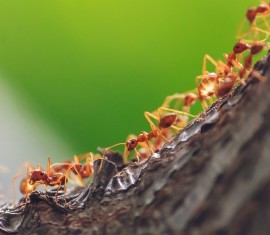
- destruction of all anthills in the orchard, since ant colonies provide protection for aphids, thereby contributing to an increase in their numbers;
- creating birdhouses and feeders for birds that feed on aphids: sparrows, robins, tits and linnets;
- planting plants whose smell repels aphids: calendula, tansy, Dalmatian chamomile, garlic;
- Attracting aphid-eating insects: wasps, lacewings, ladybugs.
It is highly undesirable to plant plants that attract aphids in the orchard: viburnum, mallow, linden, poppy and begonia.
The appearance of birds and insects will be facilitated by spices, fragrant herbs or nettles growing on the site.
Folk remedies
Many gardeners use homemade pest control solutions in combination with chemicals. The most effective formulas include:
- Liquid soap diluted in water envelops the insects in a film from which they are unable to escape. The aphids die due to lack of oxygen. To prepare the solution, dilute 250 ml of vegetable oil and 2 teaspoons of soap in ½ liter of water.
- Soak 2 cups of crushed tomato leaves, collected from the bottom of the plants, in ½ liter of water and let steep for 24 hours. Spray the resulting mixture on the green foliage of apple trees.
- Wood ash infusion: dilute 1 kg of the substance in 8 liters of boiling water and let it steep in a warm place for 24 hours. Then strain and use as directed. For maximum effect, add shavings of laundry soap to the infusion.
- Ammonia solution paralyzes and kills insects. Any remaining colonies after the first treatment are destroyed by a second spray.
- Garlic mixture: To prepare it, grind 5 cloves in a blender, add 150 g of hot water, and let steep for at least 24 hours. Then add 2 teaspoons of vegetable oil and 1 teaspoon of liquid soap.
- Tobacco dust diluted with water in a ratio of 50 g per 10 l.
Treating trees with a solution of dry mustard dissolved in water can help get rid of aphids. Add 100 grams of powder to 10 liters of hot water and let sit for 24 hours. Before use, add 30 grams of laundry soap and another 10 liters of water to the mixture.
An alternative to this remedy would be mustard powder dissolved in water and vinegarTo do this, use 1 tablespoon of each component per 10 liters of liquid.
Aphids are adversely affected by ammonia vapors. To prepare the solution, dilute 50 ml of ammonia in 10 liters of water and add 50 g of laundry soap. Apply the solution using a watering can, as the fine droplets created by a spray bottle will not reach the upper parts of the apple tree.
Preventive measures
Preventative measures can reduce the likelihood of aphids appearing on apple trees. The following procedures are recommended for this purpose:
- timely destruction of weeds - shelters for pests during the winter;
- growing fragrant herbs in the garden that attract insects that are enemies of aphids, creating favorable conditions for their wintering;
- regular inspection of apple trees, monitoring the condition of their bark, timely treatment if necessary;
- proper implementation of fertilizing;
- compliance with the regime glaze;
- Dusting trees with folk remedies.
Controlling aphids on fruit trees requires consistency and discipline. While it's impossible to get rid of these pests once and for all, providing timely protection is quite possible. By following all recommendations, positive results can be achieved in a short period of time.