
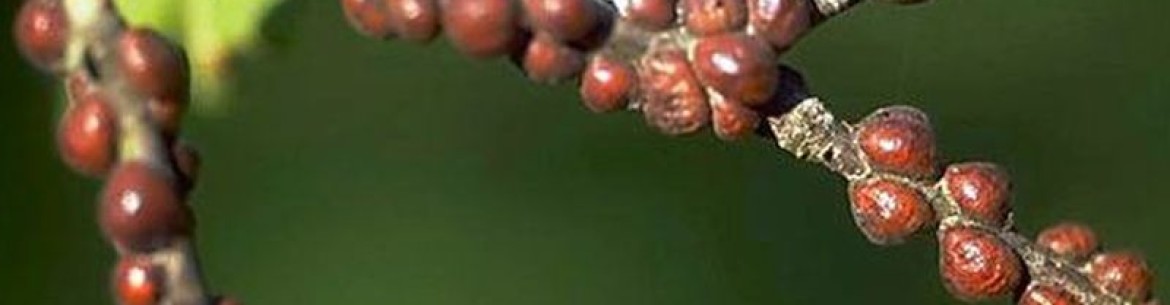
Scale insects on apple trees and other plants: effective methods of control and prevention
Scale insects are a common pest in apple orchards. They are fairly frost-resistant, reproduce rapidly, and are resistant to insecticides. To completely rid trees of scale insects, it's important to know which methods are truly effective and which are recommended for preventative purposes only.
Content
Description of the pest
Scale insects are insect pests of the family Hemiptera, superfamily Mealybug. There are over 2,000 known species, with the most dangerous to apple trees being:
 apple comma scale;
- Californian scale insect.
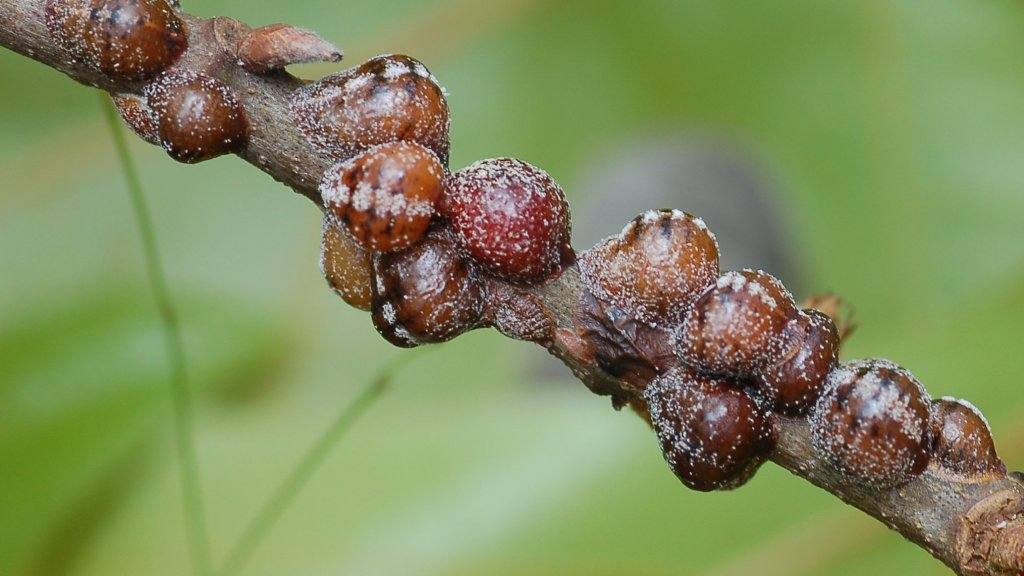 apple comma scale;
Both types of pests have common features:
- The female scale insect reaches sexual maturity in the larval stage, lacking limbs, eyes, and antennae. The developed organs are the reproductive organs.
- Leads a sedentary lifestyle.
- Characterized by sexual dimorphism – there are significant anatomical differences between females and males.
- The shield is easily separated from the body by mechanical action.
- The females and larvae of the scale insect have piercing-type oral bristles, with which they pierce the bark and attach themselves to its surface.
- By feeding on apple tree sap, the insect damages the cambium, the structural tissue that ensures the growth and development of the tree.
- A colony of scale insects causes the death of young shoots within 20–30 days, and within a season can completely destroy a mature tree.
Apple comma scale
It is widespread throughout the apple-growing zone. Its appearance resembles a comma.
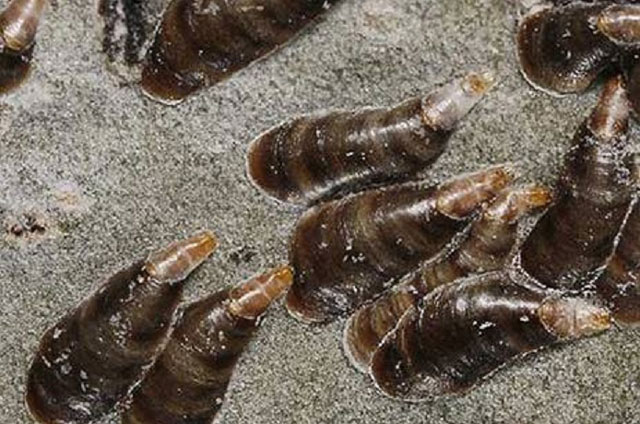 The main characteristics of the female pest:
- body – 0.7–1.8 mm, milky white, pear-shaped;
- shield - dense, dark brown in color or in accordance with the color of the tree bark, up to 4 mm long, consists of one larval skin;
- pygidium – the posterior rounded section of the abdomen, expanded relative to the anterior part, includes the anus and ovipositor;
- development begins at an ambient air temperature of +6…+8 °C;
- fertility – 70–100 eggs per season;
- number of generations per year – 1;
- egg – 0.1 × 0.3 mm, oval-shaped, white, as it matures (within 8–10 months) it acquires a beige tint;
- the size of a three-day larva is 0.3–0.5 mm;
- the maturation period of the larva is 30–50 days;
- lifespan – up to 90 days.
The male apple scale insect is characterized by the following indicators:
- body – elongated, up to 0.5–0.8 mm long, divided into head, chest and rounded abdomen;
- shield – dense, light brown, pale orange or red-gray in color, up to 0.8 mm long;
- has wings and is capable of moving up to 20 m;
- the oral apparatus is absent;
- lifespan – up to 24 hours, dies immediately after mating.
Stages and timeframes of development
First instar larva (tramp)
Larval emergence occurs in early spring when temperatures stabilize at +8…+10°C. Mass hatching coincides with the onset of apple tree blossom and lasts for 7–14 days.
Main characteristics:
- flat oval body shape;
- well-developed antennae and eyes, three pairs of legs;
- color – from pale yellow to light brown;
- length – up to 0.3 mm.
Within 24 hours after hatching from eggs, the larvae crawl along the tree trunk, either on their own or by phoresy – dispersal with the help of other insects, for example ants.
Phoresia leads to extensive infestation of the orchard with scale insects within 2–5 days.
Attaching its oral proboscis to the trunk or young shoot of an apple tree, the larva becomes covered in a thin waxy coating and becomes immobile. After 12 to 18 days, the coating cracks at the base, and the larva enters the second stage of development.
The development of the first stage takes place completely unnoticed!
Second instar larva
The second-stage larva develops a shield consisting of the remnants of the first-stage waxy coating and its own secretory secretions, which contain biologically active substances and facilitate the female's development. The shield's size increases as the larva grows.
Main characteristics:
- body length – 0.3–0.6 mm;
- shape – elongated, close to the shape of a comma;
- eyes, antennae and legs are absent;
- The color of the larva is dirty white, the posterior abdominal region is brown.
The duration of the second stage of development is 20–30 days, after which the larva turns into a female apple scale insect.
From the moment the first larva appears until the tree is populated by sexually mature females, 40–50 days pass.
Female
The female scale insect actively feeds on tree sap. Over the course of 18–22 days, it develops an impenetrable, hard shield up to 4 mm in size, which takes on a distinct comma-shaped form. The pest's body grows in size, filling the entire space beneath the shield. This developmental stage typically occurs in July.
In the beginning August The female begins laying fertilized eggs under her shell, her body shrinking to accommodate the clutch, occupying only a small area in the anterior region. Once the process is complete, the female dies.
Over the course of 45–60 days, each individual lays up to 100 eggs under its shell.
Eggs
The pest's eggs overwinter on the apple tree bark under the shield. They are frost-resistant, withstanding temperatures as low as -40°C. In the spring, when warm weather sets in, the larval hatching process begins.
Californian scale insect
In Russia, the Californian scale is common in the southern regions, Crimea, the Caucasus, and the Far East. It is listed as a quarantine species; importing planting material from areas where the pest is present is prohibited.
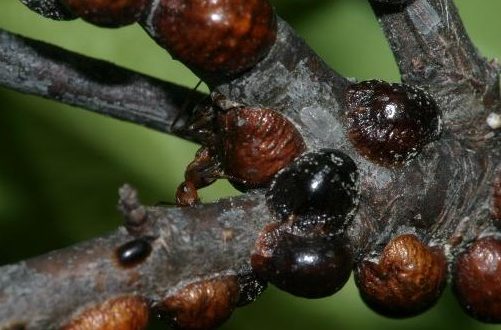 It damages fruit and ornamental trees and shrubs of various species and varieties. More than 250 plant species are potentially affected.
The main characteristics of the female pest:
- refers to a viviparous species of insects;
- fertility – 120–200 mobile larvae per generation;
- number of generations per year – 2–4;
- the development period of each generation is 58–62 days;
- body – 2.8–3.5 mm, bright yellow, rounded;
- shield - dense, dark brown in color or in accordance with the color of the tree bark, with a white border, up to 5 mm in diameter, consists of two larval skins;
- in the center of the shield there are two light brown or pale orange stripes;
- lifespan – up to 180 days.
The male is characterized by the following indicators:
- body – oval, up to 0.9 mm long, divided into head, chest and rounded abdomen;
- shield – dense, light gray, gray or black, up to 1 mm long;
- often has wings, is able to move a distance of up to 30 m, but wingless individuals are also found;
- antennae, three pairs of legs and eyes are well developed;
- the oral apparatus is absent;
- shelf life – up to 48 hours.
Stages and timeframes of development
First instar larva (tramp)
Mass development of overwintered larvae occurs in early spring with the onset of sap flow. The development of males and females during this period is identical.
Main characteristics:
- flat, elongated oval body shape;
- well-developed antennae and eyes, three pairs of legs;
- the oral apparatus is 2–3 times longer than the body and is 0.5–0.9 mm;
- color – from pale yellow to light orange;
- length – up to 0.3 mm.
Within a few hours of awakening, the larvae crawl along the tree trunk on their own or with the help of other insects.
They can survive without feeding for 5–7 days, but attach themselves with their oral proboscis to the trunk or skeletal branches within 1–2 hours after development.
California scale colonies generally do not settle on young shoots. In rare cases, they settle in bark crevices or near fruit buds.
As the larva begins feeding, it secretes waxy threads that transform into a white shield that covers its body. Over the course of 7-10 days, the shield darkens, taking on a dirty white or gray hue. Molting begins and continues for another 10-12 days, by which time the first instar's development is complete.
Second instar larva
The second stage of larval development begins 20–22 days after the start of development.
Main characteristics:
- diameter of the round body – 0.4–0.6 mm;
- eyes, antennae and legs are missing;
- the color of the larva is lemon yellow;
- shield color - gray.
The duration of the second stage of development is 30–35 days, after which the larva turns into a female California scale insect.
Female
The female's maturation coincides with the development of sexual maturity in the male. Over the next 20–30 days, the insect mates, often reproducing by parthenogenesis—without fertilization.
The hatching of new larvae lasts for 45–60 days.
At the end of apple fruiting, California scale colonies consist of individuals of various ages. When temperatures drop to -15 to -20°C, the second-instar larvae and females die. First-instar larvae overwinter under the scale at temperatures down to -35°C.
Damage caused
 The scale insect covers the trunk and shoots of the apple tree with a continuous layer. Infected trees:
- significantly lag behind in development;
- do not produce new shoots;
- do not bear fruit or produce a small harvest of low-quality apples - small and tasteless;
- the frost resistance of apple trees decreases;
- immunity to fungal or viral diseases decreases or disappears;
- the risk of development increases tenfold black crayfish.
If the pest is not controlled, the tree dies within 1–2 years.
Causes of infection
Scale insects get into the garden plot:
- with purchased seedlings infected with pests;
- when branches of a healthy tree come into contact with a diseased one;
- by phoresy - the dispersal of larvae from neighboring areas with the help of ants or other insects, as well as birds or wind.
Signs of scale insects
The main signs of the presence of a pest:
- Sticky sap, a byproduct of the scale insect's activity, appears on the leaves, and black rot begins to develop within 12–24 hours. At this stage, the scale insect's shield is not yet fully formed, so it's time to begin spraying with chemicals.
- Tightly attached pests appear on the trunk, skeletal branches, and shoots. At this stage, the infestation is already quite severe, requiring a combination of measures to eliminate the pest.
One of the signs of apple tree damage by the California scale is the presence of individual or multiple bright red spots on the fruit.
Apple tree varieties resistant to scale insects
 The following varieties are immune to the California scale insect:
- Rosavka;
- Sapphire;
- Kiev winter;
- Antonovka ordinary;
- Simirenkovets.
No varieties resistant to apple scale have been developed, but it has been observed that young trees have a stronger immunity.
Timely implementation of preventive measures increases sustainability.
Pest control methods
Destroying scale insect colonies is very difficult due to their thick shells—the pests are completely resistant to insecticide sprays. Control requires a combination of different methods.
Mechanical method
The mechanical method of getting rid of scale insects is as follows:
- Clean the trunk, branches, and shoots affected by scale insects with a wire brush. It's important to avoid damaging the tree bark, as fungal diseases can quickly develop and spread in affected areas.
- Removing branches significantly damaged by pests is done with a sharp knife or pruning shears. When pruning with a hacksaw, be sure to trim the edges of the wound and seal it. garden pitch.
Collected waste, damaged or affected parts of the plant must be destroyed by burning.
Once the treatment is complete, you should begin to fight the pest using chemicals.
Chemical control
Chemical control is the most effective way to get rid of scale insects. It's important to treat the affected plant with recommended products throughout the season, adhering to the recommended schedule:
- Spring treatment. Begins in early spring when average temperatures reach +5 to +7°C, which coincides with the onset of development of first-instar larvae, which lack a hard shell. Spray the apple tree and the surrounding area with one of the following products:
- Actara is a paralytic poison. It penetrates leaf tissue and, along with tree sap, into the scale insect's mouthparts, killing it within 2–24 hours.
- Actellic is highly effective. It penetrates instantly upon contact with the unprotected larvae and paralyzes the nervous system, leading to their inevitable death within 12–36 hours. It is inactive against scale insect eggs and females.
- Fitoverm is a biological product. It causes paralysis of the larvae within 6–12 hours and results in death within 24–36 hours.
- Bitoxibacillin is a biological insecticide with intestinal action. It kills early-stage larvae within 12–36 hours.
Repeated treatment of first-instar larvae is carried out 7–10 days after the first.
- Subsequent treatments (up to 5 times per season) with biological preparations "Fitoverm" and "Bitoxibacilli" are carried out only in the absence of females in order to completely destroy the pest and prevent its reappearance.
- Summer chemical treatment is carried out in cases where spring spraying is untimely and therefore ineffective. This treatment includes root watering apple trees with preparations diluted according to the attached instructions:
- Aktara;
- Phosphamide.
Watering is carried out at a rate of 10-15 liters of solution per tree 2-3 m tall. The poison penetrates all tissues of the apple tree through the root system and, along with the sap, into the oral cavity of the female scale insect, which dies within 6-12 hours.
After 12–24 hours, the tree must be sprayed with Actellic, Fitoverm or Aktara.
Before the end of the season, the apple tree should be pruned in a timely manner. water In order to remove toxins, it is important to monitor the water consumption rate and avoid over-watering – treated wood is less resistant to fungal diseases.
Root treatment is the most effective way to instantly get rid of scale insects. However, this method requires destroying the entire crop.
Fruit harvested from trees treated with root insecticides is strictly prohibited for consumption, including after heat treatment! They are saturated with poison! Consuming them will cause serious harm to the human body!
- Autumn treatment involves preventative spraying with biological preparations.
Agrotechnical measures
They are carried out for preventative and protective purposes, and as part of a comprehensive pest control program. They include the following:
- timely pruning and crown shaping;
- removal of dry branches and those damaged by fungal diseases;
- maintaining optimal distances when planting fruit trees;
- timely destruction of weeds from the tree trunk circle of apple trees and root shoots;
- destruction of anthills;
- timely fertilization of apple trees with mineral additives in order to increase resistance to pest damage;
- implementation of mandatory spring and autumn preventive measures.
Preventing scale insect infestation on apple trees using traditional methods
As preventive measures it is recommended to use:
- Spray or hand-wash the tree with a soapy solution in the spring before sap begins to flow and after flowering. To prepare the solution, thoroughly mix 150 grams of laundry soap and dissolve it in 10 liters of warm water. Apply early in the morning or after sunset. This protects against diseases and prevents pests from establishing a foothold on the trunk or leaves.
- Spray the tree and water the soil with an infusion of onion peels prepared according to this recipe: brew 3-5 thick handfuls in 5-7 liters of boiling water and let steep for 3-5 hours. This increases disease resistance and prevents pest infestations.
Trying to kill scale insects with folk remedies is ineffective! Scale insects are a powerful and resilient pest! They can only be eliminated with aggressive chemical treatment!
Conclusion
Getting rid of scale insects is a rather complex and energy-intensive process. Time is limited for eradicating the pest, as its colonies quickly destroy the tree. Therefore, in rare cases, extreme measures must be taken, forfeiting one year's harvest to save a beloved apple tree variety.




Comments
There's another folk remedy for scale insects. Dissolve 120 grams of pepper in three liters of hot water. Then let it sit for 24 hours and strain through cheesecloth. Dissolve a quarter bar of laundry soap in the water and spray or wash the tree bark thoroughly with this solution.
I made a garlic infusion. Red pepper isn't very good, as it might not reach the insect's soft parts, and the shell protects it from burning. Garlic repels them with its strong odor. Of course, whitewashing with lime and collecting and peeling bark also work. My mother used to use kerosene. We sprayed it in the spring, and the scales quickly receded. It's best to place a white cloth or cellophane around the tree. You'll see which method works best based on the number of insects on the surface.