The best ways to control spider mites on apple trees
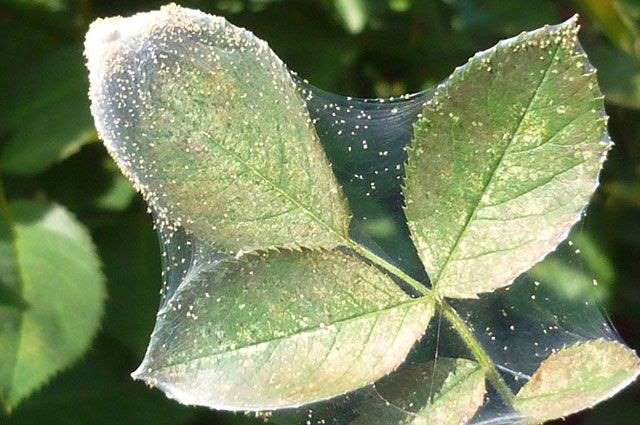
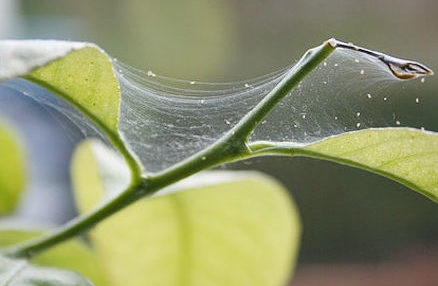
Spider mites are tiny, invisible insects that feed on plant sap and spin fine webs through which they move very quickly. They are incredibly prolific and can be a real problem for gardeners. So what should you do if these tiny, but not at all powerful, pests suddenly appear in your garden?
Spider mites love to infest apple trees, but they can also migrate to other fruit and berry crops. Their omnivorous nature easily turns this small pest into a gardener's nightmare. A spider mite infestation quickly weakens the plant's immunity and makes it vulnerable to secondary infections of various origins. So how can you combat this insect? Let's take a closer look.
Content
Spider mite: characteristics
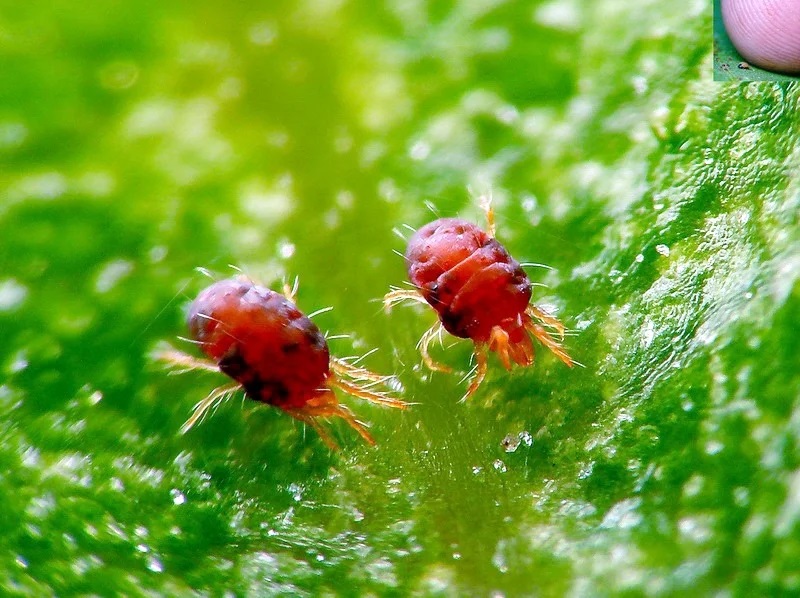
Spider mites are a group of insects of various species belonging to the arachnid family. They attack not only apple trees but also many other plant species. Their attacks reduce the trees' yield and immunity, making them vulnerable to various infections.
Spreading
Spider mites are widespread, as many species are omnivorous and feed on any plant. Some species prefer more southern or northern regions, but in general, their habitat extends to any area where green plants are present.
What does it look like?
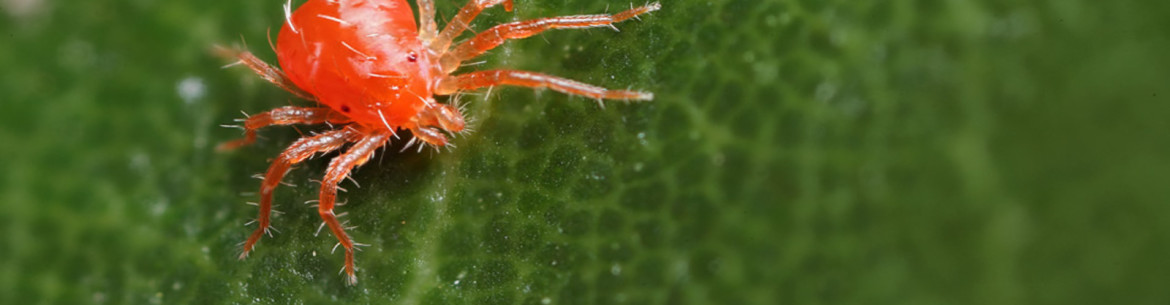
 The pest's appearance depends on its species. Generally, these mites are small, typically no more than 5–7 mm in diameter, but larger specimens are also common. The most common unwanted guests on apple trees are:
- red fruit mite – a small, oval mite of bright red color, 0.4 mm long;
- brown fruit mite – insects 0.4–0.6 mm long, flat, brown or reddish in color;
- gall mite is an extremely small insect, no more than 0.25 mm in length, whose characteristic feature is the formation of swellings on the leaves;
- kidney mite – an arachnid 0.5–0.7 mm long, bright brick-colored;
- Schechtendal mite is a yellow-brown insect 0.2 mm long, characterized by high fertility;
- The common spider mite is the most common species, about 0.4 mm long.
Life cycle
The life cycle of any spider mite includes 4 stages: egg, larva, nymph and imago, or adult insect.
- The egg may be either fertilized or unfertilized, depending on the species and its ability to reproduce parthenogenetically. A single female can produce 150 to 350 eggs per year over 8–10 generations. The eggs are small, usually no more than 0.2 mm in length. Their development depends on air temperature.
- The larva is a small insect, approximately 0.1 mm long, with three pairs of legs. It moves actively and feeds. Development lasts 8–20 days, depending on weather conditions, and feeds on the sap of leaves, fruits, and shoots.
- A nymph is an intermediate stage between a larva and an imago. Its body shape resembles that of an adult insect.
- An imago is an adult insect ready to reproduce. It actively moves, feeds, and searches for a mate. Females can lay parthenogenetic eggs, and the cycle begins anew.
Apple tree varieties resistant to spider mite infestation
Unfortunately, there are no varieties completely resistant to pest attacks. Each tree's individual resistance depends on growing conditions, its varietal characteristics, and its overall immunity. Spider mites prefer to settle on already weakened plants, so a secondary infestation cannot be ruled out after an attack. caterpillars or other harmful insects.
Methods of control
 All methods of controlling spider mites can be divided into 4 main groups:
- chemical;
- agrotechnical;
- biological;
- folk.
Let's look at each group in more detail.
To increase the overall resistance of trees, it is necessary to carry out regular root and foliar pruning. top dressing complex fertilizers.
Agrotechnical techniques
Agronomic practices are mostly preventative measures, but can help eliminate mites in combination with other methods and speed up the tree's recovery.
- To reduce the number of mites and eggs overwintering in the soil, gardeners and agricultural technicians recommend plowing the tree trunks in the fall and spring. In the fall, leaf and fruit litter should be removed and burned to reduce the number of insect overwintering sites.
- Regular sanitary pruning should be performed, removing weak, damaged, or overcrowded branches. Removed shoots should also be burned to prevent the spread of spider mites.
- It's important to monitor the condition of the bark, treating all cracks and frost cracks, as these can easily become entry points for pests. Don't be lazy in removing loose bark from skeletal branches, as mites can overwinter under it.
Biological methods
Biological control methods include the use of biologically active products and the propagation of spider mite natural enemies in the area. One of the most popular biological products is Fitoverm. This is an extract from the waste products of certain fungi, which exhibit toxic properties against adult spider mites.
Fitoverm is effective at temperatures above 18 degrees Celsius. Furthermore, it does not decompose at temperatures above 25 degrees Celsius, unlike most chemical treatments. Its drawback is that it is ineffective against insect eggs and larvae, requiring regular application—at least twice per season.
Fitoverm is dangerous due to its toxic effect on aquatic organisms and fish, so it should be used with extreme caution if there is an open body of water near the site. When working with it, keep pets and children away from the area, and wear gloves and a protective mask when handling it.
To prevent ticks from developing resistance to the drug, it must be alternated with other groups, such as acaricides.
The spider mite's natural enemy is the phytoseiid, a small arthropod that can destroy up to a hundred individuals per day. It is artificially bred and introduced into infested trees.
Traditional methods: methods without chemicals
Those who favor folk remedies and those who oppose chemical treatments should remember that these measures are ineffective against tick infestations due to the pest's high reproduction rate. Treatments must be carried out frequently and regularly, according to the insect's life cycle.
The most popular recipes:
- Spraying with a garlic solution. The working mixture is prepared by adding 50 g of peeled garlic bulbs to 10 liters of water. The solution is left to sit for 24 hours in a dark place, then 2 tablespoons of liquid laundry soap are added until completely dissolved, and the crown of the plant is treated with the resulting mixture every 7-10 days.
- Sulfur-tar soap. Dissolve 100 g of grated tar soap in 10 liters of water until completely dissolved. Spray the crown once a week until the insects are completely eradicated.
- An onion infusion is prepared by steeping 200 grams of fresh onion peel in 10 liters of water for an hour. The solution is then filtered and sprayed onto the crown of the tree once a week.
- Horseradish root infusion. Add 400 g of freshly chopped root to 10 liters of water and let steep in a dark place for 2-4 hours. Spray the crown with the resulting infusion every 7-10 days.
- Black henbane decoction should be used with extreme caution. To do this, add 1 kg of fresh henbane leaves to a simmer over low heat for 5-6 hours. Then dilute the decoction with water in a 1:1 ratio and apply it to the trees.
Chemicals for spider mite control
 Chemical control methods should be examined in more detail, as they include various groups of products with different mechanisms of action. Broad-spectrum products are called insecticides, while narrow-spectrum products aimed at eliminating mites are called acaricides.
There are a large number of different medications available in various forms. These can include concentrates, emulsions, aqueous solutions, powders, and tablets. Working solutions must be prepared strictly according to the instructions, as too low or too high a concentration will not produce the desired positive effect.
A solution concentration that is too low will have no effect on insects and, moreover, may cause resistance in the population. Excessively high concentrations can have a negative chemical effect on the plant itself.
Insecticides
Of the wide range of drugs, the following have shown the greatest effectiveness:
- Carbofox;
- Fufanon;
- Ditox;
- Clipper.
In addition to spider mites, they also control other pests, such as caterpillars, scale insects, weevils, and many others. Using these products provides comprehensive plant protection.
The most popular product is Fufanon. It is characterized by its rapid and pronounced effect, affecting both adults and larvae. However, the final treatment should be carried out no later than 30 days before the expected harvest. No more than two treatments are allowed per season.
Acaricides
Specific, highly targeted products with contact and intestinal action. They require careful treatment of the entire plant surface. The most popular in this group are:
- Zolon;
- Apollo;
- Demitan;
- Sunmite;
- Omayt.
Omite and its analogs, which contain propargite as their active ingredient, produce the most pronounced, long-lasting effects. It provides up to three weeks of protection against spider mites. However, it is considered the most toxic to animals and humans.
The main advantage of acaricides is their narrow targeting and harmlessness to other insects and spider mites' natural enemies. They do not kill beneficial insects or affect pollinators.
Technology for treating trees against pests
Spider mites are difficult to eradicate, and their small size makes mechanical treatment virtually impossible. Even regular biweekly spraying may not produce the desired results due to the pest's rapid reproduction rate.
Many preparations do not work on mite eggs, so regular re-treatment is required.
The primary method for controlling spider mites is spraying with various infusions, decoctions, or active chemical compounds. The amount of chemical used depends largely on the specific product. Traditional methods of control typically use 10 liters of spray per tree.
Treatment is carried out using a sprayer. It's essential to thoroughly spray all areas of the tree, especially when using acaricides with a contact-food mechanism of action. Spray not only the foliage but also all branches, including side branches, and the main trunk. As a preventative measure, some gardeners also spray the area around the tree trunk, in case some insects fall from the foliage during spraying.
Processing time
To protect plantings from spider mite attacks, it is necessary to carry out treatment in a timely manner throughout the season.
In spring before flowering
The first treatment is carried out to destroy females that have overwintered in the soil and bark and prevent egg laying. The soil and branches are sprayed with a 3% solution of iron or copper sulfate.
After the leaves have opened and before flowering begins, it is permissible to treat the plant with any insecticide or acaricide that has an effect on the insect.
During flowering, only acaricidal treatments are allowed!
After flowering
After fruit set and early fruit growth, the treatment is changed to prevent insect tolerance and the formation of a stable population. Both broad-spectrum and targeted treatments are acceptable.
During the period of fruit ripening
During the active fruiting period, treatments are not recommended. If necessary, spray with infusions and decoctions prepared using traditional methods. If chemical treatment is necessary, keep in mind that the final treatment should be carried out no later than a month before the expected harvest.
Deadlines in autumn
The final treatment is carried out after harvesting, before the leaves fall. This will reduce the number of overwintering insects. Broad-spectrum insecticides are suitable for this treatment, as well as urea or a solution of copper sulfate of 3% concentration.
After the leaves have fallen, all fallen leaves are collected and burned. The soil around the tree trunk is treated with a 3% solution of copper or iron sulfate and thoroughly dug over.
Processing frequency
The frequency of treatments depends largely on the chosen method and active ingredient. Traditional methods require regular spraying at least once every 7-10 days. Chemically active products typically require two or three treatments per season (depending on the active ingredient).
Processing times in the regions
 Processing times vary by region, as warming occurs at different rates in different areas:
- Central Russia – primary treatment in the second or third ten days of March, then as leaf buds and ovaries form;
- South – first ten days of March;
- Ural And Siberia – first ten days of April;
- Far East – second and third ten days of April.
Spider mites are a very unpleasant pest. They reproduce rapidly, are invisible to the naked eye, and spread quickly from a diseased tree to a healthy one. To avoid problems with this pest, it's important to follow proper agricultural practices when caring for apple trees and remember to regularly perform preventative treatments, preferably with broad-spectrum chemicals.