How to cut apples for drying: the ideal shape, thickness, and size of pieces
Drying Apples are a delicious, nutritious, and healthy product. They are used to make compotes and kissels, pie and muffin fillings, as a side dish for main courses, and even in soups. Dried apples successfully replace sugary sweets, making them a dietary staple. How to prepare them quickly and correctly dried apples at home, this article explains.
Content
How to cut apples for drying
There are many ways to cut apples for drying: into slices, rounds, cubes, etc. However, no matter how aesthetically pleasing the sliced fruit may be, the shape alone doesn't guarantee that all the apples will dry quickly and evenly. The thickness of the slices themselves is more important. It's best if the pieces are as uniform in size as possible.
Which fruits are best to choose?
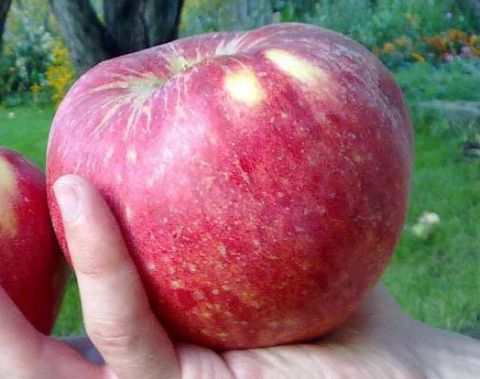 The most delicious and nutritious product, richest in vitamins, can be obtained from high-quality raw materials, which implies not only a pleasant taste but also a high content of dry matter in the fruit pulp. This property simplifies and speeds up the processing process. Thus, autumn varieties such as Apport and Antonovka are considered the best for making dried apples at home. Saffron pepin.
Winter apples are also used for drying. However, it's recommended to select apples that are not severely damaged and have fallen from the tree. Sweet summer apples are best avoided for drying, as high temperatures cause the sugar to evaporate, and the apples lose their attractive flavor.
Once the variety has been selected, they begin the actual fruit selection process. Preference is given to ripe, medium- to large-sized apples with thin skins to minimize waste.
Proper peeling of apples
To obtain a quality product, it is necessary to prepare the raw materials correctly.
- The selected fruits are thoroughly washed and dried, after which wormholes and spoiled areas are removed from their surface.
- Apples intended exclusively for compotes are not cored. However, if the dried fruit is to be used as a filling for baked goods, coring is essential. This is done either with a special tool, a tube with a sharpened end, or with a knife after slicing the fruit.
- Apple peels contain most of the beneficial elements and vitamins, so home-grown apples don't need to be peeled completely. However, apples purchased at the market or store are recommended to be peeled before drying.
- Peel the apples with a sharp knife, trying to cut the peel into the thinnest possible strip.
How thick should I cut apples for drying?
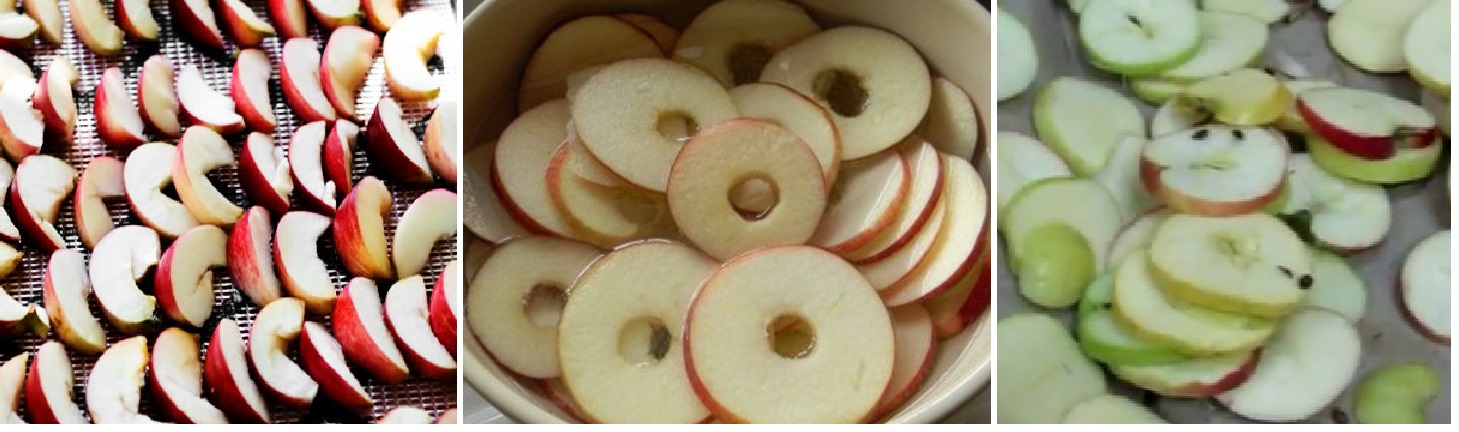
The thickness of apple slices intended for drying depends on the method used to process them.
In an electric dryer
 Using an electric dehydrator allows you to quickly and efficiently produce a large quantity of healthy apples. To do this, cut the apples into slices no more than 5 mm thick. This is easiest to do with a household slicer, although a sharp knife will also help achieve the desired result. The resulting slices are evenly spread on the dehydrator's racks, and then the desired temperature is set. This method allows you to dry apples in just a few hours.
Using an electric dryer helps protect fruits from burning and insect damage.
In the oven
Drying apples in the oven is the most common method of preserving them. To do this, the fruit is cut into slices of uniform thickness, approximately 5–7 mm. This prevents them from drying out and allows them to be exposed to high temperatures for a sufficient period of time to ensure the finished product retains all its flavor and nutritional qualities.
The shape of the slices being cut is not of fundamental importance.
To ensure high-quality drying, the apple slices, placed on baking sheets, are regularly stirred every 1.5–2 hours. The finished product is obtained approximately 7 hours after the drying process begins.
In the sun
Drying apples outdoors (in the sun) isn't the fastest or most effective method of preservation. It's only suitable for southern regions with plenty of sunny days. This method works well dry Only summer apple varieties. But their quantity is unlimited. There's enough space in the sun for everyone.
For sun drying, apples are cut into thin slices or circles no more than 5–7 mm thick.
The prepared and sliced fruit is laid out in a single layer on wide baking sheets (nets) and placed outdoors in direct sunlight, or strung on strings (sticks) and hung in the hot sun. The finished product is obtained after 3-4 days of constant exposure to sunlight.
How to protect against oxidation
During the drying process, some apple varieties may change color, oxidizing and darkening. To prevent this and ensure your dried apples retain a pleasant white color, it's recommended to soak the sliced apples in a salt or acidic solution (10 g of salt per 1 liter of water or 2 g of citric acid per the same amount of water) for 3–4 minutes.
Pre-soaking apples in a salt or acidic solution helps protect them from damage by harmful insects and increases the shelf life of the product.
How to quickly cut apples for drying
To obtain a high-quality product, you need to cut a large number of apples into slices of approximately equal thickness. To do this correctly and quickly, experienced housewives recommend following these tips.
With a knife
Traditionally, slicing apples with a knife can be time-consuming. These tips will make the process much easier and faster.
- If you only have regular kitchen knives at your disposal, choose a sharp, razor-sharp tool with a handle that fits comfortably in your hand.
- Invest in a specialized knife designed for cutting fruits and vegetables. Its slightly curved, 6-8 cm long blade allows you to easily and quickly peel rounded shapes.
- When cutting apples into rings, try to ensure that the thickness of each ring does not exceed 5 cm.
- It is most convenient to cut small apples into quarters.
- To cut a large fruit, you can gradually cut off small slices from it, moving from the edges to the core.
Apple slicer
In addition to the traditional method of slicing apples with a knife, you can use specialized tools to make the process easier, such as a slicer. A slicer is a household appliance equipped with several blades and a scraper, allowing you to not only slice the fruit but also peel and core it simultaneously. This tool allows you to quickly and efficiently process large quantities of apples for drying. Using a slicer is less labor-intensive and significantly reduces the time spent.
Dried apples are a healthy dietary product, rich in vitamins, micro-, and macronutrients. To ensure high-quality dried apples, choose sweet and sour autumn varieties with thin skins. The apples are cut into thin slices and dried in the open air or using specialized household devices. The resulting product is used in cooking to make vitamin-enriched drinks and delicious desserts.