Pepin Saffron Apple Tree: Variety Features and Care
| Color | Reds |
|---|---|
| Ripening season | Autumn |
| Size of apples | Average |
| Taste | Sweet and sour |
| Crown type | Average tree height |
| Shelf life | High shelf life |
| Application | Universal variety |
| Winter hardiness | High winter hardiness |
| Fruiting age | Up to 5 years |
 History of origin and regions of growth
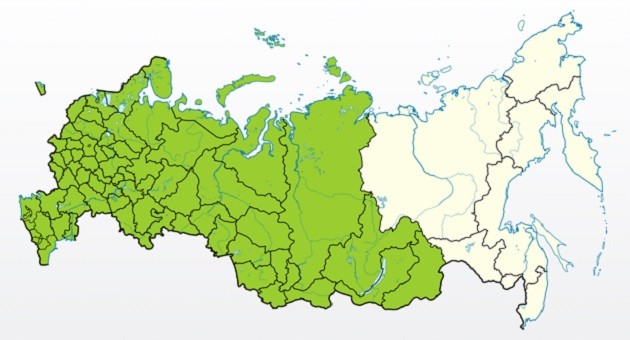
Growing regions
- Middle zone.
- North Caucasus.
- Crimea.
- Some northern regions.
- Siberia.
- Ural.
Origin
In the early twentieth century, the world-renowned breeder Ivan Vladimirovich Michurin developed and commercialized numerous new varieties of apple and other fruit trees. Between 1920 and 1950, he created the apple tree called the Saffron Pepin. The parent varieties were a hybrid of the Chinese Bellefleur and the Lithuanian Pepin, which was successfully crossed with the Orleans Renet.
Thanks to its outstanding properties, including truly good frost resistance, this variety immediately won the trust and love of gardeners in our country. It quickly spread throughout the Soviet Union. However, the decision to classify it as an elite variety and include it in the State Register was made only in 1947, after the end of the war. Even today, the saffron pepin is considered the most popular and sought-after variety in the Russian Federation and the CIS countries.
Content
Description of the Pepin Saffron apple variety
 This variety's popularity is no accident. Owners primarily note the trees' early fruiting and high yields, which increase very quickly. The fruits of the Saffron Pepin have outstanding taste and marketability; they are very tasty and attractive, and they store well when fresh and are transportable even over very long distances. This apple variety is recommended for both large, intensive commercial orchards and small home gardens.
Apples: What they look like
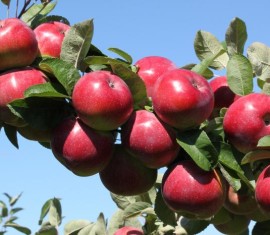
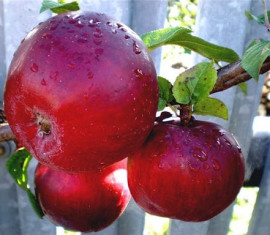
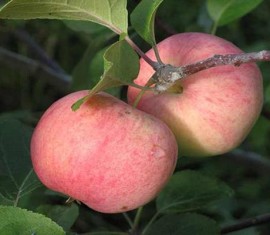
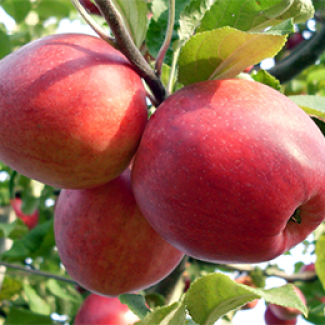
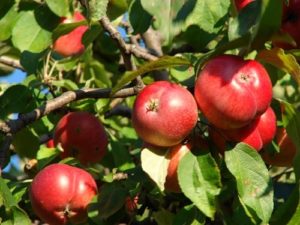 The fruits are medium to slightly above average in size, although some are small. Their average weight ranges from 80 to 140 grams. They are round, smooth, symmetrical, slightly flattened along the central axis, and uneven in size, which is considered their main drawback.
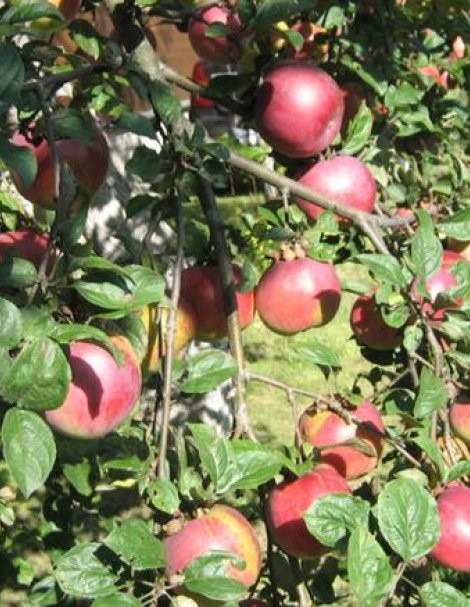
The skin is firm, thick, but not rough, green when unripe and with a distinct yellow tint as it ripens. Fully ripe apples can be described as lemon-yellow. The blush is a blurred, streaky, carmine-red or burgundy hue, with distinct speckles and stripes, covering approximately 55-85% of the surface. Subcutaneous punctures are light, almost white, and numerous and clearly visible. The chemical composition is best expressed by the following indicators:
- P-active substances (catechins) – 168.1 milligrams.
- Ascorbic acid (vitamin C) – 14.3 milligrams.
- Total sugars (fructose) – 11.9%.
- Pectins (fiber) – 13.8%.
- Titratable acids – 0.58%.
The fruit's flesh is dense, fine-grained, very juicy, and creamy and slightly lemon-colored. It has a sweet and sour taste, often described as wine-like, considered harmonious and balanced, and a pleasant, characteristic apple aroma. According to professional tasters, the fruit scores at least 4.6 and 4.8 points for appearance and taste on a 5-point scale.
Pepin saffron apple tree: characteristics
Crown and root system
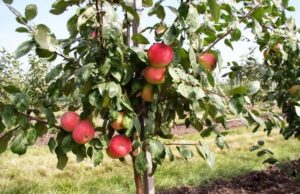 The tree is considered medium-sized, although it more closely fits the definition of a natural dwarf, as it grows to a maximum height of 3-3.5 meters without shaping pruning. When young, the crown is rounded or even oval, but with age it becomes increasingly dense, broadly oval, spreading, and sometimes even weeping and drooping. The branches are slender, straight, and long, extending from the main trunk at right angles, and covered with green or greenish-gray, heavily pubescent bark. Fruiting occurs primarily on the spurs and fruiting branches.
The leaves are rounded, small to medium-sized, elongated, and pointed, bright green or just green. They are leathery, dense, and matte, with a noticeable pubescence on the back, as well as a wavy, serrated edge, and can be folded into a boat shape. The root system is extensive, robust, and shallowly buried, well adapted to seeking water in the soil.
Productivity and pollination
The productivity and early fruiting of these trees made them famous and beloved among gardeners.
Over the course of a season, good owners of one Saffron Pepin apple tree, with proper care and thanks to suitable weather and climate conditions, can count on 210-240 kilograms of aromatic and tasty, storable fruits.But there are known cases when even 250-290 kilograms were collected.
Pepin is considered conditionally self-fertile, meaning it will produce a harvest even if there are no other apple trees nearby for cross-pollination. However, in reality, yields in this case will barely reach 50% at best. To maximize yields, it's best to plant trees interspersed, ensuring they bloom at roughly the same time. It's a good idea to set up an apiary near the orchard and spray the tree trunks with sugar or honey diluted in water during pollination.
Winter hardiness and disease resistance
The low-temperature tolerance of the saffron pepin depends almost entirely on growing conditions and proper care. With proper care, the tree will tolerate temperatures down to -32-38°C. It's important to carefully prepare the trees for winter, which includes not only proper shelter, although that's important, but also proper feeding, watering, fertilizing, pruning, and all other care.
The variety is fairly resistant to fungal infections, but not so much that you can leave it to chance. If it is affected by powdery mildew or scab, the entire harvest becomes unfit for consumption, and pests readily damage not only the leaves and fruit, but even the wood. Therefore, it is necessary to promptly treat trees with industrial fungicides and insecticides, and promptly remove rotting leaves, weeds, and apples from under the tree.
Rootstocks and subspecies
| Subspecies | Description |
| Creeping (slate) | This subspecies is grown on dwarf or semi-dwarf rootstock. It requires special care and pruning, which involves removing the central basal shoot and bending the lateral branches down to the ground. This allows the owner to more reliably protect the tree from frost during the winter, even by simply covering it with snow. |
| Cultural winter | This variant of Pepin is zoned within the central zone and some more northern regions, for example, in the Leningrad region and Moscow regionThis subspecies has a unique characteristic: it does not tolerate even minimal soil acidity. Therefore, if the soil acidity is elevated, regular liming will be necessary. |
Pepin Saffron's Growing Features
 Landing
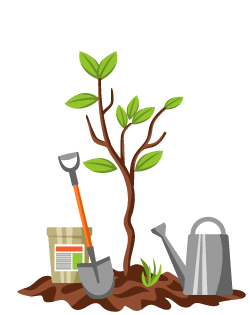 Landing
Basic conditions
- It's customary to select only open, sunny, well-ventilated sites for this variety. However, care must be taken to avoid drafts, as the trees dislike these.
- Pepin should not be planted in excessively salty or acidic soils, as this will inevitably result in the death of the seedling. The soil should be of average fertility. This means sand or loam will need to be fertilized, and black soil should be diluted with river sand.
- You need to prepare holes for apple trees at least 2-3 weeks in advance of planting, or even better, a season in advance. They should be approximately 90-100 centimeters in diameter, and 50-60 centimeters deep will suffice. Add some fertile soil from the removed top layer mixed with organic matter (manure, humus, compost). Then, place broken bricks, gravel, or rocks on top for drainage, pour in 20-35 liters of water, and leave in the open air.
- The distance between holes depends on the planting purpose. In an intensive garden, 3 meters between rows and 2.5 meters between trees is sufficient. In your own garden, you can space the holes as far apart as you like from other plants. For creeping varieties, you need to leave at least 3-3.5 meters in diameter for crown development.
- A stake is driven into the center of the hole to support the seedling. This can be a wooden plank, a metal pole, or a plastic one; it's best to position it on the north side of the trunk. The stake should not be removed until 2-4 years after flowering begins.
- The seedling is lowered into the hole, supported by the trunk, and covered with soil, gently shaking it to prevent air pockets. Firmly compact the soil around the trunk with your hands. A small mound is built around the perimeter of the hole, like a rim, and 25-40 liters of water is poured into it. Mulch is applied to slow down the soil's moisture loss.
When planting a one- or three-year-old seedling, it's best to choose a permanent location for it. This variety doesn't respond well to transplanting, so it's best to plant it once and never touch it again.
Landing patterns
This variety can be planted in either spring or fall. The key is to wait until the threat of frost has completely passed in the first case, and until the leaves have fallen and the sap has stopped circulating in the trunks in the second case. In spring, it's best to plant trees in late March or early April, and in autumn, in late September or early October. It's important to allow at least 3-4 weeks before frost, otherwise the seedlings may not survive.
Protection from frost and rodents
The saffron pepin is considered winter-hardy, but without proper protection, it will die within the first year after planting. Therefore, before frost sets in, ensure the trunks are wrapped in burlap, roofing felt, or some other material, and that mats of dry grass or straw bales are laid around the root zone. Young, low-growing trees benefit from tent-like covering, and the slate variety should be covered with snow.
Rodents happily gnaw on the tender young bark of apple trees, and insects nest in the cracks of the bark or in the tangled roots at the base of the trunk. Therefore, trees are coated with drying oil, grease, and lard to repel hungry hamsters and mice, and they are also whitewashed to repel insects.
Tree care
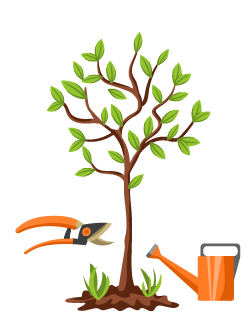 Tree care
Loosening the soil, watering: proper agricultural technology
All trees require care if you want to reap the benefits, and the Pepin is one of the most demanding. The soil around the trunk needs to be dug regularly (twice a year) and even more frequently (3-6 times) hilled to allow oxygen to penetrate the soil.
At the same time, it is necessary to remove shoots of various plants, root suckers and weeds, as they will inevitably take away nutrients from the apple tree.
Experts recommend loosening (hoeing) the soil around the tree the day after watering.
The variety needs to be watered regularly, especially when young. Once a week is ideal, with just 10-20 liters of water per mature tree being sufficient. Fertilizers, mineral supplements, and fertilizers are usually added along with the water. Moisture will ensure that the tree's roots absorb any nutrients much more efficiently than without it.
Pruning: simple crown shaping
The Pepin's crown itself is quite dense, so regular pruning is necessary. Crown shaping begins in the 3rd or 4th year, with the central conductor shortened by one-third and the skeletal branches left at varying heights; only 2-3 are needed. Inward-growing shoots and suckers (those protruding vertically) should also be removed immediately, and then simply maintained in the desired shape, removing any excess.
In the fall, sanitary pruning is also performed, removing all diseased, broken, or dead branches. Don't forget to immediately treat the wounds after pruning. If you don't have garden pitch, drying oil, water-based paint, or other suitable products, you can simply cover the cuts with swamp oil; this will also reduce stress on the tree.
Reproduction
- Rooting cuttings.
- Grafting by buds and cuttings.
- Clones (offshoots).
Diseases and pests
- Powdery mildew.
- Scab.
- Black crayfish.
- Pit bitterness.
- Cytosporosis.
- Green aphid.
- Codling moth.
Ripening and fruiting of Saffron Pepin
The beginning of fruiting
 The beginning of fruiting
The variety can begin bearing fruit for the first time quite early, as early as the second or third year, especially if grown on a dwarf or semi-dwarf rootstock. However, experts recommend plucking the blossoms at this time, preventing them from developing into fruit. Proper fruiting does not begin until the fourth or fifth year, when the tree can produce at least 5-10 kilograms of aromatic fruit.
Flowering time
Like all other apple trees, the Pepin apple tree blooms around the beginning or second half of May. However, depending on the growing region, this may occur a little earlier or later. Pepin apple trees can bloom around May 8th-12th, or as late as the 25th-27th. The flowers are medium-sized to large, gathered in fleshy, saucer-shaped, highly fragrant clusters, white or slightly pinkish. The trees look very attractive during flowering.
Fruiting and growth
Trees grow quite quickly, approximately 35-60 centimeters per season. Therefore, they reach their maximum height quite quickly. Fruit production also increases exponentially, until by the 8th or 9th year, you can reliably harvest a full crop of over 100 kilograms from a single tree. Two hundred kilograms or more of fruit can be obtained by the 10th or 12th year.
Apples begin to ripen in September, and they must be picked around mid- or late September to prevent them from falling to the ground. However, this is technical ripeness, and they need to rest for another 45-60 days before they're ready for consumption. This is when the sugars carmelize, and the apples acquire that unique sweet-wine flavor. The fruit can be stored for at least 6-7 months, and in a well-conditioned cellar, even until the next harvest, with virtually no loss of quality.
Top dressing
- Chicken manure.
- Mineral complexes.
- Wood ash.
- Humus.
- Compost.
- Ammonium nitrate.
- Manure.
What to do if it doesn't bloom or bear fruit
- Provide moisture.
- Check for pests and diseases.
- Transplant to a sunnier location.
- Limit watering.
Why do apples fall?
- Natural factors.
- Pests.
- Overripe.
- Diseases.
Leave your feedback on the Saffron Pepin variety to share your experience with other gardeners.