Planting apple trees in spring and fall in the Moscow region: choosing a variety and care guidelines
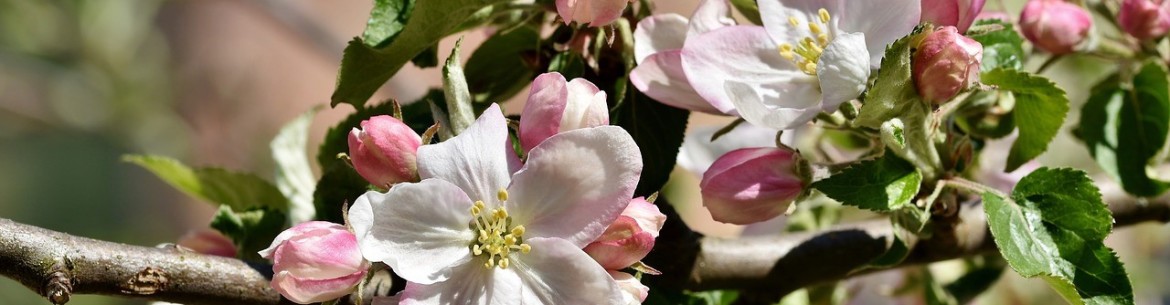
It's hard to imagine garden near Moscow Without an apple tree. Its popularity is due to its relative ease of maintenance, consistent fruiting, and beautiful blooms. In temperate climates, apple trees are planted both in the fall and in the spring. The latter option is also suitable for the Moscow region, but has a number of peculiarities.
Content
Suitable varieties for the Moscow region
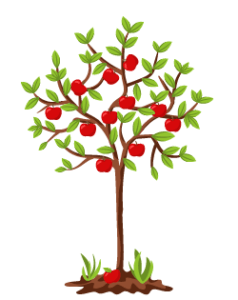 A variety's zoning is a must when purchasing an apple tree for your garden. The Moscow region's climate is characterized by cold winters, prolonged autumns, and spring frosts. These characteristics cannot be ignored, as they directly impact the plant's survival, development, and yield. Most gardeners choose winter-hardy varieties that can withstand frost with light snow cover.
According to ripening time, apple trees are divided into summer, autumn and winter.
Summer varieties
Summer apples ripen in July–August, they are juicy and sweet, but have almost no shelf life:
- «Melba" — the flavor is caramel, sweet and sour. The fruits weigh 140–300 g, are round and slightly flattened, reddish-yellow with a greenish side. The tree reaches up to 5 m in height and bears fruit in the fifth year.
- «Grushovka "Moskovskaya" apples are fragrant, red-pink, sweet apples, weighing 100 grams. They ripen gradually and will keep in the cellar for 2–3 weeks. In a good year, a mature tree yields 80–170 kg of fruit. They can withstand temperatures down to -45°C, but will drop their fruit during drought.
- 'Arkadik' is a modern hybrid that is cold-hardy, productive, and resistant to scab. The average height is 4–5 m, and the first harvest begins in early August in the third year. The apples weigh 120–340 g, have a slightly tart flavor, and a vibrant aroma. They store for up to 30 days.
Autumn varieties
Autumn varieties ripen 2–3 weeks after harvesting and are stored for 2–4 months:
- "Striped Anise" is popular for its drought and frost resistance, bearing fruit for 70–100 years, starting in its sixth year. Yields increase with maturity, reaching up to 320 kg. The apples weigh 70–90 g and have an anise flavor, pink with white stripes and specks.
- «Antonovka" is a perennial leader among apple crops. It is prized for its record yields of 500–1,000 kg per tree, its resistance to cold, and its resistance to most diseases. The fruits weigh 150–170 g, are very aromatic, green, and store for 3–4 months. The flesh is white, sweet and sour, and juicy.
- "Autumn Striped" is a tall variety that produces consistent yields of 20 to 300 kg, depending on its age. The apples weigh 100–140 g and are bright yellow-red. The flesh is juicy, pink beneath the skin, with a wine-like flavor.
Winter varieties
Winter varieties ripen in late September and early October and can be stored for up to 4–8 months. Their dense structure ensures they remain in good condition during transportation:
- "Moscow Winter" tolerates extreme frosts and is virtually pest-free. Its rosy, green-yellow fruits weigh 200–280 g and have a sweet, spicy flavor.
- "Orlovskaya Zarya" has excellent taste qualities, producing raspberry-red apples weighing 100-150 g. Starting from the 4th year, the yield increases to 170-180 kg per tree.
- «Bogatyr" is a hybrid of Antonovka and Reinette Landsbergensis. It bears fruit in the seventh year, producing large, light-yellow apples weighing 120–200 g. They ripen in September but are harvested in October to preserve flavor and shelf life.
If there is no possibility or desire to store the harvest, then it is enough to have two trees of the autumn variety and one each of the summer and winter varieties in the garden.
Selecting a site for planting
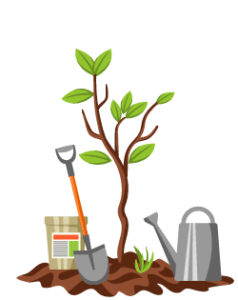 The site for planting an apple tree requires preparation. Basic requirements:
- An open, sunny area on the leeward side, free of nearby tall trees. Maintain a distance of 3–4 meters from the fence.
- If there are several seedlings, they are planted in a separate group and not mixed with other fruit crops.
- For better pollination, apple trees with different fruiting periods are planted nearby.
- The thin fertile layer of the site is brought to a thickness of 60 cm with freshly imported soil.
- Sand and compost are added to clay soil, and humus and peat are added to sandy soil.
Dry, rocky, or swampy areas are absolutely unsuitable. Groundwater levels must be taken into account; 2 meters is the minimum acceptable level for the safe growth of garden trees.
Tall varieties require 5–6 m of free space, while low-growing varieties require 3 m.
Preparing for transplanting seedlings
The best time to plant an apple tree in the spring is after the last frost and the buds begin to open. In the Moscow region, this period typically falls between late April and early May. If a spade penetrates the soil easily, it's warm enough.
Proper selection of planting material is the key to tree survival and productivity. It is recommended to purchase apple trees from reputable local nurseries. Standards required:
- age 2-3 years;
- open root system 35–40 cm long without growths, the cut is moist and light inside;
- there are no growths of formations at the site of the scion and rootstock;
- the trunk is smooth, without wounds or cracks;
- the buds are not open.
You shouldn't take thin or thick trees.
Before planting, the seedling is prepared:
- remove root shoots, broken and dead parts of roots and bark;
- Damage and cut areas are cleaned and processed garden pitch;
- placed in water for 12 hours.
If you delay planting, the roots will not be able to adapt, and the apple tree will dry out or lag in growth.
Preparing a hole for planting an apple tree
 Prepare the apple tree site a month before planting. In heavy soil, dig a hole no more than a meter wide and 50–80 cm deep. In black soil and light, cultivated soil, a hole 70 x 50 cm is sufficient.
The topsoil is discarded and mixed with two buckets of compost, a glass of superphosphate, and 200 g of ash. Half of the nutrient mixture is poured into the bottom of the hole. 500 g of dolomite flour is mixed into the acidic soil.
Landing
Sapling planting algorithm:
- A stake 1–1.5 meters high is driven into the hole.
- Place the seedling at a level so that the root collar is 4–5 cm above the ground surface.
- Spread the roots and fill with the remaining fertilized soil. Compact the roots well to eliminate any air pockets.
- Pour in 4–5 buckets of water.
- The apple tree is loosely tied to the stake with soft twine at the top and bottom using a figure eight knot.
- To stimulate the growth of lateral branches, the central conductor is shortened by 2–3 buds.
Planting diagram
An apple tree requires a certain amount of land to receive adequate nutrition. The required area depends on the tree's growth pattern:
- tall - 3.8–4.2 m distance in a row, 6 m between rows;
- medium-sized - 3.5–4.2 by 5.5 m;
- low-growing - 3.5 by 5 m;
- dwarf - 2.3 by 4 m.
Maintain a distance of at least 3 meters from a neighbor's fence or building.
Care
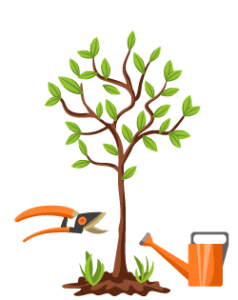 After planting in the Moscow region, apple trees are mulched with a thick layer of humus, sawdust, rotted manure, or hay. This covering will attract earthworms, which will loosen the soil and promote gas exchange.
Additional sprinkling of crushed stone or decorative gravel will protect against heat and reduce moisture evaporation.
Watering
For the first month after planting, pour a bucket of water under the seedling once a week. Subsequently, 4-5 buckets per 2-3 weeks is sufficient.
Water is supplied from a container; the recommended temperature is 15–18°C. During rainy springs, watering is stopped. Excess moisture can cause root rot.
If the seedling settles, it is carefully pulled upward so that the root collar is above ground level.
Fertilizers
In the first year, it is recommended to pluck the flowers from the apple tree, as flowering contributes to the depletion of the strength of the young plant.
Trimming
Benefits of pruning a young apple tree:
- formation of a beautiful crown that is convenient for harvesting;
- removing unnecessary shoots for better development of branches;
- restoration of balance between the reduced root system and the aboveground part;
- sanitary and preventive measure against the development of diseases.
Pruning a one-year-old seedling allows it to form lateral shoots, which will form the foundation of the crown, already in its first year. The upper part of the tree is shaped more to ensure the entire crown receives sunlight.
Shoots growing at an acute angle to the trunk are removed completely. If a branch forms a right angle, it is pruned back to 3-5 buds. The cuts are treated with garden pitch.
In the summer in the Moscow region, it is enough to pinch off excess young shoots so that they do not grow.
Incorrect pruning will weaken the tree and reduce the yield.
Graft
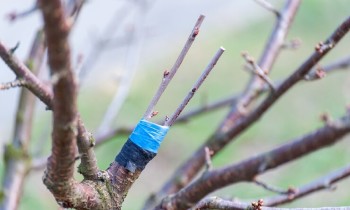
Grafting is the process of attaching a scion or bud to a rootstock plant, where the new branch will grow. This is an optional procedure, but it positively impacts the fruiting and development of the apple tree and saves space in the garden. Advantages:
- the variety of varieties is expanding;
- the adult tree is renewed;
- fruits with a new taste and shelf life.
Spring is the most preferable season for grafting in the Moscow region, when temperatures are low, buds have just begun to swell, and there is no active sap flow.
To do this, you'll need fixing tape, a hacksaw, pruning shears, a garden knife, or a single-edged blade. Tools should be disinfected with alcohol beforehand.
There are different methods of grafting, each with its own nuances.
Budding
One of the most gentle techniques, used for adding a new variety or shaping the crown. Procedure:
- horizontal cuts are made at the top and bottom of the kidney;
- with a blade they cut it off together with the bark and the tissue underneath;
- a T-shaped cut is made on the apple tree;
- bend back the edges of the bark, insert the bud and secure with tape.
Into the cleft
This method is used when the rootstock is thicker than the scion. It ensures a tight fit, but the downside is a high risk of wood rot. Steps:
- cut down the branch, leaving 10–30 cm from the trunk;
- a longitudinal split of 4–5 cm is made in the stump, and oblique cuts of 2 cm on each side are made on the cuttings;
- inserted into the schism cuttings, carefully coated with garden pitch.
Copulation
This method is suitable if the shoots are of uniform thickness. In this case:
- the edge of the scion is cut so that there is an oblique cut 2–3 cm long;
- a similar cut is made on the rootstock, with a bud on the reverse side;
- connect, wrap and coat with pitch.
Protection from diseases and pests
 After planting, apple trees are regularly inspected for parasitic insects and signs of disease. Common pests in the Moscow region include:
- apple green aphid — eats all the green mass of the tree;
- leaf roller - covers leaves and buds with webs and feeds on their juice;
- codling moth - destroys the harvest;
- Leafhopper or leafhopper - affects buds and leaves.
If detected, spray before flowering and after harvesting with insecticides "Aktara", "Intavir", "Strobi" according to the instructions.
Spring preventative treatment with Fitoverm, Nitrafen, Karbofos, or copper sulfate will protect against overwintering pests and fungal spores. Apply the entire branches, trunk, and surrounding area.
Apple tree diseases:
- scab - appears as brown spots, spoils fruits, affects leaves, reduces immunity;
- moniliosis - a grey-brown coating that causes apples to rot and shoots and buds to dry out;
- Bacterial disease - forms damp, sticky dark spots on the bark; affected parts of the tree die and mummify.
Before fruit set, spray with fungicides such as Skor, Topaz, and Khoma solution. For severe infestations, Horus, Bordeaux mixture, Gamair, and colloidal sulfur are effective.
Spring planting of apple trees will help the plant adapt to new conditions and strengthen before frost sets in. When choosing a variety, its suitability for a temperate climate is a primary consideration.
Seedlings are purchased from specialized nurseries, and the planting site is prepared in advance. Care consists of watering, moderate fertilizing, and disease prevention and treatment.