How to transplant an adult apple tree to a new location without harming it
Experienced gardeners rarely attempt to transplant mature apple trees. This procedure can be fatal to the fruit tree. However, sometimes the need to move an established apple tree to a new location becomes so urgent that the gardener simply has no choice. The transplanting process must be approached with the utmost care: carefully follow all recommendations, exercise caution, and make minor adjustments to the care of the transplanted apple tree to ensure the best possible adaptation.
Content
- Why do you need to transplant an adult apple tree?
- How to choose a suitable planting site
- The best season for transplanting mature apple trees
- Preparing for transplantation
- Transfer
- The nuances of transplanting different types of apple trees
- Further care after planting
- How long will the adaptation last?
- Conclusion
Why do you need to transplant an adult apple tree?
There are few reasons for replanting a mature tree unscheduled. Typically, the procedure is performed to increase fruiting, accelerate growth, and normalize development.
If it's already autumn and the time for replanting is approaching, but the tree still has fully developed green leaves, it means its life processes are still active. In this situation, replanting the apple tree is prohibited!
There are three main reasons that may force a gardener to transplant an adult apple tree:
 Excessive planting densityThis problem most often arises from incorrect calculations and assessments of the plant's growth rate and root system development. If trees are planted too close to each other, they will negatively impact the development and fruiting of their neighbors.
- Incorrectly selected soilAt the planting stage, it's crucial to assess the quality of the soil on the site. While its composition can be adjusted through fertilizer or other additional components (e.g., peat, sand, etc.), the high groundwater table won't be able to be remedied. The very first spring will result in flooding of the garden area, and the apple tree roots will begin to rot. In this case, only emergency replanting of the trees can help.
- Landscape redevelopmentIt's impossible to predict exactly what additional structures might be needed on a site over time, or what kind of landscape design you might want to implement in your garden. Therefore, apple trees may well need to be replanted for the sake of a more aesthetically pleasing garden. This won't be a problem if you follow all the rules for replanting mature trees.
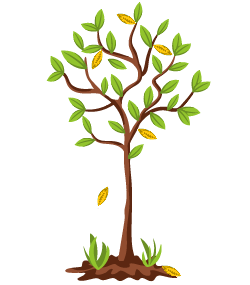 Excessive planting densityThis problem most often arises from incorrect calculations and assessments of the plant's growth rate and root system development. If trees are planted too close to each other, they will negatively impact the development and fruiting of their neighbors.
How to choose a suitable planting site
Before picking up a shovel, you need to carefully study the area and choose the most suitable place for the apple tree.
Location selection criteria:
- First, you need to determine how deep the groundwater is in the area. You can influence the soil quality with fertilizers, but you can't control the groundwater. So, assess the moisture level of the substrate in the area you've chosen for replanting the apple tree.
- Avoid areas that are too exposed or exposed to wind. Apple trees won't be able to withstand strong gusts of wind (especially while they're adjusting to their new location).
- Choose sites with loamy soil. Poor soil can reduce the yield. Avoid clay, peat, or sandy soils, as the tree will adapt very slowly to these conditions.
If you can't find a suitable spot for your apple tree on your property, you'll have to manually modify the substrate. For example, you might need to add the necessary fertilizers, provide drainage, build an artificial mound, etc.
The best season for transplanting mature apple trees
To ensure that the transplant is successful and the tree quickly recovers in its new location, it is important to choose the right time to carry out the work.
Spring period
 The spring season is considered the optimal time for transplanting fruit trees:
- It is best to start work before buds appear on the branches.
- If, according to weather forecasters, there is a high probability of frost returning, then all transplants should be postponed so as not to kill the apple tree.
- The soil temperature at the bottom of the planting hole should be approximately 10°C. It's a good idea to prepare the planting hole in the fall to ensure you're ready in time for spring.
- Keep in mind that during transplantation, the apple tree will lose some of its rhizome (this is inevitable and normal). Don't worry, trees 4 years and older already have a well-developed, massive rhizome, which is difficult to protect from loss when removed from the substrate. So, to ensure the apple tree establishes itself in its new location as quickly as possible, you need to provide it with comfortable conditions after transplantation.
- Once you have prepared the planting hole, fill it with nutritious soil and cover it with boards or any other insulating materials.
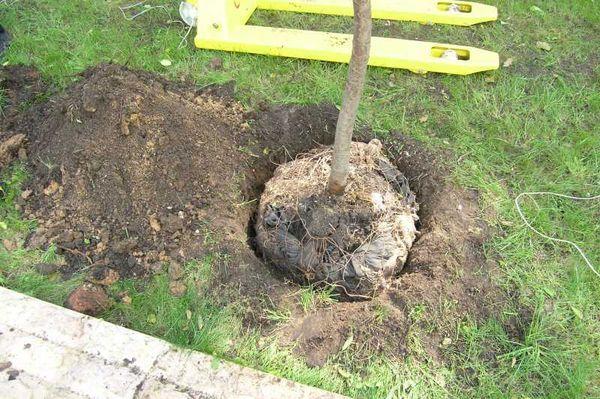 It is best to start work before buds appear on the branches.
Autumn transplant
While many favor spring replanting, more experienced gardeners recommend replanting old apple trees in late fall (late September – early October). At this time, sap flow in the plant tissue slows, and the tree begins preparing for winter dormancy, eliminating the need to support its growth and development.
However, if the autumn was dry and there was little precipitation, it's best to postpone all replanting work until spring. Insufficient moisture could prevent the apple tree from surviving the long winter.
The tree is only suitable for transplanting when it has completely shed its leaves and fruit. All work should be completed two weeks before the first frost.
Summer period
It's still not advisable to transplant mature apple trees in the summer. This process will significantly weaken the plant and cause stress, which will significantly impact its immunity. However, there are exceptions to this rule, so keep in mind that one- to two-year-old apple trees can be transplanted in the summer (in emergency situations), but there's no guarantee their survival will be preserved.
Preparing for transplantation
Properly organized work will help you transplant the plant to a new location in a short time without subjecting it to serious stress.
Tools
For transplantation you will need:
- garden shovel;
- pitchfork;
- wooden boards;
- scrap;
- scissors (garden);
- wooden or metal pegs;
- tarpaulin or any other thick fabric;
- rope.
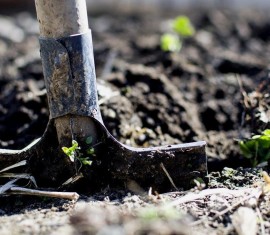
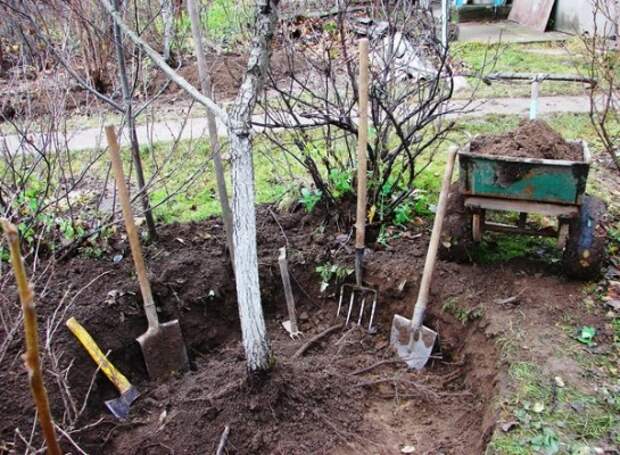 garden shovel;
The work must be done by several people.
Preparing the seedling and planting site
To minimize losses, you need to properly prepare the plant for relocation to a new location:
- Shorten healthy shoots before the main transplantIgnoring this point can increase the risk of branch drying out after transshipment. This procedure will enhance the apple tree's protective functions.
- Remove all damaged and wilted shoots. All cuts must be lubricated garden pitch.
- Prepare the landing site in advanceThe hole should be dug at least 14 days before the main work begins. Be sure to add nutrient-rich substrate to the bottom of the hole and fertilizer (for example, compost or manure), moisten the hole thoroughly.
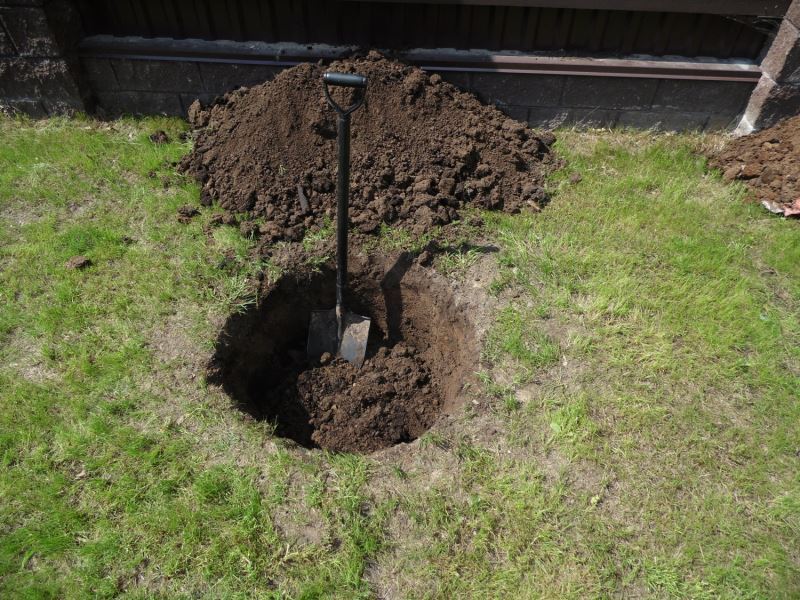 Shorten healthy shoots before the main transplantIgnoring this point can increase the risk of branch drying out after transshipment. This procedure will enhance the apple tree's protective functions.
Transfer
The entire replanting process can be divided into two major stages: digging up the apple tree and moving it to the planting site, and the planting itself.
We dig up and transport an apple tree
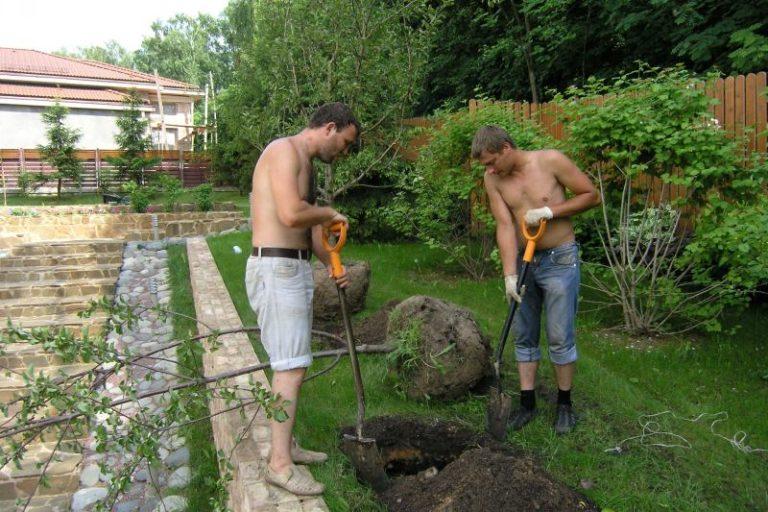
It's best to perform all digging and replanting of a mature tree as a team. This will help minimize the risk of damage to the apple tree's rootstock.
Algorithm for carrying out work:
- Two days before the procedure, you need to carefully water plant.
- Next, mark the orientation of the tree according to the cardinal directions.
- Dig around the plant (the deeper you dig, the more you will have to round off the root ball).
- Use a homemade soil jack (for example, a crowbar or boards can be used). Lift the soil ball while inspecting it.
- All roots protruding from the root ball must be cut off with sharp, disinfected garden shears.
- Using the same jack, you need to completely remove the tree from the ground and place it on a tarpaulin.
- Next, the plant is transferred to its new location. Perform all work with extreme care (it's best to make a few marks on the trunk where it touched the soil).
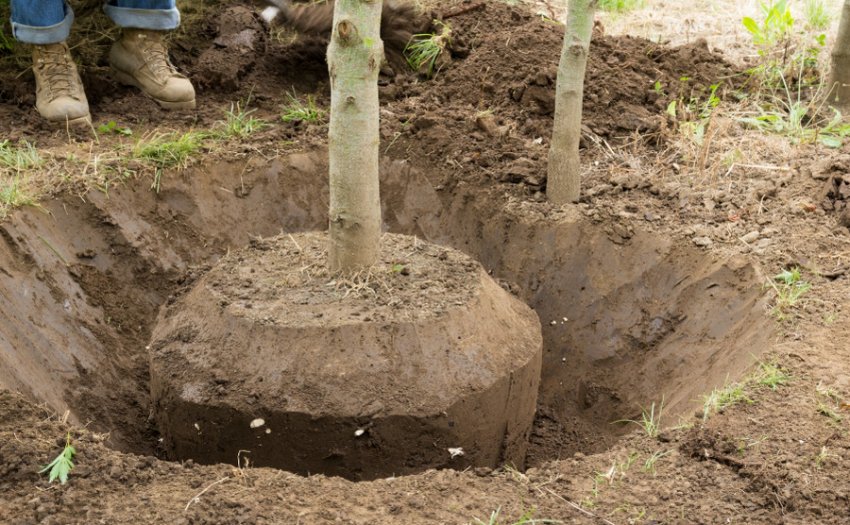 Two days before the procedure, you need to carefully
 Planting an apple tree
Once the plant has been removed from the ground in its previous location and carefully transferred to a new one for planting, you can proceed to the actual transplanting:
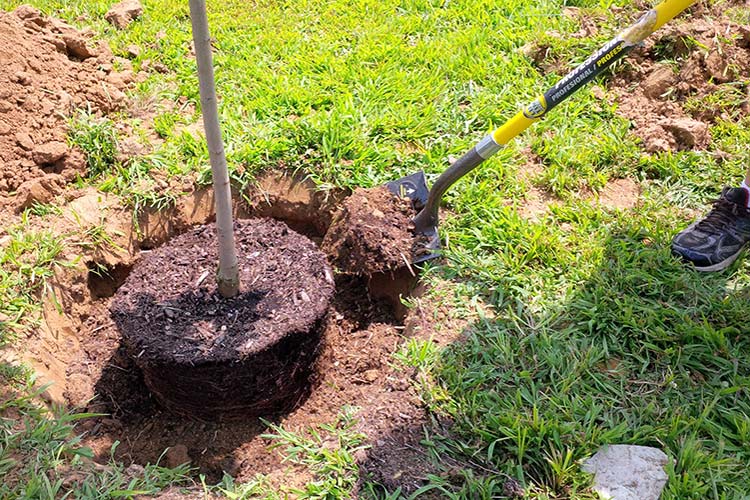
- Place the root ball with the plant into the hole.
- Drive stakes around the trunk to make it easier to secure the plant later.
- Fill the voids of the pit humus.
- Conduct mulching soil surface.
- Secure the apple tree to the supports.
- Remove all shoots damaged during transshipment and treat the cuts with garden pitch.
- Provide the tree with the necessary care so that it adapts to its new location more quickly.
Pay attention to the orientation of the tree relative to the cardinal directions - this must be observed when planting the plant in a new location.
The nuances of transplanting different types of apple trees
In most cases, all apple tree varieties are transplanted using the same general procedure. However, there are slight differences in this procedure for each variety.
Columnar
Columnar apple trees are always transplanted using a standard method. The most important thing in this process is to be careful with the rootstock. When digging, it's important to form a coherent, dense root ball. The best time to transplant a columnar apple tree is mid-spring (early April).
This species does not do well in overly wet soils, so provide it with adequate drainage.
Dwarf
Dwarf apple trees can be planted in both shade and open spaces. However, remember to leave at least 3 meters between trees. After transplanting, thoroughly compact the soil and apply mulch.
Make a depression around the planting hole to allow water to be applied when watering.
Wild
Wildings thrive when transplanted in spring, so you can transplant them in early March. Experienced gardeners recommend preparing the planting site so that it's as close as possible in quality to the site where the apple tree grew before transplanting.
Further care after planting
The transplanted apple tree must be provided with everything necessary for its normal growth and adaptation in the new location:
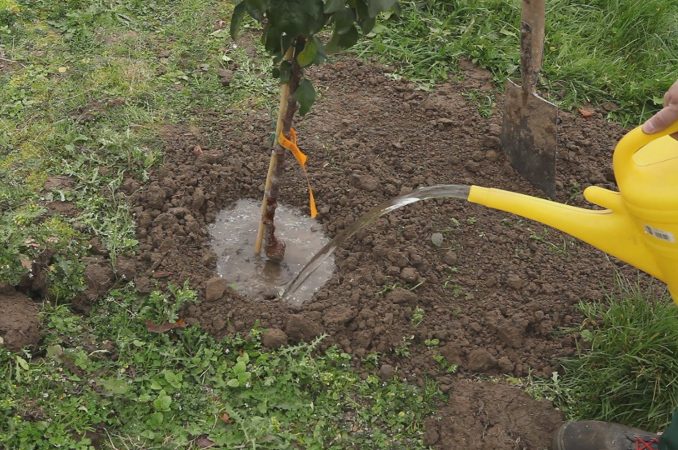
- Water the tree as often as possible. If planted in spring, you can water it once every 7 days.
- In the first year after transshipment, do not dig up the soil.
- Be sure to mulch the substrate with peat and humus.
- Insulate the plant's trunk for the winter. It's best to protect it with some non-woven material (roofing felt or spruce branches).
- In spring, prune the shoots to speed up their renewal.
- During the first year after replanting, remove all flowers from the tree. The apple tree will have to devote all its energy to adapting to its new location.
 Water the tree as often as possible. If planted in spring, you can water it once every 7 days.
How long will the adaptation last?
The time it takes for a transplanted apple tree to establish itself in its new location will depend on a number of factors. But the most important thing you should be prepared for is that the process won't be quick. The younger the transplanted tree, the faster it will adapt to its new location and set fruit.
Reasons why a transplanted adult apple tree may not take root:
- The seedling was unsuitable (for example, it was too weak, sick, or was initially grown in the wrong conditions).
- You cut the rhizome too much before planting.
- Inappropriate dimensions of the planting hole.
- Root collar was planted too deeply.
- Proximity of groundwater to the soil surface at the planting site.
- The substrate is too wet for the apple tree (for example, due to heavy rainfall) glaze or prolonged precipitation).
- The apple trees are planted too close to other fruit trees and shrubs.
- Pruning of shoots was incorrect or absent altogether.
- You planted an apple tree in a place where another tree had already grown.
 The seedling was unsuitable (for example, it was too weak, sick, or was initially grown in the wrong conditions).
Conclusion
Transplanting a mature apple tree is a difficult process. If you can avoid it, it's best to do so. An established tree will not handle the move well, will take a long time to adapt to the new location, and will experience significant stress. However, if you do need to transplant a mature fruit tree, try to carry out all the necessary steps according to the rules.