How to Get Rid of Moss in Your Garden: 3 Important Steps
The need to address the problem of how to get rid of moss in a garden arises when this plant impairs the growth of crops. To achieve a successful outcome, it is important to identify the cause of the problem.
Content
Why is there moss growing on the site?
A distinctive feature of mosses is their remarkable ability to survive in a variety of conditions. These amazing plants, which lack roots, buds, or a vascular system, reproduce by spores.
What mosses are most often found in garden plots?
Bryophytes are represented by three large divisions, representatives of which can be found in the garden plot.
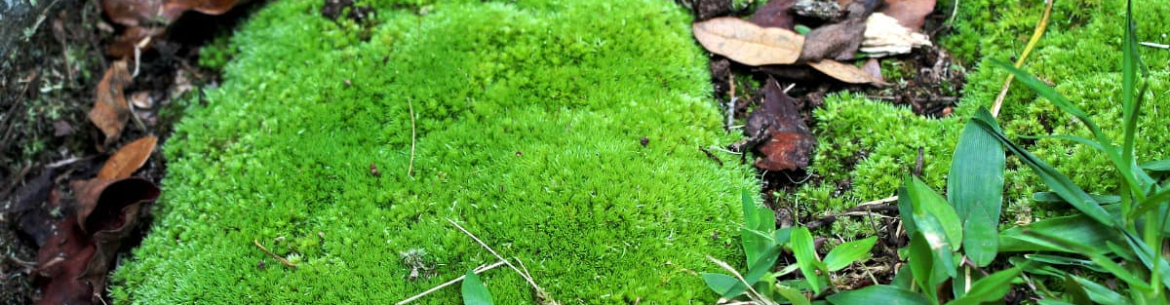
- Real mosses (Bryophyta), often called bryophytes. They encompass several classes, including leafy stems, sphagnum, andreae, and others. These brown-green or greenish-whitish plants can form isolated patches in a garden. Under favorable conditions, they often grow into a continuous carpet. The most common bryophytes are sphagnum and peat moss.
- Liverworts, or Marchantiaceae, mosses (Marchantiophyta). They are distinguished by their diverse structure. Some species develop delicate, miniature leaves and stems. There are varieties that consist of flat, spreading thalli along the soil surface. An example is the Marchantia polymorpha (various, variable) often found in garden plots.
- Anthocerotoid mosses (Anthocerotophyta). These plants are characterized by lobed, plate-like thalli that form rosettes and horn-shaped sporogonia. They grow primarily in damp ditches and areas with heavy clay soil.
Reasons for occurrence
Moss infestation in a garden plot can lead to excessive waterlogging, as these plants can retain large amounts of moisture. It also impairs soil aeration, which negatively impacts the health of crops. Before deciding how to combat moss in a garden plot, it's important to first determine the underlying cause.
The following antecedent factors are identified:
- excessive soil moisture;
- increased soil acidity;
- insufficient air permeability of excessively heavy clay soil;
- uncontrolled application of fertilizers;
- dense plantings that create shade;
- poorly organized and infrequent ventilation of the greenhouse.
How to determine the cause of moss appearance by its appearance
You can independently identify the main reasons that caused the spread of moss across the area by the appearance of these plants.
In acidic soil, straight, elongated moss stems form with noticeable light green tops. The shoots are brown at the base.
If a garden plot is swampy due to aquifers located close to the surface or improperly managed over-watering, moss will take over all the cracks and depressions in the soil.
In areas with dense shade, mossy thalli or stems will spread across the soil, closely adhering to it.
How to Get Rid of Moss: Three Steps
It will be possible to organize an effective system of measures aimed at clearing the area of moss after identifying the factors that precede the appearance of these plants.
Remove excess moisture
If the soil becomes overwatered, reduce watering. This is done during hot, dry weather. If there is occasional rain, avoid watering completely.
In low-lying areas, additional drainage for excess moisture will be necessary. For this purpose, drainage ditches are dug and placed around the perimeter of the site.
To improve air permeability, mulch with chopped straw or hay. You can also walk over the compacted soil with a pitchfork, making numerous holes in it.
Special sandals with metal spikes on the soles will help improve aeration. Wear them periodically when walking in areas where excessive waterlogging has been observed.
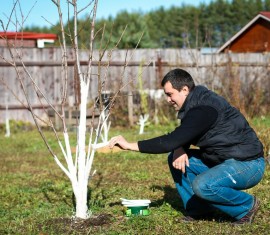
In addition to the above measures, moss control on fruit trees is often a challenge in the garden. If mossy clumps are noticed on the trunks, they will need to be removed using special brushes.
Fighting acidity
A special indicator will help you determine whether the soil in your area has a high acidity level.
You can conduct the test using available tools:
- Add 1 teaspoon of crushed white chalk and 2 tablespoons of soil from the area to a bottle with 5 tablespoons of warm water. Place a rubber finger cot over the bottle's neck. Shake the bottle for 5 minutes. If the finger cot straightens up and is completely filled with escaping gas, this indicates high pH. Similarly, if the cot is only slightly full, the soil is moderately acidic. If the soil is normal, no gas will be released.
- Place 5-6 fresh blackcurrant leaves in a mug. Pour in 200 ml of boiling water. Let it cool. After straining, add 1 teaspoon of soil. The acidity level will be indicated by the color: a reddish tint indicates high acidity, a greenish tint indicates slightly acidic, and a bluish tint indicates normal acidity.
- You can mix equal parts soil and baking soda, then add a little water. Foaming will indicate high acidity.
To reduce excess acidity, use slaked lime or chalk ground into powder. dolomite flour.
You can sow green manure crops. Plants such as rye, oilseed radish, clover, mustard, and alfalfa are good at restoring acidic soil.
Removing shading
Sufficient sunlight will help effectively get rid of excessively growing moss.
To solve the problem of how to remove moss from fruit trees in the garden, it is essential to thin the crowns in early spring, removing broken, pest- and disease-infested, and dried branches.
To ensure sufficient light, thin and excess shoots that cast shadows on other branches are also pruned. The trunk is cleared of moss with a wooden or plastic scraper immediately after it appears. Then, the bark is sprayed with copper sulfate (3%).
Remove undergrowth that forms under trees. Mow tall grass promptly, preventing it from seeding.
Specifics of moss control in greenhouses and hothouses
In protected soil conditions, moss grows not only on the soil. Fluffy clumps can be found on the wooden structures of a greenhouse or hothouse.
The main cause is irregular ventilation, so a proper ventilation schedule is established immediately. Additional vents are installed if necessary.
For greenhouse crops, cold drafts should be avoided when arranging ventilation. It's more convenient to place vents on the same side rather than on opposite walls.
Next, you should check the plantings. If they are too dense, thinning, pinching, and side shoots will be necessary.
All structures are cleared of existing moss growths. They are then treated with a solution of soap or copper sulfate (1%).
To not only remove moss but also prevent its reappearance, in the fall, when preparing the greenhouse for the next season, completely remove the surface layer of soil to a depth of at least 5 cm. Then, add fresh soil mixture, which is disinfected using Bordeaux mixture (1%).
Remove all objects (stands, hanging racks, tall barrels) from the greenhouse that create unnecessary shade.
Measures are taken to neutralize overly acidic soil. Chalk is added, dolomite flour or powdered slaked lime in the fall during the annual preparation of greenhouses and hotbeds. Avoid excessive waterlogging when watering.
Moss clumps appearing in a garden can be an attractive sight. However, it's important to understand that these plants are often a warning sign of deteriorating soil conditions. This is a warning sign, as moss growth is triggered by dense shade, as well as excessive soil acidity or moisture. Various methods are used to remove moss clumps, beginning with eliminating the identified factors that trigger their growth.