
Pruning fruit trees in the spring in the Moscow region: rules and timing
Pruning fruit trees in spring is an important agricultural practice that promotes proper crown formation and increases yield. The question of when to prune fruit trees in the Moscow region in spring is especially relevant due to the region's climate.
Content
Why is spring tree pruning necessary?
Spring tree pruning is an important procedure that helps improve the health, shape, and productivity of plants. Here are some reasons why you should prune your trees in the spring:
- Removing damaged and diseased branchesDuring winter, trees can be damaged by snow, wind, or ice, and these branches can pose a danger to both the surrounding area and the tree itself. Removing these branches in the spring helps prevent further spread of disease and damage.
- Crown formationSpring pruning helps shape the tree's crown so it's more compact and stable. This also promotes more efficient use of the plant's resources and increases yield.
- Maintaining tree healthPruning removes competing branches and encourages the growth of new, healthy ones. This helps maintain the tree's health and vitality.
- Preventing damage from sap extractionSpring pruning can prevent damage from sap draw, which can occur when the tree is not pruned before bud growth begins.
- Improving the aesthetic appearanceSpring pruning can help make your tree more attractive and give it the desired shape.
To achieve the best results, it is important to choose the right pruning tools and methods, and to consider the characteristics of the specific tree species.
When is spring pruning of fruit trees carried out in the Moscow region?
In the Moscow region, spring pruning of fruit trees is carried out between late March and early April. At this time, the trees are still dormant and have not yet begun active growth, making the procedure easier. Furthermore, severe frosts that could damage the trees have already passed, but flowering and leafing have not yet begun.
When choosing a pruning date, it's important to consider weather conditions and the tree's condition. If the tree has begun to grow vigorously, pruning can cause serious damage and reduce yield.
Before pruning, it's important to assess the tree's condition, select the right tools and pruning methods, and take measures to prevent damage and protect against disease. Pruning is best done in dry, windless weather to minimize the risk of damage and maximize the effectiveness of the procedure.
Spring pruning schemes and rules
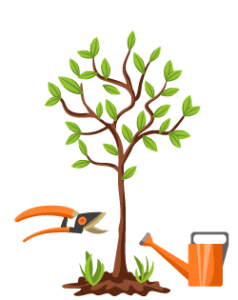 There are several basic rules to consider when carrying out spring pruning:
- Remove all damaged, diseased or dead branches.
- Remove branches that cross, rub, or grow toward the trunk.
- Remove all vertical branches, as they do not contribute to the formation of the crown and reduce the productivity of the tree.
- Trim branches according to the natural shape of the tree so as not to disturb its balance.
- Do not prune more than 25% of the crown in one season to avoid damaging the health of the tree.
- Cut branches at a distance of about 1 cm from the nearest buds.
- Avoid pruning too many strong branches as this may weaken the tree.
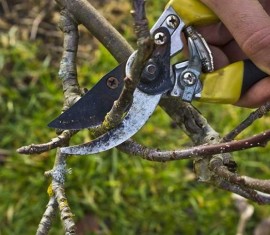
- Prune branches using clean, sharp tools to avoid introducing diseases into the tree.
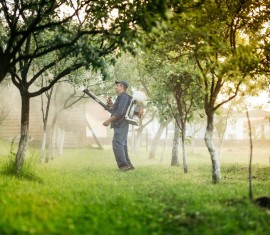
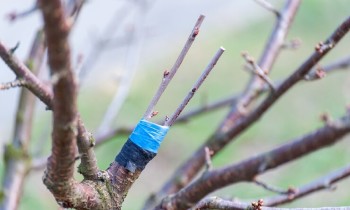
- After pruning, it is necessary to treat the wounds with garden pitch or another means to protect against diseases and pests.
- Monitor trees after pruning and carry out additional treatments if necessary.
There are also several pruning patterns that can be used depending on the type of tree and its shape:
- Open central crownThis design involves forming a crown with a single main trunk and several main branches positioned at a 45-degree angle from the trunk. The tree's crown has an open structure, allowing light and air to freely penetrate the tree, promoting its health and productivity.
- Closed central crownThis design is similar to the previous one, except that the branches are positioned more vertically, creating a denser crown, which can be useful in conditions of strong winds or snowfalls.
- Spherical crownIn this design, the tree's crown is spherical and consists of several main branches spaced evenly around the trunk. This design can be useful for small fruit trees that don't require many branches to maintain productivity.
- EspalierThis design involves growing a tree along a vertical surface, such as a building wall or fence. The tree is formed into a series of horizontal branches, which significantly increases the area occupied by the tree and allows it to be used for decoration and sun protection.
Each scheme has its own characteristics and advantages, and the choice of scheme depends on the specific conditions and goals of pruning.
Pruning peach and apricot trees
 Pruning peach and apricot trees has its own unique characteristics compared to other fruit trees: their crowns are irregular and can look untidy if not pruned. Peach and apricot trees are pruned less frequently than other fruit trees, such as apple or pear. It's important to remove only dead, diseased, or damaged branches and shoots, as well as topping to allow better light penetration.
Cherry tree pruning
Cherry trees typically have a dense crown, and pruning is aimed at reducing the density and shaping the tree into a proper shape. Branches that are too dense and those growing inward should be removed. It's best to leave lateral branches growing at a 45-degree angle, as they promote increased yield.
However, don't overdo the pruning to avoid damaging the tree. New branches and twigs can appear on the tree until late summer, so it's important to continue monitoring crown growth throughout the season.
Pruning an apple tree
Apple trees require regular pruning to remove damaged, weak, or diseased branches and form a proper crown. Remove all branches growing inward, select 3-4 strong branches to serve as the foundation for the crown, and trim the remaining side branches by 1/3 of their length. Learn more about... How to prune an apple tree in spring.
Pruning a pear tree
Pears grow quickly and can develop a dense crown. Pruning is aimed at creating the correct shape and increasing yield. Damaged, weak, and diseased branches, as well as those growing inward, should be removed. Select 3-4 strong branches that will serve as the foundation for the crown, and prune side branches by 1/3 of their length.
Pruning cherry trees
Cherry tree pruning is done in the spring, before the first leaves appear. The main goal of cherry tree pruning is to shape the crown and create optimal conditions for fruit growth and development. All dried, damaged, and diseased branches should be removed, as well as those that are too close together and could interfere with air circulation. The cherry tree crown should be shaped to be open and bright, allowing sunlight to penetrate freely, promoting better fruit ripening.
However, cherry tree pruning has its own peculiarities. Cherries tend to become overgrown quickly and do not like harsh pruning, so only necessary branches should be removed and not over-pruned. It is not recommended to prune cherries after the growing season has begun, as this can lead to crop loss.
Plum pruning
Plum trees require mandatory pruning, as without it, they can produce abundant fruit, but the resulting fruits will be small and of poor quality. Plum pruning is performed during the dormant period.
The main goal of plum tree pruning is to shape the crown and remove excess branches that interfere with the tree's development and growth. Plum tree pruning typically begins with removing the lower branches, as they produce little fruit. Any dead, damaged, or over-dried branches are also removed. It's important not to over-prune the plum tree and avoid excessive pruning to ensure sufficient foliage and photosynthesis.
In conclusion, it's worth noting that pruning fruit trees is an important part of garden maintenance. The timing of spring pruning in the Moscow region depends on the specific tree species and weather conditions. However, in general, pruning is recommended during the dormant period, when the tree is not actively growing. Proper pruning will not only create a beautiful and well-groomed crown but also improve fruit yield and quality.