How to prepare Bordeaux mixture for spraying: recipes for 1% and 3% solutions
Bordeaux mixture is a broad-spectrum fungicide used by gardeners for decades. One of the most reliable and effective products, it helps combat a wide range of diseases affecting garden and vegetable crops. To achieve the desired results, it's essential to strictly follow the instructions for preparing the medicinal solution.
Content
Making Bordeaux mixture
Bordeaux mixture is a combination of copper sulfate and lime milk. This solution is considered a versatile solution, effective in combating garden plant diseases. It combats any bacterial or fungal infection with equal ease.
You can find bundles on sale copper sulfate, packaged for the preparation of 1% and 3% mixtures. Their weights are 100 and 300 g, respectively.
 How to prepare 1% Bordeaux mixture
Instructions for mixing 1% Bordeaux concentrate:
- Prepare 100 g of copper sulfate and 150 g of fluff.
- Dissolve the main component in 1 liter of water, the temperature of which will not exceed 50°.
- Dilute the additional lime in a separate container with 1 liter of cold water. If the lime is quicklime, carefully pour it into the water, rather than pouring the water into the powder.
- After this, add liquid to both compositions up to 5 liters each.
- Filter the lime slurry through a thick woven material or cheesecloth in several layers.
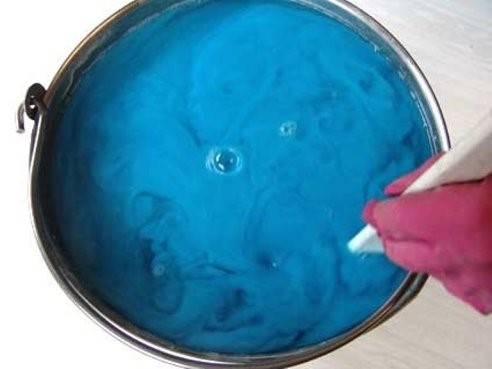
- Add the dissolved copper sulfate in a thin stream, stirring thoroughly. The mixture should turn a sky-blue color.
- The sequence must not be violated, because when pouring alkali into an acidic solution, the neutralization reaction can proceed very violently, there is a possibility of getting burn.
Don't use metal containers to mix Bordeaux mixture. Enameled or glass containers are suitable for this purpose.
How to prepare 3% Bordeaux mixture
At home, preparing a 3% concentrate is just as easy as making a 1% concentrate. You'll need 300 g of copper sulfate and 400 g of slaked powder. Here's how to dilute this Bordeaux mixture.
Mixing process:
- Copper sulfate should be diluted in 1–2 liters of hot water.
- To prepare lime milk you will need 2-3 liters of cool water.
- Similarly with a less concentrated solution, the substances are dissolved in separate containers and brought to a volume of 5 liters each.
- Next, copper sulfate is carefully poured into the strained lime milk and mixed thoroughly.
- Finally, check the pH level. For this purpose, you can use an acidity indicator, which is usually included with the copper sulfate. The correct reaction should be neutral or slightly acidic, as indicated by the indicator's color. The red paper should turn blue, while the blue paper should remain unchanged. If an aggressive color appears, dilute the final product with some lime milk and repeat the test.
- If you don't have a litmus strip, you can test the acidity with a regular nail by immersing it in the solution for 10 minutes. A blue coating indicates the mixture is unsafe.
Bordeaux mixture cannot be stored for long periods of time. Therefore, it should be used immediately after mixing. Do not dilute the prepared mixture with water.
Rules for treating plants with Bordeaux mixture
 Bordeaux mixture used to treat fungal diseases of stone fruit treesAt the same time, it is effective in combating infections affecting berry bushes, grapes, and vegetable crops. It can be combined with products from other groups, such as fungicides or pesticides. The mixture usually begins to work within two hours of spraying. Bordeaux mixture is dangerous to bees.
- During the period of spring bud formation and after leaf fall, a 3% solution of concentrate is more suitable for irrigation.It is designed specifically to destroy a variety of bacterial and fungal species before and after the plant's active growth period. The procedure is called eradication spraying.
- In the last days of spring, in summer and at the beginning of September, plants should be watered exclusively with a 1% concentrate of Bordeaux mixture.Treatment is permitted only in dry, cloudy, and windless weather. The interval between treatments is 1–1.5 weeks. The final spraying should be carried out no less than 15 days before harvest.
High humidity in the environment can cause leaf burn.
During the treatment process, it is important to spray the plant evenly and generously to such an extent that so that the solution begins to flow down the trunk and branches, getting into the most inaccessible places, especially loved by pathogenic microorganisms.
A correctly performed procedure protects garden crops from attacks by insect pests and infection by various diseases for 1 month.
Processing of stone fruit trees
Stone fruit crops are very sensitive to treatments containing copper. Therefore, it is recommended to spray them for medicinal purposes. only in early spring and late autumnA less concentrated solution is applied 2-3 times during the growing season for preventative purposes. A young tree requires 2 liters of the solution, while a mature tree requires about 10 liters.
Processing of pear, apple and quince
Early spring Apply a single treatment with a concentrated solution of Bordeaux mixture. This should be done before the flower buds open. During the period of active life A lighter concentration of the mixture is used. No more than 5 sprayings of Bordeaux mixture are carried out on stone fruit trees per season.
This solution is a real salvation for apple trees, quince and pears from scabies, fruit rot, black crayfish, phyllostictosis and spotting of various origins.
For strong and healthy trees, irrigation with blue liquid is required even less frequently – once every 3 years.
Spraying trees
The biggest mistake a novice gardener makes is allowing trees to grow on their own, neglecting regular maintenance. Depending on the developmental stage of the fruiting plant, you will need from 2 to 12 liters of solution.
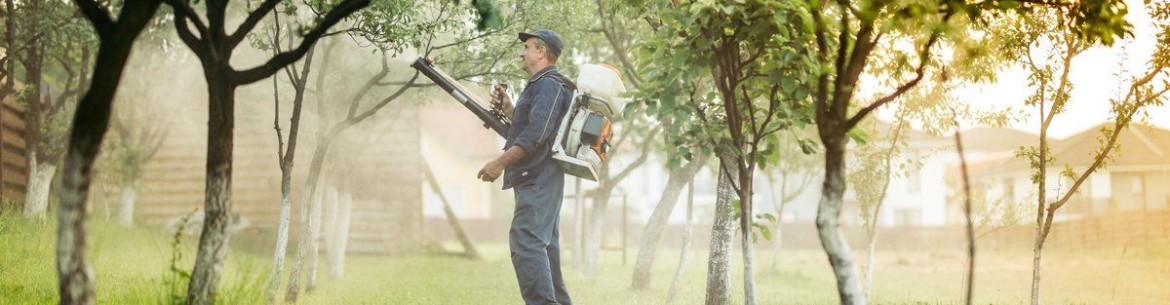
To evenly distribute the mixture onto trees, you'll need a sprayer. This device allows you to quickly apply the solution to trunks, branches, and foliage. Sprayers are easy to use. Pressure in the can is generated with just a few forward movements of the sprayer.
For spraying tall trees, use devices with long hoses to which spray nozzles are attached. The longer the delivery structure, the better the coverage of the treated objects with the solution. The nozzle should be adjusted to create a thick cloud of small droplets, which will evenly cover all parts of the irrigated plant.
Young trees and specimens that have experienced insect attack or infestation are treated as follows:
- intensive spraying with a 3% solution before the beginning of the growing season and after the leaves have fallen;
- 4 approaches during the warm season using a 1% solution.
Processing berry bushes
Berry bushes also require spraying with Bordeaux mixture. In early spring, they are treated with a more concentrated solution. This preventative measure is aimed at protecting berry bushes from leaf spot. During the growing season, a less concentrated solution is used, with no more than three sprays throughout the warm season. Two medium-sized bushes typically require approximately 1.5 liters of the blue mixture.
When properly prepared, the solution forms a thin, bluish-gray film on the leaf surface. However, if white, brown, or blue spots appear after treatment, the procedure will be of no benefit.
Grape processing
Similar to fruit trees and berry bushes, grapevines are treated with a 3% Bordeaux mixture before active growth begins. The amount of solution is calculated based on the size of the planting: 2 liters per 10 m.2During the summer season, less aggressive sprays that do not contain copper are used. This chemical can ultimately inhibit vine growth and reduce the flavor of the grapes.
Processing of vegetable crops
To prevent diseases from affecting root crops, treat the soil with a 1% Bordeaux mixture solution before beginning any agricultural work. This solution penetrates deeply into the loosened soil, killing pathogens. It is recommended to use a sprayer rather than a watering can for treatment. Spray at the first signs of disease, then, if needed, at intervals of 1.5 to 2 weeks.
- For protection tomatoes from late blight During their active growth period, irrigate the bushes with a 1% Bordeaux mixture. Up to 2 liters of solution are required per 10 square meters of planting. These treatments are performed a maximum of twice per season.
- Cucumbers and zucchini Treat with a 1% solution, using one and a half to two liters per 10 square meters. But no more than three times during the entire warm season.
- Potato It can be considered a record-holder for frequency of treatments, with a total of up to 14 times per season. For spraying, 1 liter of a 1% solution is required for every 10 m2.
- Onion, intended for feather production, is not subject to such agricultural measures. However, to combat rot and rust on the bulbs themselves, spraying with a lighter concentrate of blue liquid three times per season is acceptable.
- Beets A 1% Bordeaux mixture concentrate protects plants from all kinds of diseases. During the growing season, the maximum permissible number of irrigations does not exceed three. The required volume is 1 liter per 10 m.2.
After treatment with a mixture of copper sulfate and fluff, the fruits can be eaten only after a certain period of time: fruits can be eaten after 15 days, vegetables after 20 days, and berries after 25 days.
Advantages and disadvantages
Before preparing and using the product, it is necessary to consider all the positive and negative effects of its influence on garden crops.
- productivity in the fight against a large number of diseases;
- availability of components;
- nice price;
- long-term exposure;
- versatility;
- ease of manufacture;
- cannot cause calcium deficiency;
- holds well on shoots and foliage.
- toxicity;
- prohibition of even the slightest deviation from the instructions;
- cumulative effect that has a negative impact on crop growth.
Of course, a harmful and ineffective drug will not be held in high esteem by farmers for several decades to come.
Precautionary measures
Due to the high toxicity of the substance contained in Bordeaux mixture, it is necessary to wear protective clothing, gloves, high boots, a mask, and goggles when working with it. Do not consume food, drink, or smoke while in contact with the mixture. After finishing work, wash your hands, neck, and face thoroughly with soap. If contact occurs with skin or mucous membranes, rinse immediately with plenty of water.
Bordeaux mixture is an indispensable broad-spectrum fungicide in gardening. Strictly following the precautions and preparation instructions will help ensure guaranteed protection against many fungal and bacterial diseases.