The apple tree trunk has cracked: what to do and how to treat the crack
Cracks on an apple tree can be a sign of disease. The disease can spread throughout the orchard, reducing yields and leading to the death of the trees. It's important to identify the cause of the cracks and eliminate them. This article will explain the steps needed to address this.
Content
Where do cracks on apple trees come from?
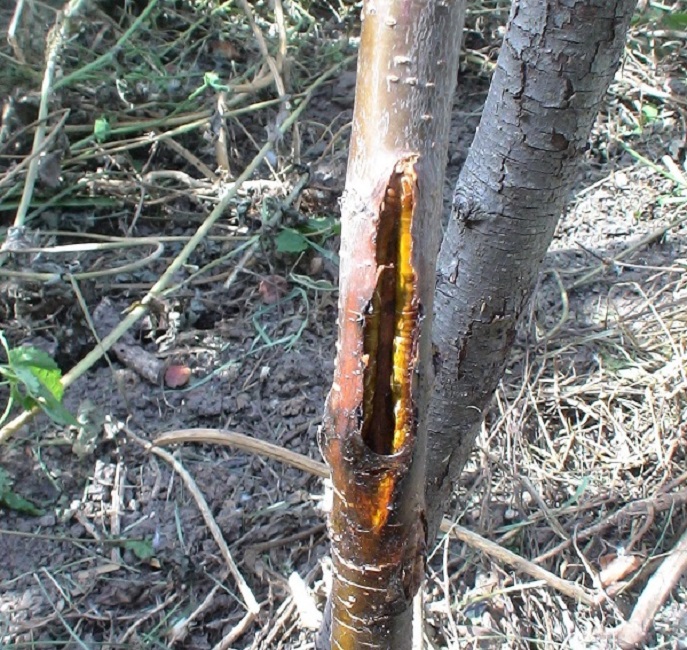
The reasons for the appearance of cracks are:
- improper tree care;
- pests;
- physical damage;
- frostbite and burns;
- diseases and fungi;
- rapid growth of the tree.
Improper care
 Failure to follow proper fruit tree care practices can lead to bark cracking. Failure to follow proper care practices includes:
- lack of nutrients and moisture;
- excess watering;
- poor quality processing of cuts;
- incorrectly selected soil;
- high content of nitrogen fertilizers.
Pests
Insect pests pose a major threat to trees. They settle on weakened trees with weakened immunity under the bark, further damaging it. Insect tunnels are visible in the bark as holes, and the tree has a diseased appearance. The wood peels off. Late detection of pests leads to the formation of hollowFor minor infestations, remove infected branches. For large infestations, use chemicals.
Physical damage
The reason for the bark tearing may be a force impact on the tree:
- snow on the branches in winter, sagging branches from a bountiful harvest in summer;
- damage to apple trees by rodents and birds;
- unfavorable weather conditions: strong wind, heavy rain.
Frostbite and burns
Frost cracks and burns cause deep cracks and discoloration of the bark. They occur during severe frosts and sudden temperature changes in late winter. Direct sunlight heats the trunks.
Diseases
The plant is susceptible to various diseases. Common diseases affecting the upper layer of wood include:
Black crayfish
The disease is not properly treated cropped and frost-sensitive apple varieties. Plants become infected in the fall. As the disease progresses, the black spots develop into cracks, foliage falls, and the fruit dies.
Cytosporosis
The causative agent of cytosporosis is fungusThe infection first appears on the trunk, then spreads to the branches. High humidity and warm weather favor the disease's development. The bark takes on a brownish-burgundy hue, and blisters form on it.
Reason for appearance:
- excess moisture;
- damage from adverse weather conditions;
- insufficient feeding;
- soil quality.
Plants weakened by other diseases are susceptible to infection.
Rapid tree growth
Bark grows more slowly than wood. This is due to:
- abundant hydration;
- excess of nitrogen-containing components;
- apple tree rooting too deep.
Cracks on old apple trees
 In old trees, a common cause of wood breakage is:
- tree sap, frozen at low temperatures, breaks the bark and wood from the inside;
- sunburn spots;
- physical pressure;
- root rot, overwatering;
- disease black crayfish;
- unpeeled yellow lichen may be the cause of fungal development.
Incorrectly pruned and frost-resistant varieties suffer more.
For treatment, a metal brush is used:
- clean off the peeling bark along with the pests;
- cleared areas and other trees are whitewashed for prevention.
The bark is peeled not onto the ground, but onto the litter.
Cracks in seedlings
 In young apple trees, the reasons for bark peeling are as follows:
- severe frosts;
- moist soil or deep planting;
- increased content of nitrogen fertilizers, incorrect schedule of their application;
- pests;
- sunburn.
Bark
Bark peels and cracks for various reasons. Sometimes the apple tree can overcome the problem on its own. If the problem is severe, the tree dies.
In summer, woodworm moths lay eggs on branches. They chew off the tips of the shoots and live under the bark for about two years. Sap flow is disrupted, and the plant dies.
Cracks in the trunk
The trunk and branches are carefully inspected every spring for damage. This is caused by:
- Sharp temperature fluctuations during the day and night, during the off-season, cause horizontal ruptures in the bark.
- Young apple trees begin to grow vigorously during the rainy season. Due to poor wood elasticity, cracks form along the trunk.
- Frostbite. This manifests itself as deep cracks and discoloration of the bark.
- Stem pests.
How to treat bark cracks and what to seal them with
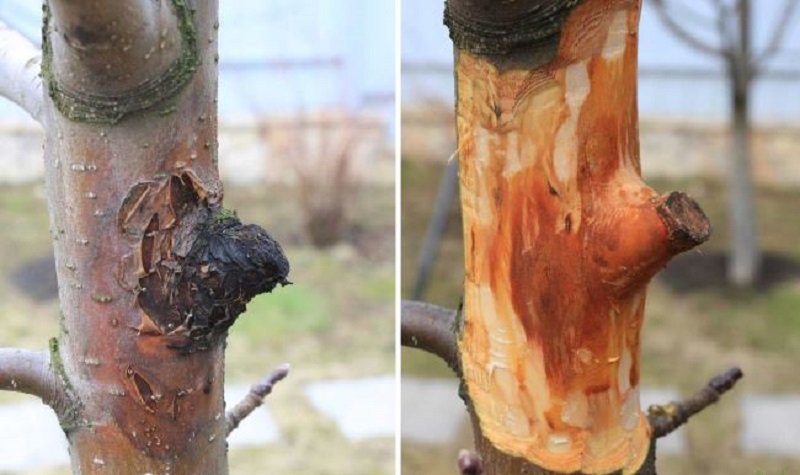
If the bark is damaged, the treatment is standard:
- in the affected areas, the exfoliated parts are removed;
- the exposed wood is cleaned with a tool, without touching healthy areas;
- the cleaned areas are lubricated with potassium permanganate, hydrogen peroxide, and brilliant green;
- The wound is covered with garden pitch to prevent infection.
For illnesses
In case of illness (blackening, presence of fungus) treat immediately:
- affected areas of bark and branches are removed and burned;
- wounds are covered with drying oil, garden pitch;
- the tree is disinfected 3% copper sulfate or bright pink potassium permanganate;
- After flowering, the apple tree is sprayed with 1% Bordeaux mixture.
Burns
Use a scraper to remove dead tissue.
Rana:
- disinfect with 1% copper sulfate;
- sealed with garden pitch;
- cover with fabric on top;
- In late autumn, 2 glasses of ash are added under the roots.
If pests
For minor infestations, remove infected branches. For large infestations, use chemicals.
When temperature fluctuates
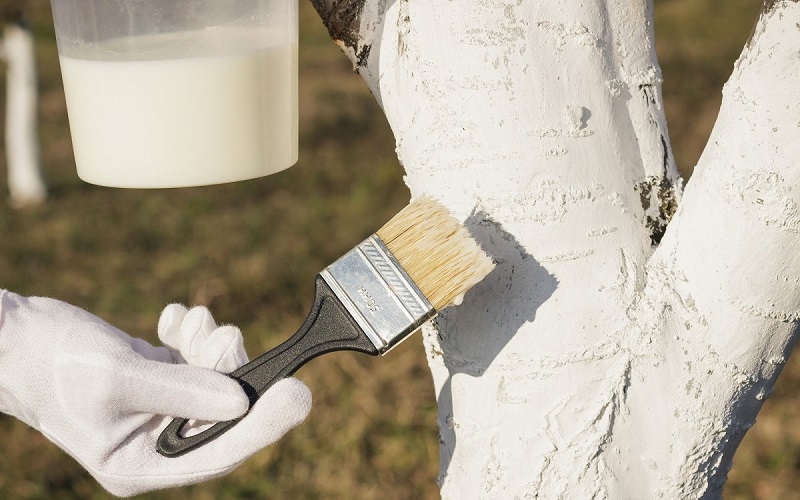
Damage from temperature fluctuations is reduced by whitewashing tree trunks. For added benefit, whitewash is supplemented with copper sulfate or mullein - approximately 200 ml per bucket of water.
What to do if the barrel cracks
Every spring, inspect the trunk and branches. If you notice any slight peeling or swelling of the bark, take immediate action:
- remove the lifeless part of the bark on the trunk or branch with a disinfected tool;
- treat the damaged area with disinfectants: potassium permanganate, hydrogen peroxide, etc.;
- cover the wound with putty.
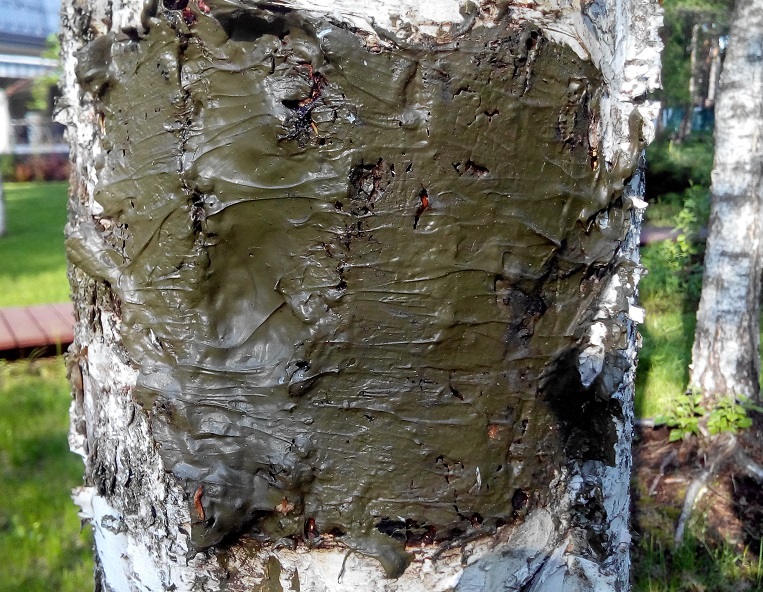
To seal a large crack:
- treated with copper sulfate;
- coated with clay and cow dung;
- wrap in film;
- tightened with twine.
Putties are also used:
- garden var;
- Artificial Bark is a dense rubber-based coating.
After the apple trees are treated, the garden is processed Bordeaux mixture.
Preventive measures
To prevent bark cracking, the following measures are taken:
 Grooving. On trees older than 5 years, small vertical cuts are made on the north side of the trunk using a sterile instrument.
- Roofing felt is used to protect against pests.
- Before the winter season, tree trunks are covered with 2–3 layers of whitewash.
- Loosen the soil around the tree trunk.
- In early spring, apple trees are fed with fertilizers containing boron and magnesium. This boosts immunity.
- In winter, trees are covered with snow.
- The apple tree variety chosen for planting depends on the climate.
 Grooving. On trees older than 5 years, small vertical cuts are made on the north side of the trunk using a sterile instrument.
The above mentioned measures reduce the rupture of the cortex.
To prolong the life of your trees and ensure a good harvest, you need to be vigilant. If the bark cracks, take immediate action. The entire orchard is at risk of dying.
Helpful tips
- A large crack in an apple tree or hollow cleared of loose bark and cemented.
- In winter, young tree trunks are wrapped in protective, warming material. Covering the trunk will protect the bark from sunlight, temperature fluctuations, and wild animals. Agrofibre, polyethylene film, and newsprint are used for this purpose.
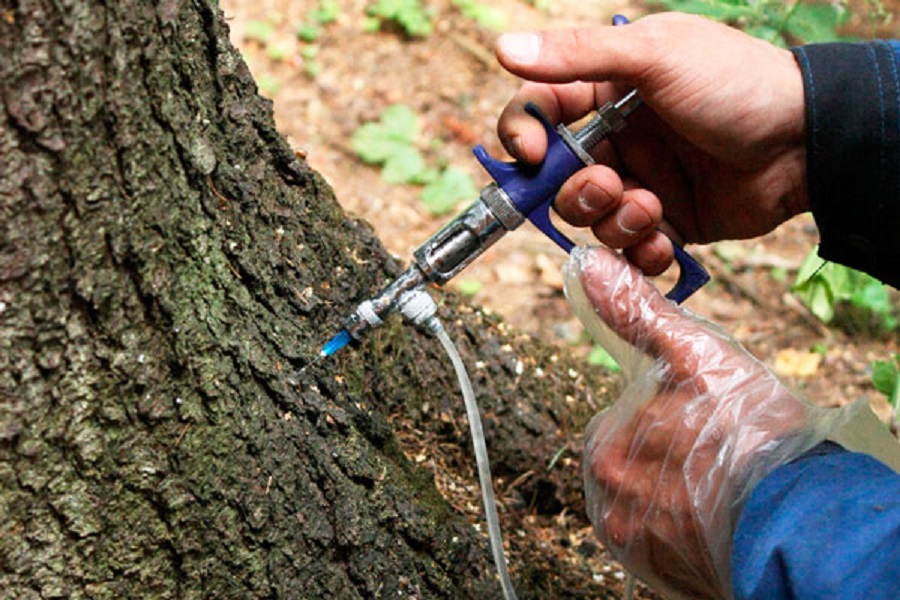
- In early spring, treatment is carried out against bark beetles. The following agents are used:
 In early spring, treatment is carried out against bark beetles. The following agents are used:
- Anti-bug;
- Confidor;
- "Calypso".
The drug is injected with a syringe into the holes made by the beetles.
The health of an apple tree depends on the care of its trunk. Apple tree trunks are cleared of loose bark. The key to a tree's long life and fruiting is whitewashing and treating wounds, burns, and frost cracks.