Proper Apple Tree Pruning in Spring: Pruning Patterns and Tips for Beginners
Spring pruning of apple trees is important for several reasons: sanitary regulations, stimulating trunk growth, crown-shaping procedures, rejuvenating the plantings, extending the fruiting period, and improving the quality of the harvest. However, spring pruning must be carried out according to all the rules to ensure the procedure is beneficial and does not cause further harm to the plant. Not all pruning errors can be corrected or prevented with the following advice, but the vast majority of problems can be avoided.
Content
Why do we prune apple trees in the spring?
Pruning shoots and branches is necessary for fruit trees not only to create a lush, well-shaped crown, but also to stimulate plant growth, extend the fruiting period, and improve the quality of ripe fruits.
The procedure and its rules will directly depend on the age of the tree.
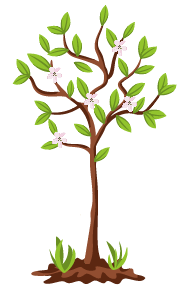 The main reasons for pruning apple trees in spring:
- Pruning the apple tree crown is necessary to make the future harvest quick and trouble-free.
- The procedure helps to strengthen the tree branches and direct their growth in the desired (correct) direction.
- Pruning helps stimulate the formation of new shoots, as it removes all deformed, dried, and unnecessary branches.
- Pruning allows the plant to access light. Thinning the bush and removing shoots that crowd the crown helps normalize the plant's nutrient supply (regulate photosynthesis).
- Proper pruning will help the plant survive the dormant period in winter more easily (provided that you also prune the tree according to all the rules in the fall).
The best time to prune apple trees
This procedure can be performed at any time of year, but gardeners most often choose to do the work in spring or fall. Trees are pruned much less frequently in the summer, and they are almost never pruned in the winter.
The choice of the appropriate time will directly depend on the goal that the gardener is pursuing when carrying out the procedure:
- In the spring, sanitary pruning is usually performed, i.e., removing shoots and branches that couldn't survive the winter cold and have dried out, become deformed, broken, or become diseased. Work on the plant can begin only after it begins to wake up, but before the buds open;
- In the fall, trees are pruned immediately after the leaves have fallen, removing all dry and broken branches and old shoots that will not survive the winter and will only take away nutrition from younger shoots;
- In summer, the procedure is carried out quite rarely; usually at this time, gardeners prefer to thin out the bushes if they have become very dense, opening up paths for sunlight to penetrate into the depths of the crown;
- In winter, pruning is carried out even less frequently than in summer, although apple trees tolerate it better than in summer: those who live in the southern regions of the country prefer to prune apple trees in winter, since if you prune the branches in frost, the bark will be damaged, and the plant will freeze and die.
What needs to be prepared before starting work
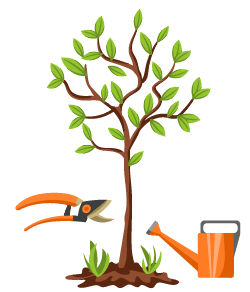 Every self-respecting gardener should have at least the bare minimum of tools necessary for gardening. To prune apple trees, you'll need:
- pruning shears;
- hacksaw;
- a tool for removing knots (usually a lopper);
- garden shears or knife.
Handle sharp tools very carefully, firstly, to avoid harming yourself and, secondly, to avoid damaging the plant.
Before pruning, be sure to disinfect all the tools you have so that cut to prevent infection or pests from entering the apple tree tissue.
If you use a saw, sharpen it thoroughly, as a dull file will tear the bark rather than cut it, which will cause serious and irreparable damage to the plant.
Instructions: Proper Spring Pruning of Apple Trees for Beginner Gardeners
Any gardening novice who plants an apple tree in their garden should clearly understand how to care for it and when to prune it. The most important pruning is done in the spring and involves shortening and thinning the crown.
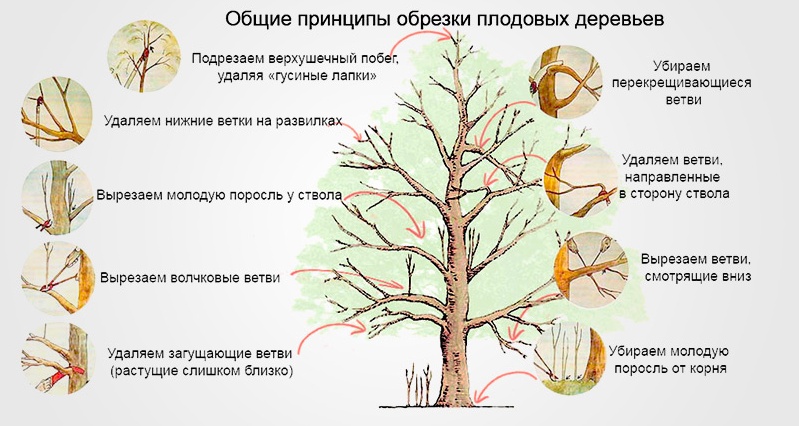
The following are removed from the crown:
- shoots that grow into the crown;
- branches that prevent young shoots and main shoots from forming;
- weak and non-fruit-forming plant parts;
- deformed, damaged, dried and diseased plant elements.
In order to facilitate and speed up the harvesting of fruits, the side shoots are shortened layering and central shoots.
General pruning rules for all types of apple trees:
- Planting care is carried out year-round, not just before and after pruning.
- Vertically growing shoots are pruned.
- Sanitary pruning should be carried out at least once a year.
- In summer, thickenings, if present, are usually removed. This determines the quantity, size, and taste of the fruit.
- Large branches should be cut at an angle of 45°.
- Thin shoots are cut off below the bud.
The timing of spring pruning will depend on the region where apple trees are grown. Remember that pruning should not be done while there's still snow in the garden (too early) or after the plant's buds have begun to open (too late).
Carry out all work in warm weather before the sap begins to move in the tree tissue.
How to prune young plants in spring
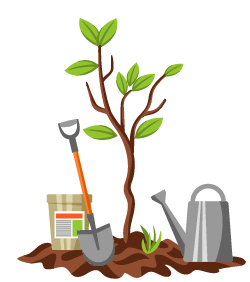 After planting the seedling, it is necessary to prune it to form the correct plant crown.
Work plan:
- In a young tree aged 2 years, the main trunk needs to be trimmed so that it rises above the branches by 4–5 buds.
- All long shoots that grow at an acute angle must be cut off, as they will simply break under the weight of the apples.
- Layers that grow at a right angle can be left, but they should be shortened by 3–5 buds.
Pruning mature trees
For mature trees, spring pruning is a real lifesaver – it prolongs the plant's life, normalizes fruiting, and makes the fruit juicier and tastier.
Basic rules for pruning mature and old apple trees:
- First, you need to carefully inspect the plant. This will identify all diseased or damaged branches. If there are too many diseased shoots, pruning is unlikely to help revive the tree.
- Spring pruning can be carried out only after all the snow has melted, but before the buds have opened.
- Before starting work, you must immediately prepare and disinfect all tools.
Haircut pattern:
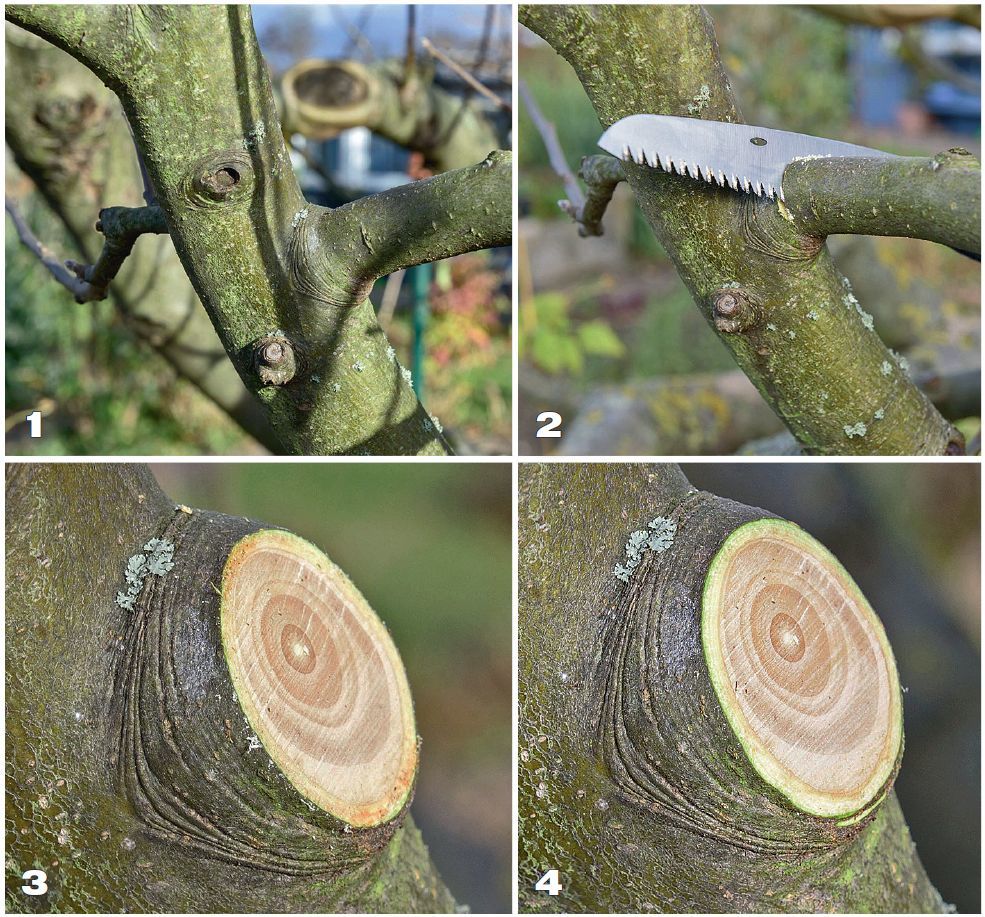
- To give the tree the correct shape and rejuvenate it, remove all deformed, diseased, or misdirected shoots. Also remove any oversized or unsightly branches.
- First, cut off the lower shoots, which will definitely not bear fruit. Cut to the ring.
- After this, remove all dead shoots and suckers showing signs of disease. It's also necessary to remove crossing branches. You can cut them off entirely, or shorten them slightly (by a third). This is necessary to avoid dense crown formation, competition between shoots, and possible damage between branches.
- Carefully thin out the tree's crown and shorten its side branches so that it can receive sufficient light.
How to prune columnar apple trees
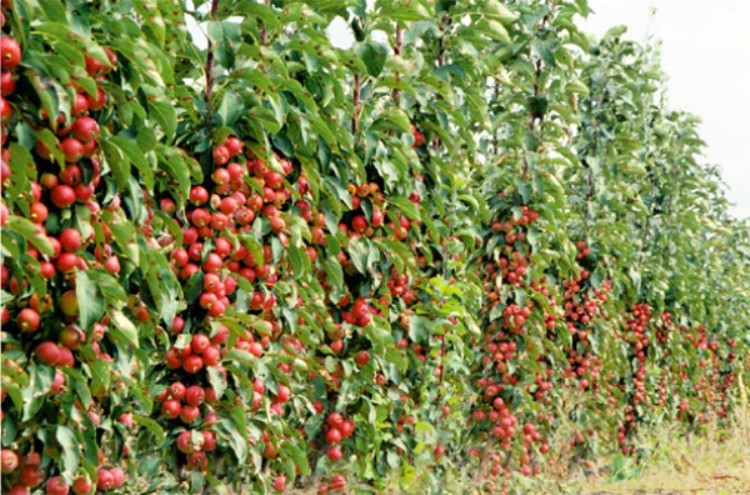 Columnar varieties have many advantages over classic apple trees:
- earlier fruiting;
- low height (easy to pick fruits);
- easy to care for.
For these varieties, pruning is one of the most important care rules. If you neglect it, the tree's crown will become dense, the yield will decrease, and the plant itself will become diseased.
Haircut pattern:
- In the first year after planting, you need to shorten the trunk and remove lateral shoots.
- In the second year of cultivation, lateral shoots are pinched to a length of 30–40 cm.
- In the third year of growth, the plant needs to be pinched by pinching the upper shoot at a length of 25 cm (lateral branches - up to 40 cm).
- In the fourth year, you need to thin out the crown a little, removing shoots that grow inward.
- In the fifth year, the tree's growth should be restricted. The optimal height for a bush is considered to be 3 meters. In the summer, all weak shoots and those that crowd the crown should be removed.
- In subsequent years of cultivation, only standard sanitary pruning needs to be carried out.
Tips for beginners on autumn pruning of apple trees
Autumn pruning is one of the steps in preparing an apple tree for a full winter. The gardener decides on the pruning pattern and technique to use.
 Here are two main methods for autumn apple tree pruning:
- thinning (complete removal of shoots);
- shortening (removal of a third of the branches).
Any shortening of branches will lead to rapid growth and more abundant branching of young shoots. A severe pruning will soon produce about 3-4 strong new shoots. A light pruning, on the other hand, will result in shorter branches.
Don't forget about thinning - this procedure helps to get a rich harvest in the new season, since the branches, leaves and fruits will receive enough sunlight.
Crown formation options
Crown formation is one of the most important aspects of autumn apple tree pruning. It determines both the yield and the plant's growth rate.
Tiered-sparse
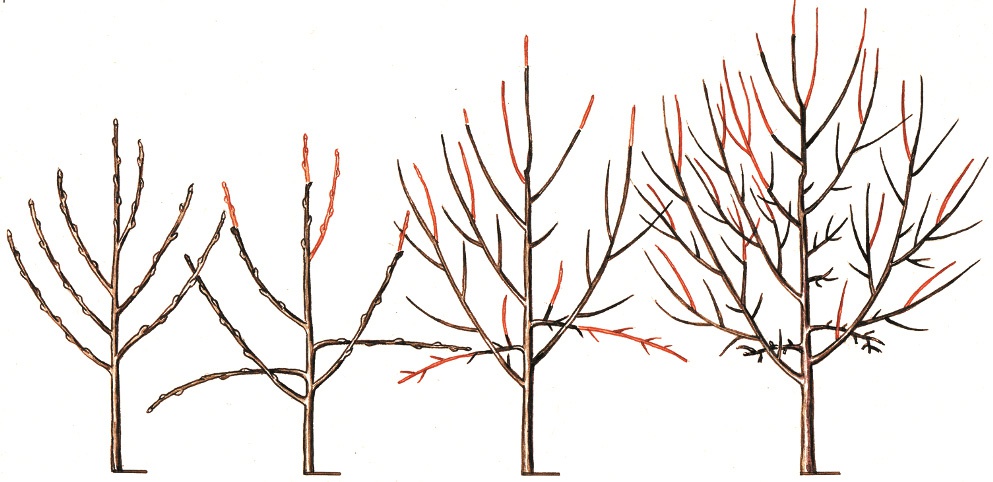
The simplest way to form a proper crown is to arrange the shoots in a tiered formation. If you choose this pruning method, keep in mind that all tree crowns should be spaced at least 3 meters apart.
Formation:
- Shorten the main trunk. In the first year after planting, its height should not exceed 50 cm.
- After 6 months, begin pruning the shoots in a mirror-image pattern. In the first tier, the distance should be approximately 30–35 cm, and in the second and subsequent tiers, 15–20 cm.
- Next season, you need to form another tier (45 cm from the previous one).
- Maintain the crown shape in the future by cutting off the main shoots above the single shoot at the top.
Spindle shape
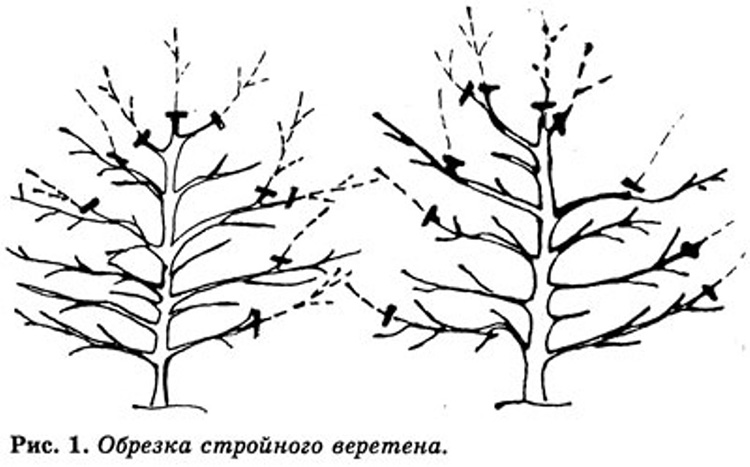
This is a fairly quick method for shaping the skeleton of a conducting shoot. This type of pruning should only be attempted by gardeners with experience growing apple trees and other fruit trees.
Bowl shape
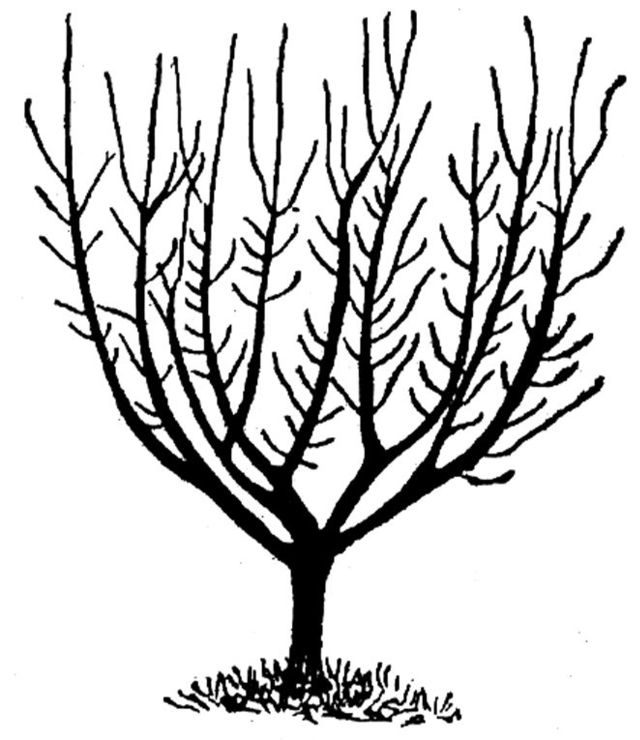
Avoid this shape for apple trees that are growing poorly. Slow growth will prevent the tree from achieving the desired crown shape.
Fan palmette
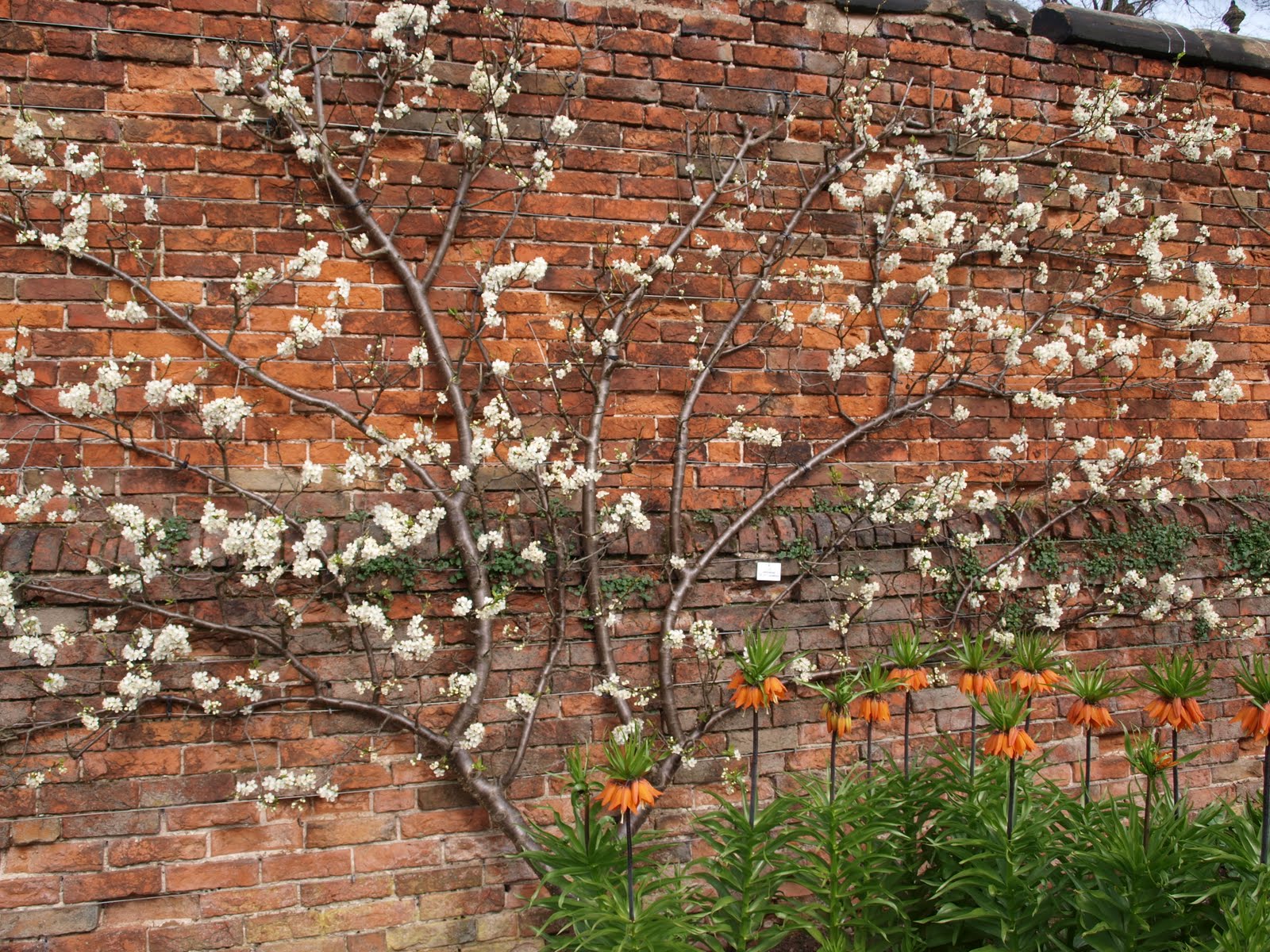
This formative pruning method is suitable for apple trees grown around the entire perimeter of a garden plot. Formation will take approximately 3–4 years, so only choose it if you're prepared to wait.
Autumn pruning scheme
Most often, two types of pruning are performed in the fall: formative and sanitary. If you don't need shaping, In the autumn period, it is necessary to carry out sanitary thinning of the tree.
During this type of pruning, all dried, deformed, and weak shoots are removed, as well as branches that cross each other or grow at sharp angles. This work should begin when the trees have completely shed their leaves, but before the first frost.
Here are some ways to prune apple trees in the fall:
- weak (suitable for young seedlings, a quarter of the length of the annual growth of shoots is cut off);
- medium (suitable for mature trees 5–7 years old, a third of the shoots are cut off);
- strong (option for old plantings, large branches are removed by about half).
The nuances of pruning apple trees in winter
Only apple trees grown in the southern regions of the country (where temperatures don't drop below -10 degrees Celsius) can be pruned in winter. This procedure has several important advantages:
- The plant is in a dormant state, so it experiences minimal stress.
- The risk of bark damage is reduced.
- The risk of infection or pests is reduced.
Only frost-hardy varieties can be pruned in winter. This involves cutting off all branches.
Conclusion
Proper pruning of apple trees ensures a longer, healthier life for the trees, and a bountiful, delicious harvest for the gardener each year. Spring pruning is the most important, as it removes all diseased and dead shoots. However, fall and summer pruning should also be considered, as they help maintain the tree's health. health and attractive appearance of trees throughout the season.