How and where to store dried apples at home
Autumn is the season of aromatic apples, tempting with their variety and flavors. Sometimes it's impossible to try them all, so preserving them for the winter in dried form is a great solution. What's more, it's a healthy and delicious dessert that's easy to enjoy without compromising your figure.
Content
Which apple varieties should you choose for drying?
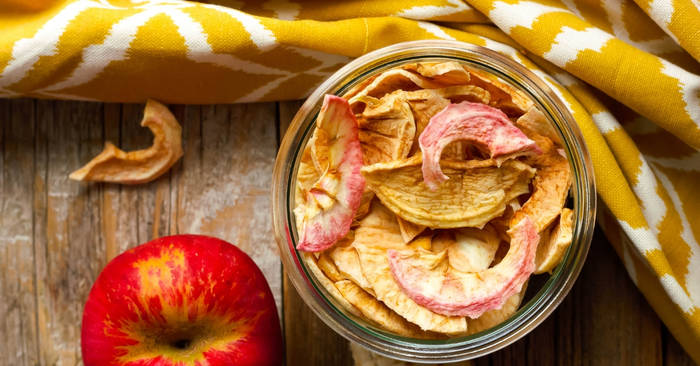 It's recommended to choose medium- and small-sized fruits for drying. Larger ones are best eaten immediately or used fresh in cooking. This is much more efficient, as drying larger apples will produce significantly more waste, which is very impractical.
Fruits with the most attractive characteristics:
- small seed box;
- thin skin.
When choosing apples for drying, you should also consider their flavor and the percentage of dry matter in the pulp. A high dry matter content will result in a larger quantity of dried fruit, and the former will impart excellent flavor.
Sweet apples are not suitable for drying because the product they produce is absolutely tasteless.
The best apple varieties suitable for the drying process:
These are sweet and sour varieties that ripen in autumn. Late (winter) varieties dried fruits They are extremely rare. Typically, only good-quality fallen apples are used. However, summer apples are also often dried, as are wild apples.
Basic requirements for proper drying of apples
 Before harvesting, the selected apples must be thoroughly washed and cut into the most convenient format: slices, halves, or wedges. They are then simply set out to dry. The result is a product of traditional drying.
Ready-made sweets, regardless of the cooking method, darken significantly.
A more advanced method for creating dried fruit involves pre-soaking the crushed fruit in a 1% solution of table salt. This treatment takes no more than 5 minutes. This process allows the dried fruit to retain its natural light color.
To achieve an even more neutral, natural-looking product, fumigation of the apples with sulfur for 10 minutes will help. Before eating, the apples treated this way should be scalded with boiling water.
In addition to soaking and fumigation, the selected fruits must be subjected to the following procedures:
- remove seed pods;
- remove all damaged areas.
Next comes the cutting and directly dryingThe most common methods are:
- in the sun;
- in the oven;
- in an electric dryer;
- in the microwave.
You can also string the sliced apples on a thread and hang them on a well-ventilated balcony on the sunny side.
How to store dried apples at home
To store your finished pretzels, it's important to choose the right container to ensure the sweet and healthy product retains its beneficial properties. Several options are available, each with its own advantages, which will help you choose the best one.
In bags
 Dried apples are stored well, and most importantly, for a long time, in dense fabric bags. The key feature of this material is its ability to easily breathe and block harmful sun rays.
These bags are very easy to make at home and can be reused multiple times. Drying in bags is resistant to mold and moisture.
In boxes
Another affordable option for storing dried apples is cardboard boxes. You'll need to poke some holes in them just to ensure air circulation. Using too-large containers is inadvisable, as if pests infest the dried fruit or even one slice becomes moldy, the entire harvest will quickly spoil. dried apples should be served in portions.
In bags
Paper bags are another great option for storing dried goods all winter without any problems. This material also provides excellent air circulation and limits sun exposure. You can make these bags yourself from unbleached paper sheets.
In banks
Dried fruits can also be stored in glass jars with nylon lids. It's best to store these containers in a cellar. The only drawback of this method is the lack of air circulation, which can lead to rotting. To avoid this, it's recommended to line the jar with paper along the walls and drill holes in the lid.
How long do dried apples last?
 The shelf life of dried fruit depends on a number of factors, including air humidity, air circulation, and protection from sunlight. However, most of these issues can be easily resolved with the right storage containers. Dried apples can be stored for a very long time, even several years. However, it's best to use them before the next harvest, so you can prepare a fresh batch of this healthy treat for the following winter.
How to protect dried apples from pests
One of the biggest problems when storing dried apples is the infection of the finished product by mold fungi or the appearance of insect pests.
From moths
If your pantry, where you keep dried food for the winter, has been attacked by food moths, which have already laid numerous eggs, you'll have to get rid of most of your food supplies. In this situation, cereals, flour, grains, pasta, and dried foods should be discarded. If the situation is less dire, you can save the food by heat treatment. Empty the apple slices from their containers, select the spoiled ones, and place the uninfested ones on a baking sheet in a single layer. Then preheat the oven to 60-70°C and dry the apples for about 30 minutes.
Food moth larvae also don't tolerate low temperatures. Leave all dried fruit on the balcony for half an hour or keep it on the refrigerator shelves for no more than 24 hours.
From fungi and mold
The appearance of mold indicates that healthy treats haven't been stored properly. Mistakes that lead to its appearance include:
- placement in plastic bags;
- moisture penetration into the container;
- poor drying of individual pieces.
If mold appears, the product must be completely removed. Its quality cannot be restored by freezing or washing. Consuming such preserves can be harmful to health.
From other pests
Many insects absolutely cannot stand certain scents that are perfectly acceptable to the human sense of smell. Bay leaves, acacia blossoms, oregano, or lavender placed nearby will help prevent pest attacks on dried apples. It's also a good idea to place dried citrus peels in the same area.
The main thing is to keep them separately and not inside containers with dried fruits, so that the latter do not become imbued with foreign aromas.
Dried apples are rich in nutrients, they contain B vitamins, iodine, magnesium, potassium, iron, as well as natural pectin. Proper drying and storage procedures will ensure the ability to prepare various dishes from apples for a long time.