Aport apple tree: characteristics of the variety and care
| Color | Reds |
|---|---|
| Ripening season | Autumn |
| Size of apples | Large |
| Taste | Sweet and sour |
| Crown type | Tall tree |
| Shelf life | Average shelf life |
| Application | Fresh , For recycling |
| Winter hardiness | Average winter hardiness |
| Fruiting age | Up to 5 years |
 History of origin and regions of growth
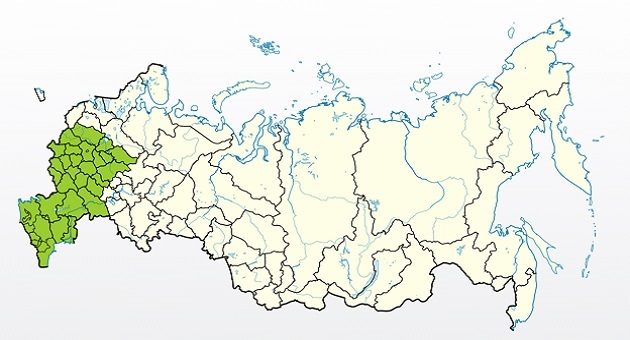
Growing regions
- Crimea.
- Middle zone.
- Leningrad region.
- North Caucasus.
- Moscow region.
Origin
This variety has attracted the attention of gardeners for over nine hundred years. The first mention of it can be found in trade records, which indicate that in 1175, seedlings were transported from the Turkish city of Porto to Poland. Many believe that by that time, the apple tree was already widespread in orchards in what is now Ukraine. The first Russian pomologist and breeder, Bolotov, wrote in the eighteenth century that the old Sievers variety can be considered the variety's ancestor.
In different countries, the Aport apple tree has many names accumulated over the long decades of its history: Alexander, President Napoleon, the King of Beauty, and others.
By the early nineteenth century, Aprote apple trees first appeared on the European market. At the World's Fair in Paris, the variety was promoted as the best for commercial cultivation. Yegor Redko, a tradesman from the Ostrogozhsky district of the Voronezh province, brought several stunted seedlings to Russia, or more precisely, to the city of Alma-Ata in what is now Kazakhstan. Surprisingly, they grew and produced enormous fruits, weighing between 400 and 600 grams.
In the 1970s, apples became a true symbol of the city. In April 2009, commemorative coins were even issued, featuring the legendary Aport apple tree on the reverse. Today, there is no record of these trees in the State Register, and they have no official zoning, having been supplanted by more promising, low-maintenance varieties. Many modern scientists believe that the original Aport variety has been lost, and we can only enjoy various modifications.
Description of the Aport variety
 This is a rather demanding and capricious apple tree, requiring comprehensive and timely care. It doesn't have any particular frost resistance, so it won't grow in every region of our country. The variety requires regular pruning, watering, fertilizing, and protection from cold weather, and it's fussy and demanding of soil. It grows best on the rocky slopes of the North Caucasus and Crimea. It can be affected by any apple tree disease, damaging leaves, fruit, and sometimes even the wood.
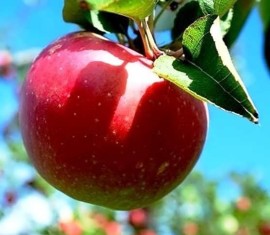
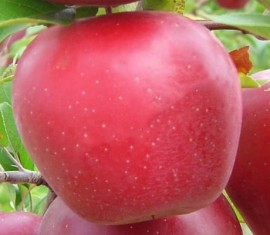
The apple tree produces very large fruits, unlike any other in the garden. They are beautifully rounded, with attractive, rosy-brown sides, and are very aromatic and delicious. The only drawback is the irregularity of fruiting. The fruit transports well and can be stored in a cellar or refrigeratorThe variety is recommended for individual cultivation in private gardens.
Apples: What do they look like?
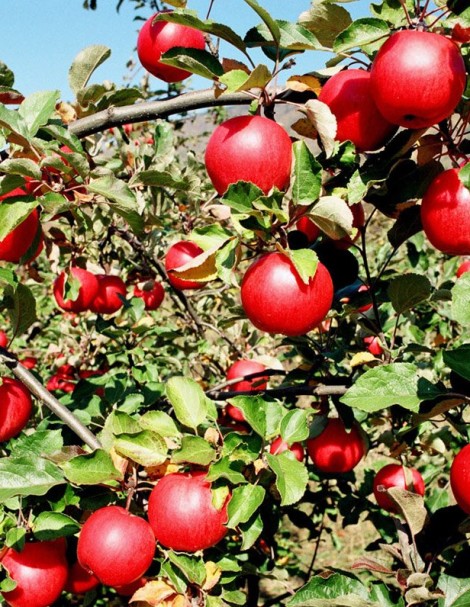
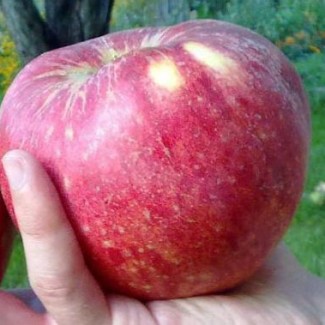
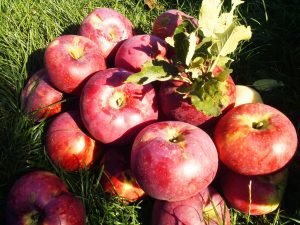 Aport fruits typically grow to large or very large sizes. Under favorable conditions, they can easily reach 500-650 grams in good years. On average, 250-350 grams are most common, but 900-gram specimens are also available. They are round, slightly conical, and flattened along the central axis. In some cases, the ribbing and the side seam of the apple are clearly visible.
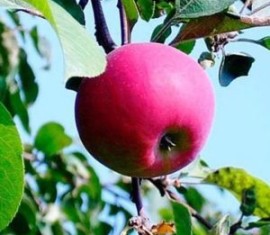
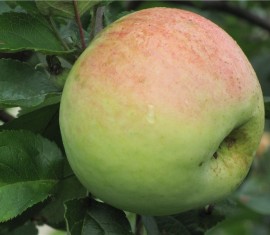
The fruit has a dense, smooth, and shiny, glossy, elastic skin, not thick but quite firm. The base color is green or yellow-green, sometimes slightly lemon-colored. The blush appears as wide stripes and streaks, with diffuse spots ranging from dark red or burgundy to raspberry-pink. When ripe, the apples become covered with a dense, oily bloom. Subcutaneous spots are indeed numerous; they are light, large, and clearly visible. The chemical composition is most easily assessed by the following data:
- P-active substances (catechins) – 125 milligrams.
- Ascorbic acid (vitamin C) – 11.9 milligrams.
- Total sugars (fructose) – 11.4%.
- Pectins (fiber) – 13.8%.
- Titratable acids – 0.76%.
Aport has a dense, fine-grained, and juicy flesh. It's crisp, pleasantly textured, and easy to break off, yet tender, albeit slightly prickly, with a white or slightly light green hue. Its flavor is considered sweet and sour, or more accurately, wine-sweet, with a noticeable spicy note in the aftertaste. Professional tasters, based on unofficial data, have given it a 4.8 out of a possible 5.
Aport apple tree: characteristics
Crown and root system
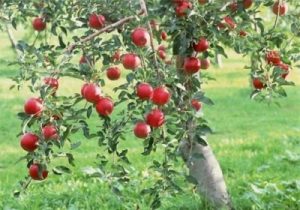 Officially, the tree is classified as a tall tree, but in reality, it can reach no more than 5-6 meters without pruning. The crown is rounded, sometimes spherical, or more often broadly oval. It is very vigorous and spreading, and can reach a diameter of up to 7-9 meters. The branches are thick, rounded, straight or curved, sometimes geniculate, covered with bark of a classic gray-silver or brownish hue, smooth, and pubescent. Fruiting is concentrated on the rings and fruiting shoots.
The leaves are medium-sized, often dark green or emerald, smooth, glossy, dense, and leathery. They are short-pointed, slightly elongated, with finely serrated, serrate-crenate edges, sometimes slightly wavy, and may have a light, felt-like pubescence on the underside. The root system is fibrous, highly branched, and well-dug, with moderate adaptations to the search for water and nutrients.
Productivity and pollination
Aport is usually considered a high-yielding, early-ripening variety, although it is far from being a true record-breaker.
In a single season, under the most favorable conditions, climate, and care, a mature tree can produce approximately 140-160 kilograms of aromatic and delicious fruit. Older trees may experience reduced yields, usually due to excess nitrogen fertilizer in the soil.
The apple tree is conditionally self-fertile. This means that if there are no other trees within 150-200 meters that are suitable for budding, you can expect no more than 15-30% of the potential yield.
Winter hardiness and disease resistance
This variety is delicate and can easily freeze in the harsh conditions of our country. It can withstand temperatures down to -22-25°C, but will require adequate and timely shelter. The apple tree dislikes high humidity and sudden temperature fluctuations. In winter, the tree's buds can freeze, requiring several years of recovery.
Aport has absolutely no immunity to any diseases. Therefore, all of them pose a serious threat to the variety, starting from scabies and ending with parasitic diseases. Therefore, it requires timely prevention and treatment with various industrial agents to minimize the risks.
Rootstocks and subspecies
This variety is truly ancient, with a huge number of diverse subvarieties and subspecies. They are so diverse and distinct that each deserves a separate article.
| Subspecies | Description |
| Alexandrovsky | A classic variety grown on standard vegetative rootstock. It produces large, pinkish-striped fruits weighing 300-330 grams. |
| Pushkinsky | Specifically bred for the challenging conditions of the Moscow and Leningrad regions, where it is successfully cultivated, it begins bearing fruit in the fifth or sixth year, producing apples weighing 250-300 grams. |
| Almaty | A fairly old variant of Aport, distinguished by its largest fruits (800-900 grams). Apples of this subvariety are delicious, have a powerful aroma, and retain all their qualities until spring. |
| Bely and Dubrovsky | The large and beautiful apples of this subvariety ripen on small, semi-dwarf trees, taking up little space in the garden. They weigh an average of 250-400 grams, but the former has a noticeably paler skin and blush. |
| Kuban | This subspecies tolerates fairly severe winter frosts well and requires little care or feeding. It produces large (300-400 grams) green fruits with a light, fuzzy reddish-pink blush, intensely aromatic, and a pleasant sweet-and-sour wine flavor. |
Features of growing Aport
 Landing
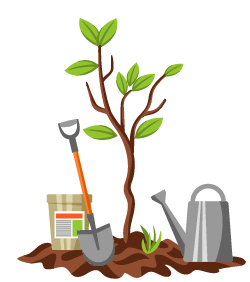 Landing
Basic conditions
- Only sunny locations are chosen for planting apple trees. In the shade, trees cannot grow, refuse to bloom or bear fruit, and sometimes even die.
- It's important to consider the depth of groundwater. It shouldn't be too close to the surface, otherwise trees will reach it with their roots and rot.
- Ensuring adequate ventilation of the tree crowns is crucial. However, drafts should be avoided, as this will make the trees uncomfortable, prone to disease, and reduce fruit production.
- There's no need to prepare the holes for planting Aporta in advance; letting them sit for just 2-4 weeks is sufficient. Dig holes up to 1 meter in diameter and 70-80 centimeters deep. Add fertilizer and topsoil to the bottom, then add any drainage material and water generously.
- Stakes or trellises are immediately driven into the holes to support the trees. Placing them on the north side will provide additional protection from cold weather, not just reliable support.
- Between trees of this variety, or between them and other plants, it is necessary to leave quite a lot of space, at least 8-10 meters, otherwise a conflict between crowns and rhizomes is inevitable.
- Planting requires that the tree's root collar always remain above the soil surface. 5-8 centimeters is sufficient.
- Before transplanting into open soil, inspect the seedlings and trim off any broken or dry shoots. The rhizomes can be soaked in warm water for 5-8 hours or simply overnight.
- The seedling is placed on a drainage mound, the rhizome is straightened, covered with soil, watered with 40-50 liters of water, and the surface is mulched to further retain moisture.
Landing dates
Aport trees prefer warm climates; they are delicate and sensitive to even the slightest frost, so it's best to plant them in the spring, when the threat of frost has passed and the soil has dried and warmed, but the sap in the trunks hasn't yet activated. In warmer climates, autumn planting may be preferable, but it's important to time the planting before the first frost.
Tree care
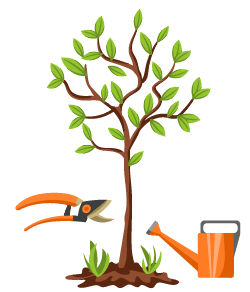 Tree care
Protection from frost and pests
Standard garden protection measures during cold weather are ideal for Aport trees. Young trees are wrapped in a tent-like manner, wrapping them from the rootstock to the top. Larger trees are simply wrapped in burlap, with spruce branches, straw, or hay thrown over the roots, and sometimes 15-20 centimeters of soil added for added security. All of this should be completely removed in the spring before the sap begins to flow.
Coating apple trees with strong-smelling substances such as lard, rendered tallow, fuel oil, grease, or old drying oil helps repel rodents. Every spring and fall, the trunks are whitewashed with lime, a thick solution. This prevents insects from settling in cracks and broken bark during the winter.
Loosening the soil, watering: proper agricultural technology
Tree trunks are typically dug twice a year—in spring and fall. This should be done very carefully to avoid damaging the high-lying roots. The rest of the year, you can simply lightly loosen the soil with a hoe, removing weeds and debris. It's important to loosen the soil the day after watering, otherwise it can compact into a very dense lump.
Water the Aport tree generously and frequently, but don't overdo it. The soil should never dry out completely, but excess moisture won't do any good either. Therefore, it's best to water once every 7-10 days during periods of no rain. Apply 25-35 liters of water per trunk, twice a day, morning and evening.
Pruning: simple crown shaping
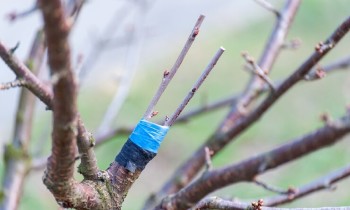
The initial pruning and shaping of trees is usually done at tree nurseries. Most often, a sparse, tiered form is created, which is most suitable for the given crown type. After this, you can prune the trees yourself as early as the third or fourth year. All branches that don't fit the overall design, protrude upward or inward, run parallel, or cross are removed.
In the fall, you can only perform a sanitary pruning, cutting off all dry or broken shoots. However, experts recommend postponing this until spring, when daytime and nighttime temperature fluctuations are less dramatic. Wounds must be sealed to reduce stress on the tree. You can use garden var, paint or even a regular swamp.
Pollinator varieties
- Shield.
- Spartacus.
- Gala.
- Prikubanskoe.
- Champion.
- Borovinka.
- Memory of the Yesaul.
- In memory of Ulyanishchev.
- Gloucester.
Diseases and pests
- Cytosporosis.
- Rust.
- Pit rot.
- Powdery mildew.
- Black crayfish.
- Scab.
- Rust.
- Scale insect.
- Leafhopper.
- Green aphid.
- Hawthorn.
Ripening and fruiting of Aport
The beginning of fruiting
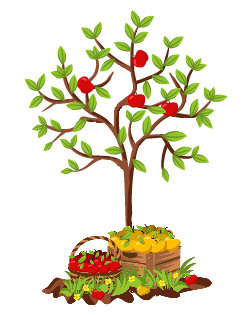 The beginning of fruiting
The first flowers can be seen quite early, as early as the second or third year, but it's best to pluck them off immediately. They're likely just barren flowers, which won't produce any fruit or fruit. The first harvest is usually in the fourth or fifth year. It won't be particularly abundant, but you're guaranteed several kilograms of very large, beautiful apples.
Flowering time
Like most late-ripening varieties, Aport begins to bloom only in late spring, or even more often in early summer, around early or even mid-June. It blooms profusely, becoming completely covered in a snow-white blanket of large, highly fragrant flowers with delicate, fleshy petals. The blooming process lasts approximately 10-15 days, so there's plenty of time to enjoy the spectacle.
Fruiting and growth
Trees grow approximately 45-60 centimeters in a single season, so they grow very quickly and acquire their final appearance. Fruitfulness increases gradually but quickly. A full harvest will not be expected for longer than 8-9 years. By then, you'll be able to harvest around a hundred kilograms of unusually large fruit.
Apples begin to ripen as early as late September, but the optimal harvest time is usually early October. They hold up well, falling only after strong winds, frost, or severe overripening. They can be transported over any distance in crates, no more than three layers deep, layered with sawdust. They can be stored in a cellar or refrigerator for approximately 2-4 months, until their flavor deteriorates.
Top dressing
- Humus.
- Peat.
- Bor.
- Calcium.
- Manure.
- Compost.
- Superphosphate.
- Ammonium nitrate.
What to do if it doesn't bloom or bear fruit
- Limit or increase watering.
- Eliminate insects.
- Cure diseases.
- Feed.
- Transplant to a sunny place.
Why do apples fall?
- Wind, frost, rain, hail.
- They are very overripe.
- Pests or diseases.
Leave a review of the Aport apple tree variety so that even a novice gardener can receive useful information firsthand.