Sokolovskoye apple tree: characteristics of the variety and care
| Color | Striped , Reds |
|---|---|
| Ripening season | Winter |
| Size of apples | Average , Large |
| Taste | Sweet and sour |
| Crown type | Dwarf |
| Shelf life | Average shelf life |
| Application | Fresh , For recycling |
| Winter hardiness | High winter hardiness |
| Fruiting age | Up to 5 years |
 History of origin and regions of growth
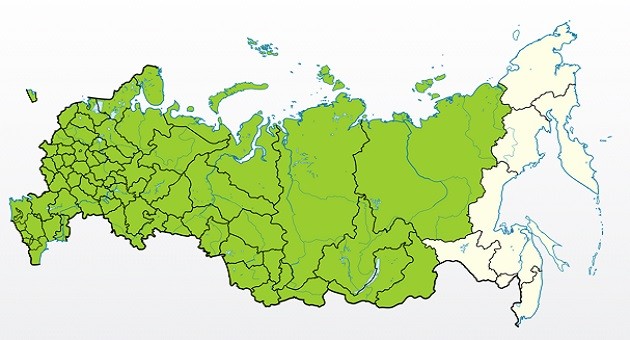
Growing regions
- Crimea.
- Ural.
- Middle zone.
- Urals.
- North Caucasus.
- Trans-Urals.
- Bashkortostan.
- Moscow region.
- Chelyabinsk region.
- Leningrad region.
Origin
The variety was developed at the breeding experimental station of the Ural Federal Agrarian Research Center of the Ural Branch of the Russian Academy of Sciences. It was obtained through open pollination of the renowned Vydubetskaya Weeping variety. The authors are renowned Russian pomologist breeders:
- Vladimir Ilyich Putyatin.
- Mikhail Alexandrovich Mazunin.
- Nina Fedorovna Mazunina.
The first application to classify the Sokolovskoye variety as an elite one was submitted in 1993, and the trees themselves were sent to nearby farms for variety testing. Testing continued until the turn of the century. It was only in 2001 that the apple tree was added to the State Register of Breeding Achievements. It received official zoning for the Ural region.
Content
Description of the Sokolovskoye variety
 One of the new varieties, distinguished by its compact crown and low growth habit, it is a natural dwarf with good yields, is relatively undemanding regarding soil and care, and is highly environmentally friendly. However, as with Ural apple trees, its winter hardiness is considered somewhat low; fruit production can fluctuate significantly depending on weather and climate, and during frequent droughts, it can drop to almost nothing.
The fruits themselves possess high commercial and consumer qualities. They are quite large, attractive, aromatic, juicy, and delicious. They are easy to transport over long distances and can be stored for almost the entire winter without losing their flavor or consistency. This variety is recommended for both commercial and home cultivation.
Apples: What do they look like?
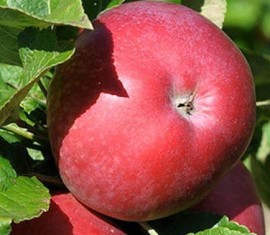
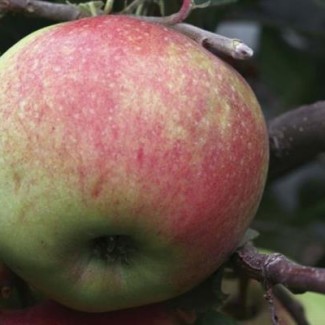
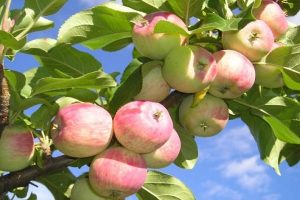 The fruits are predominantly medium to larger than average in size, weighing up to 160-200 grams. The shape is typically round or slightly flattened-round, rounded-conical, and regular. The fruits are symmetrical and uniform in size, with moderate ribbing near the calyx, and a lateral suture may be clearly visible.
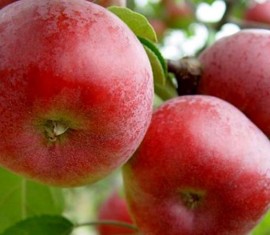
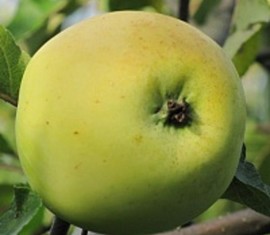
Sokolovskoye is distinguished by its dry, smooth, glossy, shiny skin, dense, strong, elastic, and sometimes somewhat thick and hard. Its base color is green or greenish-yellow, and may develop a waxy, bluish-silver, dense bloom when fully ripe. The blush is dark red, burgundy, purple-red, or deep red, covering most of the fruit. It is dense, spotted, and slightly speckled, covering approximately 75-80% of the surface. Subcutaneous spots are small, grayish-green, and difficult to see. Experts recommend understanding the chemical composition using the following information:
- P-active substances (catechins) – 234 milligrams.
- Ascorbic acid (vitamin C) – 15.7 milligrams.
- Total sugars (fructose) – 10.9%.
- Pectins (fiber) – 14.5%.
- Titratable acids – 0.8%.
This variety has a pleasantly firm, fine-grained flesh with a distinct creamy-milky hue, which can be slightly lemony or greenish. It is very juicy, aromatic, fresh, crisp, and crisp. The flavor is sweet and sour, with a predominance of sweetness; it is considered harmonious, balanced, and dessert-like. According to professional tasters, the apples score 4.7 out of 5 possible points.
Sokolovskoye apple tree: characteristics
 Crown and root system
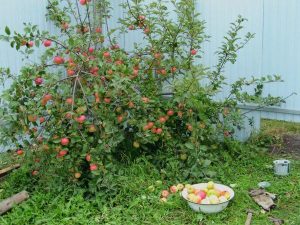 Crown and root system
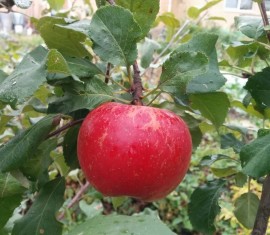
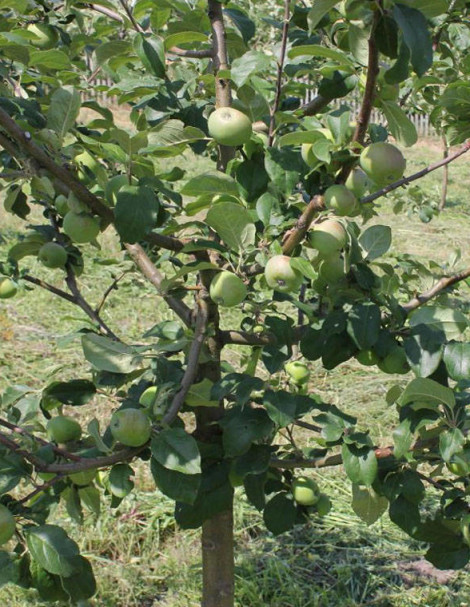
The variety belongs to the natural semi-dwarfs, grows to a maximum of 1.5-2 meters Without formative pruning. The crown can be flat-rounded or flat-horizontal, spreading, weeping, or drooping in old age. The branches are long, rounded in cross-section, thick, long, and straight, covered with greenish-brown bark, and set at a nearly right angle from the central core. Fruiting is mixed, occurring on all types of wood.
The leaves are medium to large, rounded, oval-elongated, and long-pointed. The margins are serrated, crenate, doubly serrated, and may be slightly wavy or folded into a boat shape. They are green, deep green, or bright green, smooth and glossy, with a felty pubescence on the underside. The root system is fibrous on most rootstocks, superficial, shallow, and branched, with a few small branches. It is poorly adapted to seeking water in the soil, so it requires regular watering during hot weather.
Productivity and pollination
For a natural dwarf, the yield can be called average or high, depending on the specific year.
With proper care and favorable conditions, one mature Sokolovskoye variety tree can yield 65-70 kilograms of aromatic and delicious apples per season. Per hectare, this typically yields approximately 220-230 centners at a standard planting density for dwarf apple trees..
The variety is completely sterile within itself, so it requires external pollinators to produce fruit. It's common to plant two or three apple trees of a different variety with a suitable flowering time per 100 square meters, or even interplant different varieties. Spraying flowering trees with sugar or honey syrup in the spring and using mobile apiaries are very productive.
Winter hardiness and disease resistance
In terms of the Ural apple trees' resistance to low temperatures and fluctuations, Sokolovskoye is by no means a benchmark. However, it is quite tolerant if prepared for winter in time and properly protected. It can easily withstand temperatures down to -25-32°C if the owners take proper care.
The tree has a natural resistance to disease. Fungi in general, as well as powdery mildew and powdery mildew in particular, rarely attack trunks. Even during years of severe epiphytotics, it's primarily the leaves that are affected, and the fruit can be processed or eaten fresh.
Rootstocks and subspecies
The variety is very young, so it doesn't yet have any subspecies. They are grown primarily on dwarf rootstocks, but even on standard rootstocks, they don't grow very tall. Using a varietal rootstock, you can impart some unique qualities to your apple trees, for example, slightly increasing their winter hardiness or disease resistance.
Features of Sokolovsky's cultivation
Landing
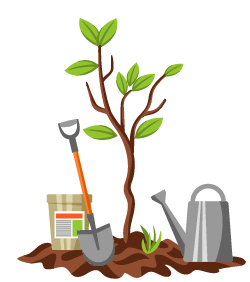 Landing
Basic conditions
- Apple trees require a sunny, open space, free from shade from taller plants or building walls. Without access to ultraviolet light, they won't grow, and even if they survive, they will bear fruit poorly and irregularly, producing sour, tasteless, and small fruits.
- Blowing winds can affect buds' resistance to cold, but stagnant air in the crowns won't help either, instead encouraging more rapid fungal growth. Therefore, it's important to ensure trees are well ventilated but free of drafts.
- It's not necessary to dig holes in advance of the planting season; trees can be planted in holes prepared 2-4 weeks before fieldwork. Hole sizes are usually adjusted based on the size of the rootstock; typically, 60-70 centimeters deep and 70-80 centimeters in diameter are sufficient. Fertilizer and drainage are added to the bottom, and the entire hole is filled with water.
- There are no special requirements for the soil, except that it must be fertile, not too heavy, salty and acidic, which can be easily solved by various methods (adding sand, clay, dolomite flour, lime).
- A distance of 1.5-2 meters can be left between trees; this is quite sufficient for the compact crowns of Sokolovsky. It is customary to leave larger row spacings, approximately 2-3 meters, to make harvesting and garden maintenance easier.
- The grafting site of the trees (root collar) should be left at a height of approximately 5-8 centimeters to prevent the roots from growing higher.
- Trellis or planks are dug directly into the holes; they will serve not only as support, but also as additional protection in the cold if the trunks are placed on the south side.
- Immediately before planting, rake the used drainage material into a pile in the center of the hole. Then place the seedling on it, straighten the rhizome, and cover with soil, compacting it lightly with your hands. Water the trees generously, using 20-30 liters of water per trunk, and mulch the surface.
Landing dates
The optimal time for planting Sokolovsky's rhododendron is spring in regions with a relatively cool climate. Choose a dry day in late March or early April, when the last frosts have passed and the soil has warmed up well. If the weather is generally good and winters are mild, it can also be planted in the fall, immediately after the leaves have fallen.
Tree care
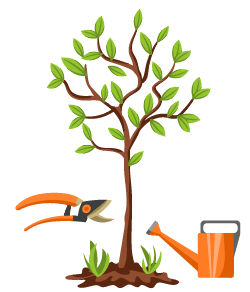 Tree care
Protection from frost and pests
Before winter, it's crucial to properly prepare the trees; otherwise, they could suffer significant damage and require time to recover. Watering should be stopped completely from the end of August, and after the leaves have fallen and the trees have been cleaned, they should be covered using standard methods. Dwarf trees are small, so covering them with a tent is acceptable, but you can also simply cover the root zone with straw, spruce branches, or hay, and tie the trunks with burlap.
Whitewashing with lime twice a year, in spring and fall, while taking all necessary precautions, is effective against insects that nest in bark crevices. Commercially available products also work well and can be purchased at any gardening store. To repel rodents that chew bark and young shoots in winter, smearing the trunks with old lard, rendered tallow, grease, or fuel oil will help.
Loosening the soil, watering: proper agricultural technology
Apple trees are dug twice a year, carefully, without going too deep, no more than half a spade's depth. The rhizome is shallow, so it's easy to damage important shoots. The rest of the year, you can simply loosen the soil with a hoe, removing weeds, root suckers, and other shoots. Don't forget to clear the area around the tree trunks of debris, rotting leaves, and fruit, as this encourages fungal growth.
Sokolovskoe doesn't like excessively long, hot, and dry periods; it requires regular watering. The tree won't be able to find water in the soil on its own, so consider using drip irrigation or a sprinkler system. This will solve the problem. If this isn't possible, you can apply 15-25 liters of water per trunk once a week.
Pruning: simple crown shaping
The first shaping is usually done around the second or third year, when the crown will have acquired its natural appearance. It's generally recommended to leave stylish branches only on the lower tiers, while the middle tiers can be preferred above. The key is to place them at different heights and space them far apart. Trees are flexible, so their flat, rounded crowns can be shaped into anything from cordons and bushes to broom-shaped forms and bowls.
In the fall, do a sanitary pruning, removing all broken, diseased, and damaged shoots. They won't be useful, but the sap will flow properly. Pruning should be done when the sap is not flowing in the trunks, that is, in early spring and late fall. The cut areas should be sealed with garden pitch.
Pollinator varieties
- Carpet.
- Academician Kazakov.
- Brotherchud.
- Butskoe.
- Carpet.
- Snowdrop.
- Bryansk.
- Kehura.
- Ariva.
Reproduction
- Kidney grafting.
- Budding.
- Layers.
- Growing from seeds.
- Cuttings.
Diseases and pests
- Scab.
- Cytosporosis.
- Fruit rot.
- Powdery mildew.
- Scale insect.
- Leafhopper.
- Fruit hyacinth.
- Hawthorn.
- Green aphid.
- Leaf roller.
Ripening and fruiting of Sokolovsky
The beginning of fruiting
 The beginning of fruiting
The tree bears fruit quickly; some gardeners report harvesting the first few apples as early as 2-3 years after planting. However, the official estimate is that the tree begins bearing fruit in 3-4 years. The trees are unlikely to produce a bountiful harvest in the first few years, but there's certainly something to try, and the very first apples are the largest.
Flowering time
Skolovsky's buds open quite late, so it requires careful selection of pollinator varieties. The beautiful, large, densely covered, fragrant flowers open in late May or early June. After a cold winter and a prolonged spring, these dates may shift even further.
Fruiting and growth
Apple trees grow quickly, growing at least 25-45 centimeters per year, soon reaching their full size. They also quickly increase their yield, reaching full production by 5-8 years. At this point, good harvests can be harvested, but only sporadically. Only high-quality care, timely pruning, cleaning, fertilizing, and watering can ensure consistently high fruit production, without rest periods.
The harvest is at the very end of September, and often even in early to mid-October, just before the first frost. The fruits hold firmly to the branches and usually don't fall to the ground without reason. However, they ripen not all at once, but rather from the bottom up, so it's best to harvest them, picking the ripest ones in stages. In a cellar with a temperature no higher than 5°C and 60% humidity, they can retain their flavor until about February, but it's best to eat or process them by then.
Top dressing
- Superphosphate.
- Humus.
- Peat.
- Calcium.
- Manure.
- Compost.
- Nitrogen complexes (not in the first 4 years).
What to do if it doesn't bloom or bear fruit
- Increase watering.
- Remove insects.
- Cure diseases.
- Fertilize.
- Move to a sunny place.
Why do apples fall?
- Wind, rain, hail, snow.
- Pests or diseases.
- They are very overripe.
Leave a review of the Sokolovskoye apple tree variety so that even a novice gardener can receive useful information firsthand.