Rossiyanka apple tree: characteristics of the variety and care
| Color | Greens |
|---|---|
| Ripening season | Winter |
| Size of apples | Average |
| Taste | Sweet and sour |
| Crown type | Average tree height |
| Shelf life | Average shelf life |
| Application | Fresh , For recycling |
| Winter hardiness | High winter hardiness |
| Fruiting age | From 5 years old |
 History of origin and regions of growth
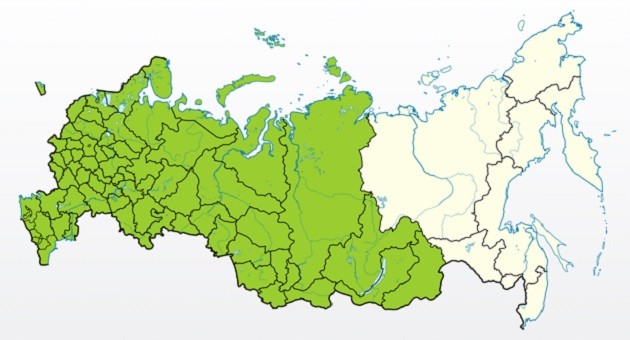
Growing regions
- Crimea.
- Ural.
- Middle zone.
- Urals.
- North Caucasus.
- Trans-Urals.
- Bashkortostan.
- Moscow region.
- Chelyabinsk region.
- Leningrad region.
Origin
The variety with the impressive name "Rossiyanka" was developed at the I.V. Michurin All-Russian Research Institute of Horticulture by renowned breeder Sergei Ivanovich Isaev. It was obtained by pollinating Antonovka with ordinary pollen from the Babushkino variety.
The new apple tree was bred in 1935, and even before the start of WWII, it was included in the State Register of Breeding Achievements and recommended for cultivation in the Ural region. Currently, the Rossiyanka is not listed in the State Register of Breeding Achievements and has no official zoning.
Content
Description of the Rossiyanka variety
 This variety is considered a late-winter one because it ripens much later than most apple trees, even compared to those from the Urals and Siberia. It is extremely winter-hardy, tolerant of various soil types, undemanding in terms of care, feeding, and fertilizer, and doesn't require frequent watering. Its resistance to scab and other fungi is high, making it a popular choice for gardeners growing in excessively humid locations. The trees themselves are quite compact, don't take up much space, and boast a long, active fruiting period, regularly producing high yields.
The fruits are quite large, beautiful, and attractive, possessing high commercial and consumer qualities. They are very aromatic, tasty, and juicy, surpassing the Antonovka variety in vitamin content. They are recommended for cultivation in private gardens, but are also suitable for commercial orchards, although primarily for processing.
Apples: What do they look like?
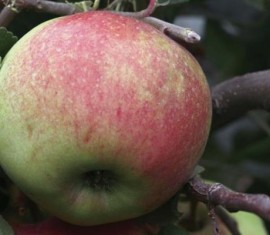
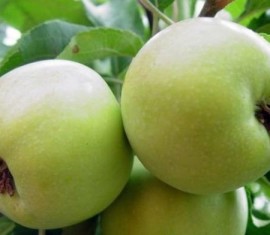
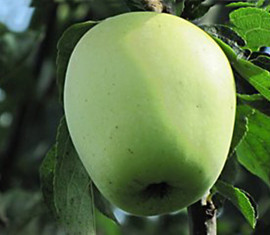
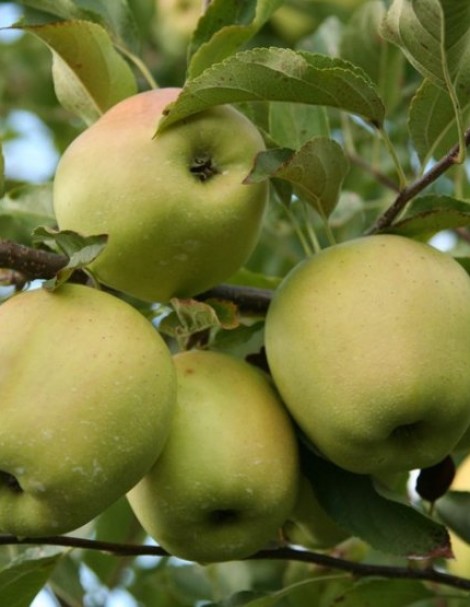
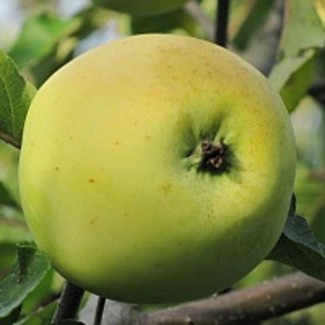
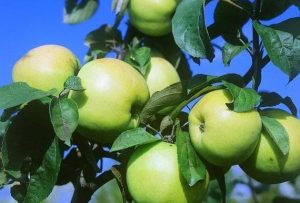 The fruits are considered medium or slightly smaller than average, with a maximum weight of 130-140 grams per apple, though they are slightly smaller in bulk. The shape is round or round-conical, somewhat turnip-shaped, flattened at the stem end. The surface is smooth, with barely noticeable ribbing near the calyx and no lateral seam.
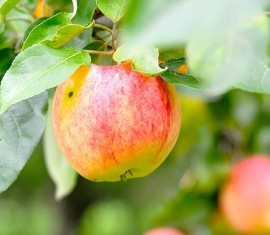
The skin is dense, thick, elastic, and somewhat hard, protecting the flesh well from mechanical damage. It is smooth, glossy, and highly shiny, sometimes covered with a slight waxy-oily coating that rubs off easily. The skin's base color is greenish-yellow or yellow, with a slight lemon tint. The underlying blush is usually completely absent, but sometimes apples on the sunny side appear to "tan," acquiring a light carmine-brown hue. Subcutaneous dots are small, light-colored, numerous, and not very visible. The chemical composition is most easily assessed by the following data:
- P-active substances (catechins) – 432 milligrams.
- Ascorbic acid (vitamin C) – 17.8 milligrams.
- Total sugars (fructose) – 10.11%.
- Pectins (fiber) – 14.7%.
- Titratable acids – 1.2%.
The pulp of the Rossiyanka is in many ways reminiscent of its ancestors, the Antonovka ordinary and Grandma'sIt's dense, fine-grained, and even somewhat firm when harvested. It's crisp, fresh, piercing, and juicy. Its flavor is considered balanced, harmonious, and dessert-like. It's sweet and sour, but leaning heavily toward the sweet, with a slight, distinctive tartness in the aftertaste. Professional tasting scores from experts reach 4.6 out of 5 possible points.
Rossiyanka apple tree: characteristics
Crown and root system
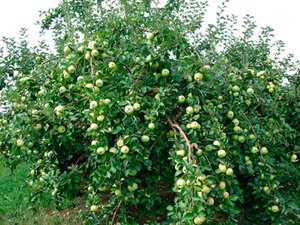 Apple trees are usually called medium-sized because They can stretch up to 4-4.5 meters, no more. In some cases, trees grow taller, but this is considered a flaw and a consequence of improper training, which leads to a decrease in yield, not the opposite. The crown shape is rounded, flattened and horizontal when young, but with age it becomes spreading, sometimes even drooping and weeping. The branches are long, straight, thin or medium, medium to dense, set at an angle close to right angles from the trunk, and covered with brown-green or brown bark.
The leaves are medium to slightly larger than average in size, rounded in shape, only slightly elongated, oval-ovate. They are short-pointed, the edges are serrated, doubly serrated, and slightly wavy. The surface is smooth, leathery, with a slight matte sheen and a felted pubescence on the back. The color is rich green, bright green, or light green, with delicate venation. The root system is deep, vigorous, fibrous on most rootstocks, but can also be taproot. It penetrates deep into the soil and is well adapted to seeking water.
Productivity and pollination
It is generally accepted that Russian women's fertility is average or above average.
Thrifty growers typically yield at least 150-180 kilograms of aromatic fruit from a single mature stem of this variety. In some years, yields may decline slightly, but not significantly. There is no discernible periodicity in fruiting..
The variety is conditionally self-fertile, meaning that even if there's no other apple tree in the area with suitable blooms, a harvest will still occur. However, with the presence of third-party pollinators, fertility has been significantly increased by 35-50%, which is significant. Therefore, it's recommended to interplant the trees or at least allow for one pollinator per 50-80 square meters of orchard. Spraying with sugar or honey syrup in the spring will attract insects and allow for even more fruit to be harvested in the fall.
Winter hardiness and disease resistance
The Russian plant's resistance to low temperatures, sudden changes, and fluctuations is truly remarkable. It easily survives even the harshest winters in the Urals or Siberia. If you ensure timely preparation for winter and proper shelter, no cold will harm the garden. It can survive temperatures down to -35-37°C without sustaining any serious damage.
To the scab, cytosporosisThe variety demonstrates good resistance to , powdery mildew, and other apple tree infections. Trunks are rarely affected, but even if they are, it usually affects the leaves, and the fruit can be processed and consumed fresh. Pests sometimes attack the trees, but all risks are easily mitigated with proactive insecticide and fungicide treatments.
Rootstocks and subspecies
No subspecies of this variety are known, and they will likely never be developed, as the apple tree is no longer officially registered. However, it can be grown on a variety of rootstocks to impart some unique characteristics. For example, on dwarf rootstocks, it will be much more compact, but its winter hardiness will suffer. You should inquire with the seller about the qualities of the rootstocks.
Features of growing Rossiyanka
 Landing
 Landing
Basic conditions
- Fruit trees grow poorly without constant access to ultraviolet light, which is why Rossiyanka requires an open, sunny location. In the shade, trees begin to stretch upward, failing to develop skeletal lateral branches, which inevitably impacts yield. In some cases, shaded trees may even die or simply refuse to bloom.
- The Rossiyanka's crown is quite dense, so it's important to ensure it's well-ventilated but not exposed to drafts, as these will often bring diseases. Maintaining a balance is crucial.
- The tree thrives in almost any soil, as long as it's not overly acidic or salty. Depleted soil will also be difficult for the tree to grow in; it's best to choose fertile soil or fertilize it properly.
- Prepare the holes in advance, at least 3-4 weeks before planting apple trees in the fall, or in the fall for spring planting. Dig the holes 60-70 centimeters deep and approximately 1 meter in diameter. Fertilize the bottom (except nitrogen-based fertilizer), cover with soil and drainage (rocks, vermiculite, broken brick), fill with water, and leave them outdoors.
- There should be at least 4-5 meters of space between the holes and the same amount between the rows so that in the future the trees do not interfere with each other with either their crowns or rhizomes.
- It's a good idea to immediately dig planks or stakes into the holes to tie the seedlings to. These will not only provide support but also provide additional protection from cold winter winds if the trunks are positioned on the south side of the supports.
- The apple tree grafting site (root collar) is always left above the surface to preserve the rootstock's properties. Failure to do so may result in roots growing higher.
- The drainage material is raked into a single pile in the center of the hole, then the tree is placed on it, spreading the roots so they don't bend anywhere. The hole can be widened if necessary. The tree is covered with soil, watered from above, and the surface is mulched, ensuring that the mulch doesn't touch the bark.
Landing dates
The Rossiyanka apple tree thrives at any time, whether in spring or fall, if done correctly. A good tip: in northern and colder regions, plant in March or April, after the soil has warmed up. In southern and warmer regions, plant in September or October, after the leaves have fallen.
Tree care
 Tree care
Protection from frost and pests
Despite the tree's frost resistance, it certainly doesn't hurt to properly prepare it for winter and cover it promptly. Watering should be stopped by early September, and no further watering should be done. After the leaves have fallen, wrap the trunks with burlap, roofing felt, or agrofibre. In the harshest conditions, small young apple trees can be covered like a tent. Straw or hay, spruce branches, and even piled soil can be piled on the roots. All of this should be removed in early spring, before the buds begin to open.
To protect trees from insects, it's important to carry out preventative insecticide treatments regularly, but whitewashing the trunks with a thick lime solution is also quite effective. This will prevent pests from settling in bark cracks and damaging the apple trees. Coating the trunks with melted animal fat, fuel oil, or grease will also protect against rodents. Other pungent-smelling substances are also suitable, and there are also commercially available products.
Loosening the soil, watering: proper agricultural technology
Digging around the trunks is standard in spring and fall, before the sap begins to flow or after it has stopped. Over the years, digging can be reduced to once a year, or even the area around the trunk can be seeded with herbs or lawn grass. The plants will provide natural aeration and prevent weeds from growing, which must be removed regularly.
Young apple trees should be watered regularly, approximately every 10-12 days, to allow them to establish themselves comfortably. In subsequent years, it's acceptable to increase watering to 5-8 times per season, while also diluting fertilizers and fertilizers in the water. Applying fertilizers and fertilizers before the 4th or 5th year is not recommended, as the ones applied before planting will be effective.
Pruning: simple crown shaping
Rossiyanka responds well to shaping and tolerates pruning, but not more so after pruning, as long as you don't remove more than a third of the foliage at a time. Trees usually arrive from nurseries already mature, requiring no trimming in the first year. However, maintaining natural branching and pruning excess branches will still be necessary. Any shoots crossing, protruding inward, or vertically should be ruthlessly pruned.
Sanitary pruning is usually done in the fall, but a broken branch can also be pruned in the spring, and if necessary, even in midsummer. Cuts (wounds) must be immediately sealed with garden pitch.
Pollinator varieties
Diseases and pests
- Scab.
- Cytosporosis.
- Fruit rot.
- Powdery mildew.
- Scale insect.
- Leafhopper.
- Fruit hyacinth.
- Hawthorn.
- Green aphid.
- Leaf roller.
Ripening and fruiting of Rossiyanka
The beginning of fruiting
 The beginning of fruiting
This variety is often considered early-bearing, but in reality, you'll have to wait for the first harvest. The first fruiting usually occurs only 5-6 years after planting in open ground. Flowers may appear earlier, but most often these are just barren blossoms, so it's recommended to pluck them off to save the tree energy; there won't be any apples anyway.
Flowering time
The buds open late, often as late as late May or early June. Rossiyanka's flowers are large and beautiful, pure white or with a light green tint, with fleshy yet delicate petals. They are fragrant and densely cover the branches, giving the tree a beautiful appearance. The blooming period lasts quite a long time, up to two weeks, so the wind and bees usually have plenty of time to do their work.
Fruiting and growth
Trees grow very quickly, reaching their full height in a relatively short period of time. They can grow at least 50-60 centimeters per year. Growth beyond 60-70 centimeters is considered extreme and undesirable, indicating the tree is not receiving enough space or sunlight. Fruiting increases gradually, but quite quickly, and full yields are reached by the 10th to 12th year.
The fruits ripen by mid- or even late September, but harvest ripeness and consumer ripeness don't coincide. The apples are initially firm, tough, grassy in taste, and somewhat lacking in juice. To "ripen," they need the sugars inside to caramelize, which occurs after 45-60 days of storage in a cellar or special container. refrigeratorRossiyanka can be transported easily over any distance and stored in the cellar until spring.
Top dressing
- Superphosphate.
- Humus.
- Peat.
- Calcium.
- Manure.
- Compost.
- Nitrogen complexes (not in the first 4 years).
What to do if it doesn't bloom or bear fruit
- Increase watering.
- Remove insects.
- Cure diseases.
- Fertilize.
- Move to a sunny place.
Why do apples fall?
- Wind, rain, hail, snow.
- Pests or diseases.
Leave a review of the Rossiyanka apple tree variety so that even a novice gardener can receive useful information firsthand.