Vinnoye apple tree: characteristics of the variety and care
| Color | Reds |
|---|---|
| Ripening season | Summer |
| Size of apples | Average |
| Taste | Sweet and sour |
| Crown type | Average tree height |
| Shelf life | Low shelf life |
| Application | For recycling , Fresh |
| Winter hardiness | High winter hardiness |
| Fruiting age | Up to 5 years |
 History of origin and regions of growth
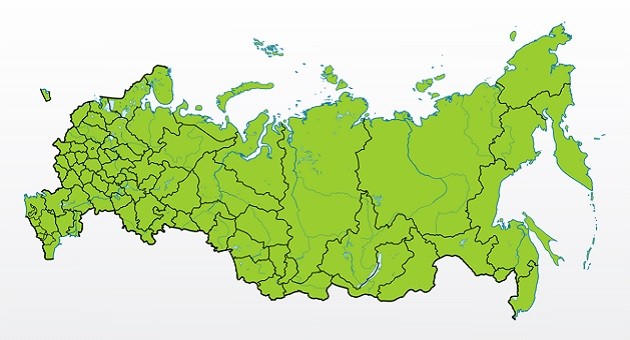
Growing regions
- Far East.
- Middle zone.
- Western Russia.
- Southern regions.
- Ural.
- Siberia.
- North Caucasus.
Origin
This variety has been well known since ancient times and is considered a folk variety or one of those bred through folk selection. No one knows exactly how it originated, but the first mentions of it can be found in E. Regel's "Russian Pomology," published in 1868.
For many years, beginning in 1948, it was thoroughly studied at the Pavlovsk Experimental Station of the All-Russian Institute of Plant Breeding (VIR) of the Russian Academy of Agricultural Sciences. In 1959, it was decided to add it to the State Register and zone it for the Yaroslavl and Leningrad Oblasts. In fact, the apple tree can be grown practically anywhere in the country.
Description of the Wine variety
 This tall, vigorous tree with a dense, wide crown has always attracted the attention of gardeners. It is resilient to various weather conditions, well-adapted to frost, resistant to droughts, and requires no special care, feeding, or fertilizer.
Vinnoye is productive and early-bearing, producing a good quantity of high-quality fruit each year, albeit with poor shelf life. It is recommended for cultivation in both intensive commercial orchards and home gardens.
Apples: What do they look like?
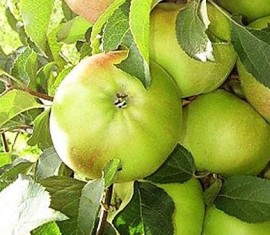
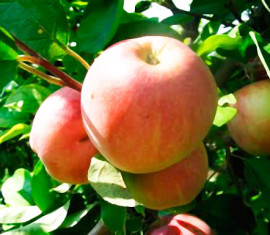
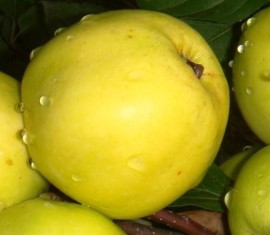
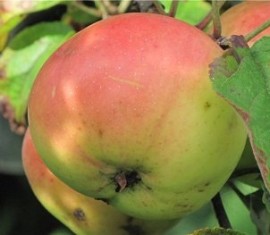
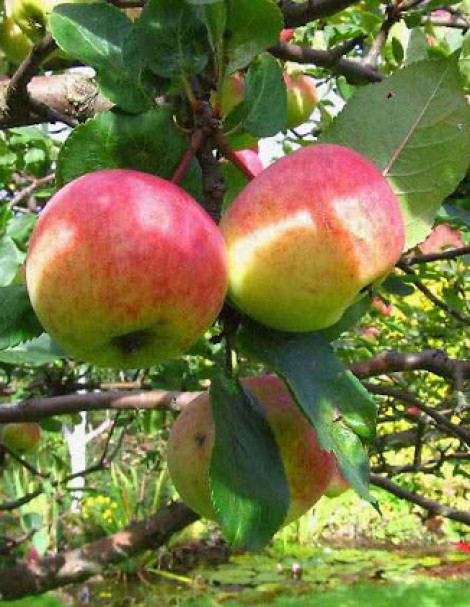
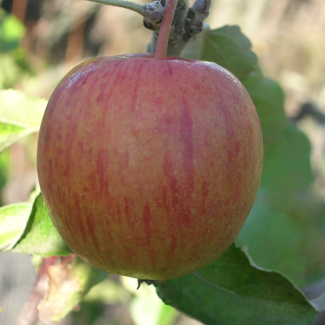
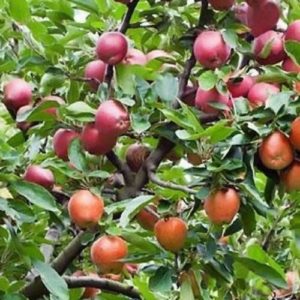 The fruits are generally medium-sized, sometimes slightly larger than average. They grow to 120-140 grams, but in exceptional cases can reach 140-170 grams. They are round, slightly flattened, or slightly conical, with a truncated shape. The ribbing is moderately pronounced, but most noticeable near the calyx; it is smoother on the rest of the fruit.
The skin is thick, dense, smooth, glossy, and highly shiny, becoming covered with a dense waxy coating when ripe. The base color is green, becoming greenish-white and sometimes slightly lemon-colored as it ripens. The blush is mottled, slightly blurred, and spotted, raspberry or reddish-pink. Subcutaneous punctures are clearly visible, numerous, and light-colored. The chemical composition is typically assessed using the following unique criteria:
- P-active substances – 159 milligrams.
- Ascorbic acid (vitamin C) – 11.3 grams.
- Sugar (fructose) – 10.1%.
- Titratable acids – 0.94%.
- Pectins (fiber) – 12.7%.
The flesh is white or slightly greenish, fairly dense, finely grained, prickly, with a pleasantly refreshing consistency and very juicy. The flavor is considered table-worthy, with a sweet and sour balance, leaning heavily toward the acidity, but with a distinct sweetness in the aftertaste. It is considered salty, balanced, and harmonious, with a strong wine-like flavor and a pleasant, spicy aroma.
Vinnoe apple tree: characteristics
Crown and root system
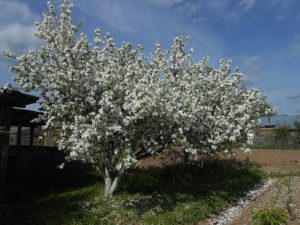 The tree is very vigorous, but can also grow as a shrub. In normal mode, under favorable conditions, it can stretch up to 12-15 meters., which is very impressive. The crown can be oval or spherical; it is dense, vigorous, and prone to overgrowth. The shoots are long, straight or geniculate, covered with greenish-brown or brownish-green bark with slight pubescence. Fruiting occurs on the spears and rings.
The leaves are medium-sized, oval, elongated, pointed, serrate-crenate, and serrated. They are dense, leathery, green or deep green in color, and may have a slight pubescence on the underside. The root system is highly branched, very robust, and deep, and can be fibrous or taproot, depending on the chosen rootstock.
Productivity and pollination
The variety is said to be early-ripening and high-yielding, although it can hardly compare to Antonovka.
A single mature tree 6-9 meters tall can regularly and reliably yield at least 160-180 kilograms of beautiful and delicious apples per season. With proper care, the yield may be slightly higher, but not significantly so.
The variety is conditionally self-fertile, meaning apples will grow even when there's no other apple tree nearby that blooms at the same time. However, experienced gardeners interplant the trees to maximize yield.
Winter hardiness and disease resistance
The tree has excellent low-temperature tolerance, easily surviving temperatures as low as -30-32°C. If frosts are short-lived, the trees don't even need shelter, but it's still best to take care of your plantings. With proper winter preparation and adequate shelter, apple trees can be grown even in the Far East without the risk of dying from severe cold.
Vinnoye is virtually immune to scab, powdery mildew, and other fungal diseases of apple trees, especially with timely care and regular preventative measures. Insects also rarely attack the trees, and the variety is highly resistant to codling moths. Proper insecticide and fungicide treatments usually prevent any problems.
Rootstocks and subspecies
There are a huge number of diverse subspecies of the Vinnoye variety, none of which are fundamentally different from one another. They may differ in the size and shape of their fruit, the color and density of the blush, and the height and spread of their crown. These characteristics largely depend on the rootstock used to grow the tree. More detailed information can be obtained from the nursery or retailer.
Features of growing wine
 Landing
 Landing
Basic conditions
- The planting site should be well-protected from strong northern winds and drafts. Ventilation should be good, but Vinnoye will not survive long periods exposed to icy air currents, especially when young.
- A sunny, open space is ideal for an apple tree. The crown should be exposed to sunlight for most of the day, especially in areas with short summers. In the shade, apple trees may refuse to bloom and bear fruit, although they actively grow branches and leaves.
- Groundwater level plays a key role in choosing a garden site. If it's above 2.5-3 meters, it's best to look for a different location. The rhizome of the wine tree will inevitably reach the water and begin to rot, which will kill the tree.
- Not every soil is suitable, although the situation can be improved with fertilizers, supplements, and other tricks. Light loam, carbonate, sod, and sod-podzolic soils are ideal for Vinnoye.
- Tree holes are dug 2-3 weeks before planting, but those prepared well in advance of the planting season are also suitable. Dig holes 80-100 centimeters deep and the same in diameter. Loosen the bottom, add a small amount of soil mixed with wood ash, mineral fertilizer, compost, and manure, and cover with drainage material or another layer of regular soil.
- There should be a distance of at least 5-6 meters between trees, and up to 7-8 meters between rows, so that in the future they do not conflict with each other either with their crowns or rhizomes.
- Immediately before planting, form a mound in the hole and lower the seedling onto it, spreading the roots out to give them space. Cover the entire area with soil, compacting it gently with your hands. Water the soil with 35-50 liters of water, and then sprinkle it on top. mulch to retain moisture using any available material (sawdust, chopped grass, compost, manure).
The root collar of Vinny seedlings must always remain above the surface if the properties of the rootstock on which they are grown are to be preserved. Otherwise, the tree will take root higher, and then all of their roots will be hopelessly lost.
Landing dates
Almost all apple trees bred for homegrown varieties have a very high survival rate even in the harshest conditions, but it's still not worth taking risks. Therefore, in warmer regions, they are planted in both spring and fall, while in northern regions, the former option is preferable. Trees planted in late March or early April, when the soil has already warmed up completely, begin to bud and bear fruit much earlier than if they hadn't had time to adapt due to early frosts in the fall.
Tree care
 Tree care
Protection from frost and pests
Neglecting protective measures is never a good idea; it's better to be on the safe side to avoid regretting lost seedlings later. Standard measures will be sufficient. Stop completely. water Trees should be watered around August, even if only one or two waterings have been done previously, to ensure the sap has time to stop flowing. The trunks are wrapped in fabric, such as burlap, agrofibre, roofing felt, or roofing felt. The root area can be covered with bales of straw, bundles of dry hay, leaves, or spruce branches. The main thing is to keep it dry, otherwise rot is inevitable.
Whitewashing tree trunks in spring and fall helps repel insects. This can be done with lime diluted with water to the consistency of thick sour cream. Repelling rodents is also easy; experienced gardeners apply grease, fuel oil, or even rendered animal lard to the lower part of the trunk.
Loosening the soil, watering: proper agricultural technology
The soil is loosened to a depth of 25-35 centimeters around the root area to ensure aeration. This can be done with a crowbar or a spade. You don't need to be particularly careful, as the roots usually run a bit deeper. Hoeing the soil throughout the summer is also possible, but it won't provide much benefit. Therefore, in the 6th to 9th year, experienced gardeners prefer to lay sod around the root area; the grass will naturally aerate the soil.
Young seedlings can be watered at an early age, which will be beneficial. Even 6-8 waterings per season will be beneficial. However, as the tree ages, it begins to seek out moisture on its own, so watering becomes less frequent. However, in particularly dry and hot years, watering can be increased to 45-60 liters per trunk. Fertilizers and other fertilizers can also be added, as this will ensure better absorption.
Pruning: simple crown shaping
Most often, seedlings from the nursery arrive already properly pruned, but this doesn't mean you won't have to take care of proper shaping. The optimal shape is sparsely layered, with branches spaced far apart and at varying heights. Don't remove more than two-thirds of the green mass at a time, otherwise the tree may die. Regular pruning is necessary. spinning tops, shoots sticking up, and those that grow inside the crown, thereby thickening it and interfering with ventilation.
Every fall and spring, you'll also need to perform sanitary pruning. This involves cutting off all dry, diseased, and broken shoots. These will only suck up the tree's sap and won't produce any fruit. Around the 14th to 16th year, you can begin rejuvenating the tree by removing 2-3 older branches, allowing the newer ones to develop.
Pollinator varieties
- Amur red.
- White filling.
- Reliable.
- Grushovka.
- Aborigine.
- Arkad.
- Amur filling.
- Mantet.
Reproduction
- Rooting.
- Kidney grafting.
- Growing from seeds.
- Cuttings.
Diseases and pests
- Black crayfish.
- Scab.
- Gray rot.
- Anthracnose.
- Spider mite.
- Green aphid.
- Geometrid moth.
- Leaf roller.
- Weevil.
Ripening and fruiting of Wine
The beginning of fruiting
 The beginning of fruiting
The tree begins to bloom for the first time in the fourth or fifth year after planting, which is why it is considered a fast-growing variety. However, in harsher climates, such as the Urals, Siberia, or the Far East, it may not produce its first harvest until the fifth or sixth year. It's difficult to call it a full-fledged apple tree, as it will yield only 5-15 kilograms of apples, but that's enough to give it a try.
Flowering time
Apple trees bloom very quickly, already in early May, covered in buds that soon open. By mid-May, almost all trees have blossomed into beautiful, medium-sized, cup-shaped flowers with delicate, snow-white petals. Sometimes they can be slightly pink, gathered in clusters of 6-9, and are moderately fragrant. This process lasts at least 12-16 days, and then all the flowers fall at once, leaving a dense carpet of petals on the ground beneath the tree.
Fruiting and growth
The tree quickly grows green mass, reaching 55-70 centimeters per season in the first few years before fruiting begins. After this, growth slows slightly, but not significantly, to only 50-60 centimeters. Yields also increase exponentially; by the 8th to 10th year, full harvests can be harvested, and by the 15th year, they reach their peak.
The fruits ripen uniformly, all at once, towards the end of summer in August or early September. They cling firmly to the branches and don't fall off, so there's no need to rush harvesting. Even in the ideal conditions of a dedicated refrigerator, let alone a cellar, these apples will only last for 30-45 days. Therefore, this variety is considered suitable for processing and eating fresh.
Top dressing
- Peat.
- Compost.
- Ammonium nitrate.
- Humus.
- Chicken manure.
- Superphosphate.
- Manure.
- Mineral complexes.
What to do if it doesn't bloom or bear fruit
- Check for pests or diseases.
- Transplant into the sun.
- Water.
- Fertilize.
Why do apples fall?
- Wind, hail, hurricane, rain.
- Pest damage.
- Diseases.
Please leave your feedback on the Vinnoe variety, as many gardeners would like to grow similar ones in their gardens.