Isaev's Dessert Apple Tree: Variety Features and Care
| Color | Reds |
|---|---|
| Ripening season | Summer |
| Size of apples | Average |
| Taste | Sweet and sour |
| Crown type | Average tree height |
| Shelf life | Low shelf life |
| Application | Fresh , For recycling |
| Winter hardiness | High winter hardiness |
| Fruiting age | Up to 5 years |
 History of origin and regions of growth
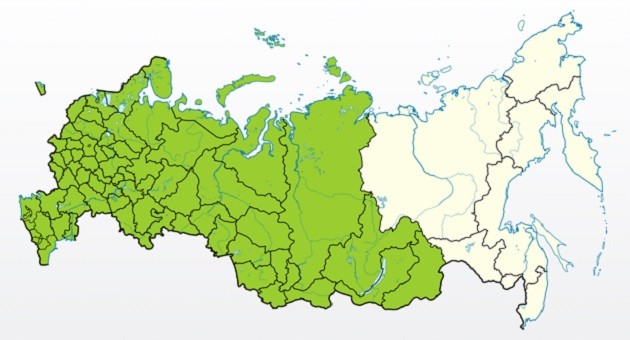
Growing regions
- Crimea.
- Middle zone.
- Leningrad region.
- Ural.
- North Caucasus.
- Siberia.
- Moscow region.
- Far East.
Origin
This variety was developed by the renowned global pomologist and student of Michurin himself, Sergei Ivanovich Isaev, in 1935. At that time, he headed the fruit breeding department at the Central Research Institute of Northern Fruit and Berry Growing, which today proudly bears the name of the I.V. Michurin All-Russian Research Institute of Horticulture (Michurinsk, Tambov Region). The new apple tree was created by crossing the Canadian-Russian Welsi and the old domestic variety, Cinnamon Striped.
At one time, these apple trees successfully passed all tests, were included in the State Register of Breeding Achievements, and were zoned for the Volga Federal District. Over time, they were supplanted by promising new varieties with higher yields and greater resilience. However, the Isaev Dessert variety is still grown in orchards across our country today. It is most popular in Udmurtia, but can be cultivated virtually anywhere.
Content
Description of the Dessert Isaev variety
 This medium-sized, yet very fruitful tree is considered early-maturing. The resulting variety is truly productive, and even early-bearing, perfect for those who can't stand the wait. The trees are hardy, undemanding, and have good environmental adaptability. They are quite compact, but to achieve record-breaking results, careful pruning will be necessary, as they tend to become overly dense.
The fruits are attractive, with appetizing, rosy-brown striped sides. They are tasty and aromatic, easily transported even over long distances, and store fairly well, albeit briefly, in a regular cellar. Drawbacks include the tendency for the fruit to drop and the need for careful pruning, otherwise the fruit will become smaller. This variety is recommended for cultivation in private gardens and is sometimes used as a commercial variety for juice and other product production.
Apples: What do they look like?
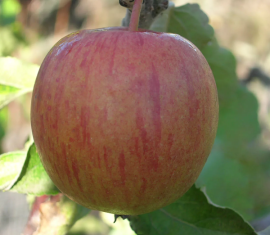
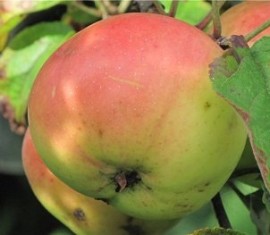
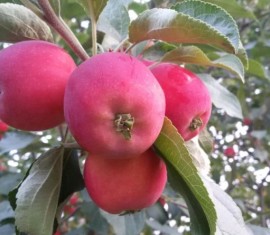
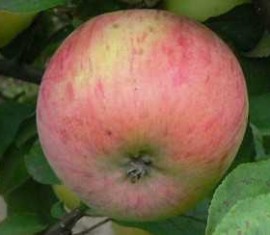
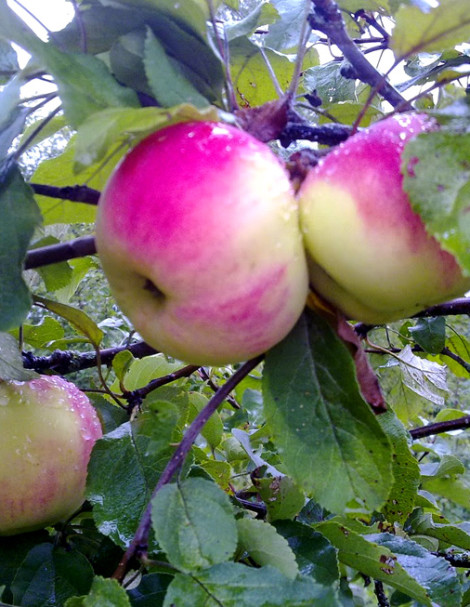
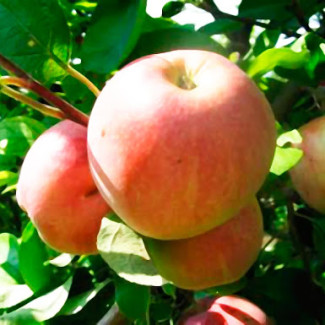
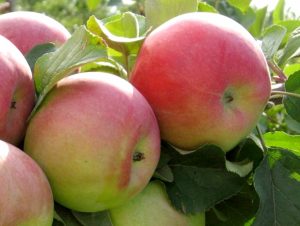 The fruits are medium to slightly larger than average in size, reaching 120-170 grams, rarely slightly larger. They are round or rounded-conical, turnip-shaped, flattened at the petiole end and elongated at the calyx. Ribbing is slightly noticeable, but the fruits are generally smooth, uniform, symmetrical, and without a lateral suture.
The Dessert Isaev has a thin, delicate skin that's smooth yet quite dense, strong, and elastic. It's shiny and glossy, and when fully ripe, it becomes covered with a bluish or silvery waxy coating. The skin's base color is greenish-yellow or deep yellow, sometimes with a hint of light green. The blush covers at least 45-60% of the surface. It's streaked, striped, spotted, or speckled, and red or crimson-red in color. Subcutaneous punctures are numerous, but they are small, light, greenish-gray, and not very visible. The chemical composition can be determined using the following data:
- P-active substances (catechins) – 232 milligrams.
- Ascorbic acid (vitamin C) – 10.4 milligrams.
- Total sugars (fructose) – 11.9%.
- Pectins (fiber) – 10.2%.
- Titratable acids – 0.49%.
The Dessert apple has a fairly dense, fine-grained flesh with a very pleasant consistency. It's not prickly, very tender, melts in the mouth, juicy, slightly crunchy, and has a powerful, distinctive aroma. The flavor is considered harmonious, balanced, and dessert-like; it's sweet and sour, with a hint of spice and a distinctive tartness in the aftertaste. Professional tasters give the apple 4.4-4.6 out of 5 stars for taste and appearance.
Isaev's Dessert Apple Tree: Characteristics
Crown and root system
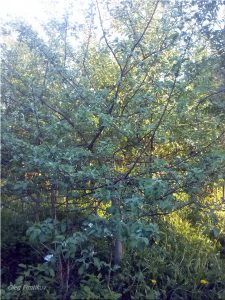 Trees are usually classified as medium-sized. They grow up to 4-4.5 meters. Approximately, if not pruned. Gardeners generally limit trunks to 3.5-4 meters for ease of harvesting and maintenance. The crown shape when young is most often oval, but with age it becomes rounded, sometimes spherical, and can be spreading or even drooping. It is prone to excessive growth and requires regular, proper pruning. The shoots are at right angles to the main stem; they are long, straight, and slender, covered with brown or reddish-brown, sometimes brown, bark. Fruiting is mixed.
The leaf blade is oval or ovate, elongated, medium-sized or small, dense, and leathery. It is smooth and has a slight matte sheen, with coarse ribbing, a long-pointed, twisted tip, and finely serrated, crenate-serrate margins. The root system is extensive, well-branched, and adapted to the search for water and nutrients.
Productivity and pollination
The variety is considered high-yielding, especially compared to northern apple trees with compact crown sizes.
One mature Dessert Isaev tree can produce approximately 100-140 kilograms of fragrant and beautiful fruits per year..
The variety is self-pollinating and self-fertile, so it doesn't require any external pollinators. However, many gardeners report that having suitable apple trees within half a kilometer increases yields significantly, up to 15-35%. Using mobile apiaries for fruit planting is always a good idea, and they wouldn't hurt for Isaev's Dessert either.
Winter hardiness and disease resistance
Apple trees are distinguished by their excellent resistance to low temperatures, including sudden fluctuations and changes in temperature. They tolerate frosts down to -35-37°C quite easily, suffering virtually no damage. If the cold weather lasts too long, the buds may freeze slightly, but they recover very quickly. Trunks are somewhat more sensitive to drought and require watering.
The variety is highly resistant to scab, as well as a number of other apple diseases, although it lacks genetic immunity. It rarely gets sick, and the damage mostly affects the leaves, though the apples can be eaten and processed. While parasites rarely attack the trunks, preventative treatments are still necessary.
Rootstocks and subspecies
Isaev's Dessert doesn't have its own subspecies, although it's grown on various rootstocks. The most popular are dwarf and semi-dwarf varieties, which allow for even more compact crowns, taking up minimal space in the garden. This doesn't significantly affect fruit quality. There's no columnar variety. creeping can be created by tying branches to stakes driven into the ground and cutting off the central conductor.
Features of growing Dessert Isaev
 Landing
 Landing
Basic conditions
- It's best to choose sites for this variety where the crowns will receive full sun for most of the day, without shade, especially while the young trees are growing and becoming firmly established. In the shade, the Dessert tree grows poorly, slowly, and often refuses to flower or bear fruit.
- Ventilation of the crown is crucial for this variety; stagnant air in the branches is undesirable, as this will lead to disease. Drafts are also unsuitable for the tree; maintaining a balance is crucial.
- Apple trees should be planted in areas where the groundwater level is no higher than 2 meters above the surface. Otherwise, the trees may reach the surface and rot. Avoid planting apple trees in swamps or floodplain meadows, near lakes and rivers, streams, or ponds; even a shallow well can be a bad neighbor.
- Digging planting holes in advance is a good idea. They should be left to rest (at least 4-5 weeks) to prevent the rhizomes from being burned by fertilizer. Dig holes 60-70 centimeters deep and up to 1 meter in diameter, add mineral and/or organic fertilizer to the bottom, then cover the entire hole with a drainage layer and fill with water (25-40 liters).
- You can leave about 3-4 meters between trees, and it is advisable to leave the same distance between rows.
- Stakes, planks, or trellises are immediately dug or driven into the holes to support the seedlings. It's best to place them on the north side of the trunk to provide additional protection from cold winter winds.
- It's advisable to purchase seedlings only from reputable sellers or nurseries, as they resemble wildings. The grafting point should be clearly visible, and the bark above and below should differ in color and texture.
- Before planting, inspect the tree, cutting off any dried, rotted, or broken shoots. Soak the rhizomes in water for several hours to speed up growth.
- Place the tree on a drainage surface, spread the roots by hand, and cover them with soil, compacting it layer by layer. Water the apple trees with 45-60 liters of water, and mulch available materials, even chopped grass.
Landing dates
This undemanding and resilient variety can be planted in both spring and fall. Seedling survival rates are approximately the same at any time, but frosts should be avoided before trees have stopped sap flow or are beginning to bud. This can damage buds and even shoots, although recovery is very rapid.
Tree care
 Tree care
Protection from frost and pests
Isaev's dessert tree doesn't require any winter shelter in most parts of our country. However, in the harshest regions, it's a good idea to cover young trees with a tent. Otherwise, you can wrap the trunks with roofing felt, burlap, or other available materials. You can pile spruce branches on the root zone, pile up soil, or throw straw bales or hay mats onto the roots.
To prevent rodents from damaging the bark and young branches in winter, the trunks are coated with grease, rendered animal fat, fuel oil, or other unpleasant-smelling substances. To prevent insects from settling in the bark cracks, the bark is whitewashed with lime, a thick, concentrated solution, to a height of approximately 1-1.2 meters.
Loosening the soil, watering: proper agricultural technology
Trees have extensive root systems, some of which extend shallowly near the surface, so digging must be done carefully. It's best to do this twice a year: in late fall and early spring. Mature trees don't need to be dug at all if you sow herbs or grass around the trunk to provide natural aeration. Don't forget to remove weeds, debris, rotting leaves, or fruit from under the tree.
Trees need watering, especially when they're young and still developing. A good rule to follow is the 10-day rule. This means applying water when no precipitation has occurred for ten days. If it rains, count ten days from that date and water again. Fertilizers are diluted with water, making them easier to apply and more effectively absorbed by the roots. After each watering, the following day, be sure to loosen the soil to prevent it from becoming compacted.
Pruning: simple crown shaping
Training begins in the first year after planting, unless the tree was pruned at the nursery. Then, the central trunk is cut back by a third, and all lateral shoots are removed, leaving only two or three branches at different heights and spaced far apart. These will become the skeletal branches. Subsequently, pruning will be necessary twice a year to prevent the tree from becoming overgrown. The optimal form is a sparse, tiered growth.
Sanitary pruning involves pruning all diseased, dead, or broken shoots. This is done more often in the fall, less often in the spring, but this can be adjusted as needed. Removing excessively dense shoots, crossing shoots, or shoots growing vertically or inward can be done in both spring and fall; it makes no difference. The cut areas must be sealed to reduce stress on the tree.
Pollinator varieties
- Anniversary boy.
- Ranetki.
- Glory to the victors.
- Summer striped.
- Pepinka.
- White filling.
- Candy.
- Melba.
- Kovalenkovskoye.
Diseases and pests
- Cytosporosis.
- Pit rot.
- Powdery mildew.
- Scab.
- Scale insect.
- Green aphid.
- Hawthorn.
Ripening and fruiting of the Dessert Isaev
The beginning of fruiting
 The beginning of fruiting
Buds may appear on the tree as early as the first year, but allowing them to bloom is not advisable. These are likely sterile flowers and will not produce any fruit. The first harvests can be collected as early as the third or fourth year, once the tree has accumulated sufficient foliage. Keep in mind that Isaev's Dessertnoe requires annual flowering control, removing up to 35-50% of the fruit. Otherwise, the fruit will become smaller each year until it reaches the size of a cherry, and then disappear altogether.
Flowering time
Abundant, lush flowering begins all at once and lasts for approximately 14-16 days. It occurs in most areas in mid-May, but may be slightly delayed in the northernmost regions or after a long, cold winter. The flowers are beautiful, snow-white, large, with delicate, beautiful, and light petals, intensely fragrant, and densely cover all branches.
Fruiting and growth
Trees of this variety can grow at least 35-50 centimeters per year, and sometimes even more. They grow faster before fruiting, then slow down slightly. They increase their fruiting in the same way. By the 10th to 12th year, the harvests become full-fledged and will remain so for the next 50 years or more, with proper care and pruning.
Dessert apples ripen around the middle or second half August, quite early. As soon as the blush deepens and a waxy coating becomes clearly visible on the surface, the fruit is ready for picking. It's best to do this quickly, before the fruit falls to the ground. Apples can be transported and processed without much difficulty, but they can be stored for no more than 25-45 days in a cellar, and up to 60 days in a special refrigerator.
Top dressing
- Peat.
- Superphosphate.
- Humus.
- Bor.
- Calcium.
- Manure.
- Compost.
- Ammonium nitrate.
What to do if it doesn't bloom or bear fruit
- Limit or strengthen watering.
- Eliminate insects.
- Cure diseases.
- Feed.
- Transplant to a sunny place.
Why do apples fall?
- Wind, frost, rain, hail.
- Overripe.
- Pests or diseases.
Leave a review of the Isaev Dessert apple tree variety so that even a novice gardener can receive useful information firsthand.